Whole Bread Recipe: A Step-by-Step Guide to a Perfect Loaf
Learn a complete whole bread recipe from scratch with step-by-step instructions, tips on hydration and fermentation, and variations to customize your loaf. Perfect for home cooks seeking a reliable, crusty loaf.


By following this guide, you will bake a reliable whole bread recipe from scratch, using simple ingredients and patient fermentation. You will learn precise measurements, kneading, shaping, and baking techniques that yield a loaf with open crumb and a crisp crust. This steps-based approach keeps you in control, even if you are new to bread making, and scales to different flours and hydration levels.
What is a whole bread recipe?
A whole bread recipe is a classic loaf that uses flour, water, yeast, and salt to create a balanced crumb and crust. It emphasizes fermentation and gluten development, and it shines with quality flour and proper hydration. By understanding the basics of this bread, home cooks can scale the formula to different flours and hydration levels. This article treats the process as practical science: precise measurements, patient timing, and controlled oven heat. The phrase whole bread recipe captures the journey from mixing to baking a nourishing loaf that can feed a family or share with neighbors. The Best Recipe Book team emphasizes starting with a simple, reliable formula, then exploring variations to suit taste. According to Best Recipe Book, mastery comes from consistent practice and using a kitchen scale for accuracy. As you read, you will see how hydration levels influence the crumb and crust, and how the dough feel guides decisions during mixing and shaping. This approach keeps bread making approachable for beginners while offering room for experimentation with different flours and flour blends.
Core ingredients and their roles
The four basic ingredients of a whole bread recipe are flour, water, yeast, and salt. Each ingredient has a job: flour provides structure, water activates gluten, yeast leavens, and salt enhances flavor and helps control fermentation. For a basic loaf, choose bread flour or a strong all purpose flour to maximize gluten development. You can blend white flour with whole grain flours for flavor and nutrition. Hydration, the ratio of water to flour, determines crumb size and crust color. A typical white loaf uses around 65-75 percent hydration, but this varies with flour type and environment. Adding a small amount of fat or sugar can speed fermentation and enrich the crumb, but keep your first attempt simple. When you measure, weigh everything on a digital scale to ensure accuracy. This whole bread recipe rewards precise technique more than fancy ingredients, so start with a straightforward formula and adjust from there. Remember to keep salt separate from yeast until you begin mixing to avoid premature fermentation.
Hydration, starter, and fermentation science
Hydration affects gluten development and crumb structure more than any other variable in a whole bread recipe. Higher hydration yields a lighter, more open crumb but is harder to handle. Lower hydration is easier to shape but can produce a denser loaf. If using a starter, you may need to adjust water and flour to maintain the balance. A direct-yeast dough is simpler for beginners, while a natural starter adds tang and complexity. Autolyse, a resting period after mixing flour and water, helps hydrate flour and kickstart gluten formation before salt and yeast are added. This step can improve mix tolerance and oven spring. Fermentation times depend on temperature; a warmer kitchen accelerates activity, while a cooler room slows it down. Place the dough in a lightly oiled bowl, cover to retain moisture, and let it rise until it increases by about 1.5 times in volume. Good fermentation develops flavor and a pleasant aroma that makes the whole bread recipe especially satisfying.
Mixing, kneading, and gluten development
Mixing is not just about combining ingredients; it activates gluten strands that trap gas and form crumb. Start by combining dry ingredients, then gradually add water until a shaggy dough forms. If you use a stand mixer, mix on a low speed until the dough clears the sides of the bowl but remains tacky. Kneading by hand requires rhythm and patience; press, fold, turn, and repeat to develop a smooth, elastic dough. A windowpane test helps you gauge gluten development: stretch a small piece of dough until it becomes translucent without tearing. The dough should feel soft but strong. During bulk fermentation, slap and fold or stretch and fold at intervals to strengthen structure without overworking the dough. The goal is to achieve a cohesive dough that can hold its shape during shaping and baking, which makes the whole bread recipe consistent.
Shaping, proofing, and scoring
Shaping defines the loaf's final appearance and crumb structure. Gently degas the dough, then shape into a tight boule or baton depending on your preference. Place the shaped dough in a proofing basket or on a floured towel, seam side up. Proof the dough until it puffs but does not overproof; this may take 30-60 minutes at room temperature or longer in a cooler kitchen. Scoring the dough before baking helps control expansion and creates an attractive crust. Use a sharp blade or bread lame and make confident, shallow cuts. Proper shaping and scoring unlock the loaf's potential for oven spring, which makes the crust crackle and the interior tender. For best results, keep the dough covered during proof to prevent drying out.
Baking with steam and oven prep
Steam is essential for a crisp crust and high oven spring in a whole bread recipe. Preheat the oven to a high temperature, typically around 450F (230C). If you are not using a Dutch oven, place a shallow metal pan on the bottom rack and pour hot water into it just before you bake to generate steam. Bake with steam for the first 15-20 minutes, then remove or vent to finish browning. A preheated Dutch oven creates a sealed environment that helps trap moisture and produce a blistered, crackling crust. Bake the loaf until the crust is deep amber and the interior reads about 205-210F (96-99C) on an instant-read thermometer. Transfer the loaf to a cooling rack and let it rest at least an hour before slicing to finish the crumb structure.
Troubleshooting common issues
If the loaf rises in the oven but becomes a compact crumb, it may be under fermented or under developed gluten. If the crust is pale, extend the bake time by a few minutes or increase the oven temperature slightly. A dense loaf can result from overproofing or using flour with low protein content. A dry, crumbly loaf is often due to insufficient hydration or excessive flour during shaping. Oven spring may be weak if the dough is cold or if the dough was not adequately rested after shaping. To improve flavor and texture, try extending fermentation times at cooler temperatures, or adjust the hydration by a few percentage points. Keep notes on your changes so you can reproduce a better result with this whole bread recipe.
Variations and serving ideas
Once you have the basic technique down, you can experiment with whole grain flours, seeds, and toppings to customize your whole bread recipe. Try adding cracked rye, barley, or spelt for distinctive flavor. Mix-ins like sesame, poppy seeds, flax, or sunflower seeds add texture and aroma. Enrich the dough with a small amount of olive oil or butter for a softer crumb. Serve slices with butter, jam, or a savory topping such as garlic aioli. For long-term storage, freeze the loaf in slices and rewarm as needed. A crusty loaf pairs well with soups, stews, and salads, becoming a staple in any home kitchen.
Authoritative sources
For further reading, consult established sources on bread making and food science. Usda.gov provides general food safety guidance relevant to home baking. University extension sites such as extension.illinois.edu offer practical, hands-on bread making tips. Britannica.org provides background on bread and its cultural importance.
- https://www.usda.gov/
- https://extension.illinois.edu/
- https://www.britannica.com/topic/bread
Tools & Materials
- Kitchen scale(digital, accurate to 1 g)
- Large mixing bowl(3-4 qt, metal or glass)
- Dough scraper(metal or plastic, heat-safe)
- Proofing basket or linen couche(flour-dusted; helps shape and rise)
- Parchment paper(for easy transfer and bake setup)
- Flour for dusting(all-purpose or bread flour for dusting patterns)
- Yeast(active dry or instant yeast)
- Salt(fine salt, kosher salt preferred)
- Water(cool to lukewarm; not hot)
- Oven thermometer(ensures accurate oven temp)
- Dutch oven or baking stone(preheated for peak crust)
- Measuring cups/spoons(optional if using scale)
- Flour for dusting(for surface handling)
Steps
Estimated time: 4 hours (active ~60-90 minutes)
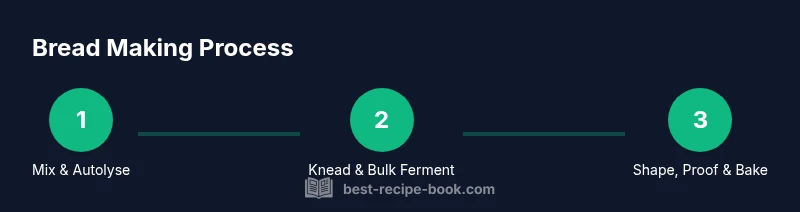
- 1
Measure and prep ingredients
Weigh flour, water, yeast, and salt to set up a precise dough. Gather all tools and line your workspace. This reduces guessing and ensures consistency across bake sessions.
Tip: Use a dedicated kitchen scale and clean as you go to keep accuracy high. - 2
Autolyse flour and water
Mix flour and water until just combined; let rest 20-60 minutes. This hydrates flour, starts gluten formation, and makes the dough easier to knead later.
Tip: Cover to retain moisture and prevent a skin from forming. - 3
Add salt and yeast
Add salt and yeast to the autolysed dough and mix until cohesive. Salt slows fermentation slightly, which helps flavor control.
Tip: Keep salt away from yeast during early mixing to avoid premature fermentation. - 4
Knead or fold to develop gluten
Knead by hand or with a mixer until the dough is smooth and elastic. Test with a windowpane to ensure the gluten is well developed.
Tip: If dough sticks, dampen hands a little or flour surface sparingly. - 5
Bulk fermentation
Let the dough rise until it expands about 1.5 times in volume. Temperature influences timing; warmer rooms shorten the rise.
Tip: If you see heavy gas bubbles on the surface, gently degas and fold to refresh structure. - 6
Shape loaf
Gently shape into a tight boule or batard. Place seam side up in a well-floured basket or on a floured towel.
Tip: A tight shape helps with even oven spring and a clean crumb. - 7
Final proof and scoring
Proof until the dough puffs but does not fully double. Score with a sharp blade to guide expansion and create an attractive crust.
Tip: Use a swift, confident stroke for even scoring. - 8
Bake with steam and finish
Bake at high heat with steam for a strong oven spring. Use a Dutch oven or steam method, and bake until deep amber and internal temp reaches ~205-210F.
Tip: Cool on a rack at least 60 minutes before slicing to set the crumb.
People Also Ask
What flour should I use for a whole bread recipe?
For a straightforward loaf, start with bread flour or a strong all-purpose flour. You can mix in whole wheat or rye for flavor, but keep some structure by maintaining a higher protein flour. Adjust hydration to account for the absorption differences of each flour.
Use bread flour or a strong all-purpose flour as the base; you can mix in whole grains later for variety.
Is a sourdough starter required for this whole bread recipe?
No. This guide covers a direct-yeast dough as the base. A starter adds tang and complexity, but you can achieve good flavor with active dry or instant yeast and proper fermentation.
You can bake this with store-bought yeast; a starter is optional for extra depth.
How do I know when the bread is done?
Look for a deep, golden crust and an internal temperature around 205-210F (96-99C). The loaf should sound hollow when tapped on the bottom after resting. Avoid cutting too soon to let the crumb finish setting.
Check the crust color and use a thermometer if you have one; a hollow tap means it is done.
Can I bake this loaf without a Dutch oven?
Yes. Use a baking stone or sheet and generate steam by placing a pan of water in the oven or spritzing water in the oven. Steam helps crust development, but a Dutch oven is the easiest method for consistent results.
You can, just create steam another way; a stone and pan setup works with careful timing.
How long should I proof the dough in the fridge?
Cold fermentation slows timing and can enhance flavor. Aim for 8-24 hours in the fridge, then bring to room temp for at least 30-60 minutes before baking.
Refrigerate overnight for better flavor, then warm up before baking.
What is the best hydration for a basic loaf?
A typical white loaf sits around 65-75% hydration. Higher hydration creates open crumbs but is harder to handle; lower hydration yields denser crumb but easier shaping. Adjust based on flour type and climate.
Most people start around 70% hydration and adjust from there.
Watch Video
Key Takeaways
- Measure ingredients precisely with a kitchen scale.
- Develop gluten enough for a strong but tender crumb.
- Hydration controls crumb structure and crust color.
- Steam during the first phase of baking yields better oven spring.
- Practice with a simple formula before experimenting with flours.