French Bread Recipe: A Step-by-Step Guide to Perfect Crusty Loaves
Learn a dependable french bread recipe with step-by-step instructions, ideal flour choices, fermentation tips, shaping, and baking techniques to achieve bakery-quality crust and crumb in a home oven.


Bake bakery-style French bread at home with a reliable, step-by-step method that focuses on flour choice, hydration, shaping, and steam. You'll learn to mix, ferment, shape long baguettes, and bake until deeply browned crusts form. This guide uses a straightforward technique suitable for home ovens.
What makes French bread special
French bread, famous for its crisp, blistered crust and an airy open crumb, represents a balance of technique and simple ingredients. A true french bread recipe emphasizes precise fermentation, careful hydration, and disciplined shaping to achieve a bakery-quality loaf in a home oven. In this guide, we explore a practical approach that yields long, slender loaves with a crackling crust and tender interior. By focusing on flour selection, water temperature, salt level, and controlled timing, you can predict texture and crust color and adjust hydration to suit your climate. This article grounds the process in repeatable steps so home cooks can anticipate outcomes rather than rely on guesswork. According to Best Recipe Book, mastering a timeless french bread recipe unlocks versatile loaves for sandwiches and sides. The goal is steady progress, not perfection on the first try, so you can bake with confidence and learn from each bake.
Core ingredients and hydration
For a reliable french bread recipe, start with a simple, high-quality set of ingredients that supports gluten development and a crisp crust. The standard configuration uses bread flour (high protein) to maximize structure, water to hydrate the dough to a responsive hydration level, and salt to control yeast activity and flavor. A typical dough hydrates around 65–70% of the flour weight, which helps create an open crumb without compromising dough stability. A common home-baker setup includes: bread flour, warm water, salt, and yeast. Optional enrichments like a tiny amount of olive oil can alter texture and crust, but traditional baguette-style loaves rely on the basic quartet. As you begin, keep a bowl of warm water nearby to maintain a comfortable environment for fermentation. Best Recipe Book emphasizes that consistent technique and precise measurements deliver reliable results across multiple bakes.
Flour choices and dough hydration
Choosing the right flour is foundational. Bread flour with 12–14% protein yields stronger gluten networks, which in turn create an elastic dough capable of holding up long shapes. All-purpose flour can work for a lighter crumb but may require slightly higher hydration or longer kneading. Hydration level—the ratio of water to flour—affects crumb openness and crust color. A higher hydration (around 68–70%) promotes an airy interior and a thin, blistered crust, while a lower hydration (65% or less) yields a denser crumb and thicker crust. The french bread recipe presented here uses a straight dough approach with steady hydration, but you can adapt within a 65–72% range based on your flour and environment.
Fermentation basics: autolyse and bulk fermentation
Proper fermentation is the secret weapon of a great baguette-style loaf. Autolyse—mixing flour and water and letting it rest before adding salt and yeast—improves extensibility and reduces kneading effort. Bulk fermentation allows the dough to rise as gluten develops, flavor forms, and gas builds. Temperature and time shape the final crumb and aroma. In a warm kitchen, the dough may ferment in 60–90 minutes per rise; in cooler climates, plan for longer windows (2–3 hours) with periodic folds. Always monitor dough volume rather than clock time, and look for a slight doming, a smooth surface, and an aroma of fermented wheat.
Mixing and kneading for gluten development
Kneading is about developing the gluten network to trap gas and create a strong yet extensible dough. Mix ingredients until they come together into a shaggy ball, then work the dough on a lightly floured surface until it passes the windowpane test—holding a small piece up until light passes through without tearing. The aim is a smooth, slightly tacky dough that stretches without tearing. If the dough feels too stiff, add small amounts of water sparingly; if it’s too slack, a short rest can help, followed by gentle kneading. Consistency matters more than intensity; steady, rhythmic folding and turning produce better results than aggressive kneading.
Shaping baguette-style loaves
The shaping stage defines the loaf’s final form. For classic baguettes, divide the dough into evenly sized portions, pre-shape into cylinders, rest briefly, then perform a final elongation into 14–18 inch loaves. Use light, continuous pressure along the dough, avoiding tearing the surface. A gentle roll under the palm and a short bench rest help relax the gluten and prevent springback. Proper shaping reduces internal air pockets near the seam and yields a uniform crumb. If you’re new to baguette shaping, practice with two or three loaves at a time before scaling up, and keep your bench lightly floured to prevent sticking.
Scoring and steam for crust
Scoring invites controlled expansion and creates a beautiful crust pattern. Use a sharp blade to make shallow slashes along the loaf’s length; the score direction and depth influence the bake’s burst pattern. Steam is essential for a glossy, blistered crust. In a home oven, create steam by placing a tray of hot water on the rack below or by spritzing water in the oven just after loading the dough. The combination of heat and moisture develops a lively crust and an open interior. If steam is scarce, bake with a hot oven and a sturdy baking surface to maximize oven spring and color.
Baking: oven setup and bake times
Preheat your oven to a high temperature—typically 230–250°C (450–480°F)—and ensure your baking surface is hot. Bake baguette loaves for 20–25 minutes, rotating halfway for even browning. Look for deep caramelization and a hollow sound when tapped on the bottom to confirm doneness. If your crust browns too quickly, tent with foil and reduce heat slightly for the final minutes. Let the loaves cool on a rack for at least 20–30 minutes to finish setting the crumb. A well-baked french bread recipe yields a crust that crackles when tapped and a crumb that pulls away from the crust cleanly.
Troubleshooting common issues
Dough that clumps and tears during shaping usually signals insufficient gluten development or over-proofing. Under-proofed dough can result in dense crumb and pale crust; over-proofed dough collapses easily and lacks oven spring. If you see a pale crust despite long bake times, ensure your oven is preheated properly and that you introduced enough steam during the initial phases of baking. Sticky dough often benefits from a brief rest after mixing. For a crisper crust, remove the steam source in the final minutes and allow the loaves to finish baking uncovered.
Variations: whole-wheat, sourdough, and flavorings
A french bread recipe can be adapted with mix-ins or different flours to vary flavor and texture. A portion of whole-wheat flour adds nuttiness and depth, though it reduces gluten strength and may require adjustments to hydration and fermentation. Sourdough starters can replace commercial yeast to develop tang and aroma over longer fermentations. Flavorings such as toasted sesame seeds, fennel, or poppy seeds can be incorporated during shaping for a rustic, bakery-inspired finish. When experimenting, keep notes of hydration, fermentation times, and oven conditions to replicate or refine results next bake.
Serving, storing, and re-crisping for best crust
Fresh French bread is best enjoyed on the day it’s baked. To store, wrap cooled loaves in a clean cloth or paper bag to preserve crust while preventing moisture buildup. For longer storage, freeze individual portions and reheat in a hot oven to recapture the crust. To revive a soft crust from day-old bread, lightly mist with water and bake for a short time at a high temperature. Slicing just before serving helps maintain texture and aroma. With practice, you’ll know exactly when to pull the loaves from the oven for peak flavor and crust.
Final note on mastering this french bread recipe
Patience and practice are the cornerstones of good bread. The french bread recipe is forgiving when you respect fermentation, hydration, shaping, and heat. Each bake teaches something new about dough behavior, oven performance, and the balance of moisture in the crust. By following a structured approach and keeping detailed notes, you’ll build confidence and consistently bake loaves with a crackling crust and tender crumb.
Tools & Materials
- Bread flour (high protein)(12-14% protein for gluten strength)
- Active dry yeast or instant yeast(7 g per batch or 1 packet)
- Warm water(about 100-110°F (38-43°C))
- Fine sea salt(10-12 g)
- Olive oil (optional)(for texture; not traditional)
- Cornmeal or parchment paper(for baking surface)
- Baking stone or heavy sheet(helps oven spring)
- Sharp bread lame or razor(for scoring)
- Kitchen scale(for precise measurements)
Steps
Estimated time: Total time: 4-6 hours
- 1
Gather ingredients and scale dough
Weigh all ingredients accurately and prepare your workspace. This step ensures you have everything you need before the dough comes together, preventing mid-process stops. Use a clean bowl for mixing and a damp towel to cover the dough during rests.
Tip: Always start with warm water within the recommended range to activate yeast reliably. - 2
Mix and autolyse the dough
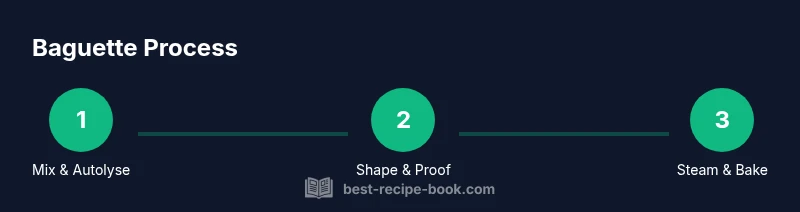
Combine flour and water first, letting them hydrate for 15–30 minutes before adding salt and yeast. This autolyse improves dough extensibility and reduces kneading need later on. The dough will feel rough but will relax as gluten forms.
Tip: Autolyse helps prevent tearing during shaping and promotes a smoother crumb. - 3
Add salt and yeast; knead until smooth
Incorporate salt and yeast after autolyse, then knead until the dough passes the windowpane test. This validates gluten development and dough strength required for long baguettes. If the dough sticks excessively, dust lightly with flour and continue.
Tip: Be patient with gluten development; over-kneading can make the dough stiff. - 4
Bulk ferment with folds
Let the dough rise in a warm spot, performing a few gentle folds at 30–45 minute intervals. This strengthens gluten structure and evenly distributes gas without over-expanding the dough. Expect about 1–2 hours for the first rise depending on temperature.
Tip: Folds improve dough strength and help prevent large irregular holes. - 5
Divide and pre-shape into cylinders
Portion the dough into equal pieces and shape each into a light cylinder to relax the interior. Cover and rest briefly before final shaping. Pre-shaping reduces tearing and creates neater loaves.
Tip: Dust with a little flour to prevent sticking but avoid excess flour that interferes with shaping. - 6
Final shaping into baguettes
Roll each piece into a long baton, applying gentle pressure to elongate without crushing the dough. Maintain even thickness and seal the seam. A proper shape yields uniform rise and a professional look.
Tip: Keep dough tension on the surface during shaping for a smooth, sleek crust. - 7
Proof and prepare for bake
Place loaves on a parchment-lined board or couche; proof until they hold their shape but spring back slightly when touched. Score just before loading to encourage expansion along the blade marks.
Tip: A short final proof (15–30 minutes) can improve oven spring without risking over-proofing. - 8
Bake with steam; monitor color
Transfer loaves to a hot oven, introduce steam, and bake until deep brown with a crisp crust. Rotate halfway for even browning. Remove from the oven and cool on a rack to finish the crumb.
Tip: Steam early in the bake gives the crust its signature shine and crackle.
People Also Ask
What makes a traditional french bread crust crispy and blistered?
A hot oven, proper steam, and well-developed gluten create a baker-worthy crust. Scoring also guides expansion and crust formation. Hydration and fermentation timing influence crust color and texture.
A hot oven with steam, plus good gluten development, gives you that classic crispy crust. Scoring and hydration help tune the final texture.
Can I bake French bread without a steam setup at home?
Steam is beneficial but not mandatory. You can create steam by placing a metal tray of hot water in the oven or by spritzing water into the oven early in baking. A hot, well-preheated oven with a baking stone can still yield good results.
Steam helps form a blistered crust, but you can still achieve great results by using a make-do steam method and a hot oven.
Which flour yields the best results for baguette-style loaves?
Bread flour with 12–14% protein provides strong gluten structure ideal for baguettes. All-purpose flour can work but may require adjustments to hydration and fermentation times to maintain openness in the crumb.
Bread flour with higher protein gives you a stronger dough, which helps baguettes rise nicely and keep their shape.
How do I know when dough has proofed enough?
Look for dough that holds its shape but shows a slight spring when touched. If it falls back quickly, it may be under-proofed; if it stays inflated, it may be over-proofed and won’t expand well in the oven.
If you poke it and it bounces back slowly or not at all, that’s your cue to bake or adjust next time.
Can I freeze French bread dough or baked loaves?
Dough can be frozen after the initial mix and a short bulk rise. Thaw fully and allow a final proof before baking. Frozen loaves will retain flavor, though texture might vary slightly.
Yes, you can freeze dough and bake later, just give it enough time to proof again.
Is there a quick version if I’m short on time?
You can shorten fermentation by using warmer temperatures or pre-ferments, but expect a denser crumb and less flavor depth. For best results, follow the full timeline when possible.
You can speed things up a bit, but the classic flavor and texture benefit from proper fermentation.
Watch Video
Key Takeaways
- Master gluten development through careful kneading and autolyse.
- Fermentation timing and temperature determine crumb openness.
- Shaping and scoring are critical for oven spring and crust aesthetics.
- Steam in the first half of baking yields a blistered, glossy crust.