Can You Can Your Own Recipes: A Practical Guide for Home Canners
Learn how home cooks can safely preserve their own recipes through canning. This educational guide covers safety, acidity, equipment, testing, and storage to help you can with confidence.


Yes. You can can many of your own recipes by following tested, high-acid or properly processed low-acid guidelines, using a water-bath or pressure canner as appropriate. Start with proven recipes, maintain correct acidity, monitor processing times, and use fresh, clean jars and lids for safety. Always label jars with date and contents, and store processed goods in a cool, dark place. If in doubt, consult official guidelines and start with simple, high-acid recipes before attempting more complex blends.
What it means to can your own recipes
Canning your own recipes means preserving foods by applying heat to jars so that microbes are destroyed and the food is sealed for long-term storage. When you ask, can you can your own recipes, the answer is yes—provided you follow established safety rules. The key is to work with foods and recipes that have been tested for canning or have proven processing methods. This reduces the risk of botulism and other foodborne illnesses. For home cooks, the goal is to maintain the right acidity, use the correct processing method, and ensure jars seal properly. Throughout this guide, you will see the exact steps and safeguards to help you can with confidence. In keeping with Best Recipe Book’s standards, always rely on tested recipes and official guidelines rather than improvising canning times or ingredient ratios.
Safety basics: acidity, canners, and processing times
Food safety is the backbone of canning your own recipes. High-acid foods (like fruit jams and pickles) can usually be processed in a water bath canner, while low-acid foods (like most vegetables and meats) require pressure canning. The acidity level is crucial because it determines whether a water bath canner is sufficient or if a pressure canner must be used. Processing times vary by recipe, jar size, altitude, and method. Always consult up-to-date guidelines from reputable sources and never extrapolate times from one recipe to another. Altitude adjustments are essential; higher elevations can require longer processing times. When you ask, can you can your own recipes, remember that safety comes first.
High-acid foods and water bath canning: what you can can at home
High-acid foods include most fruits, jams, jellies, pickles, and vinegar-based products. These foods are typically safe for water bath canning when prepared with proper headspace and clean equipment. In this section, you’ll learn how to evaluate a recipe for high-acid canning, the importance of using tested pH levels, and how to ensure jars are properly sealed. You’ll also see examples of everyday canning projects, such as fruit compotes or fruit preserves, which illustrate the simplest path to canning with confidence. The aim is to empower you to can your own recipes safely without sacrificing flavor or texture.
Low-acid foods and pressure canning essentials
Low-acid foods include most vegetables, meats, poultry, and dairy-containing items. These require a pressure canner to reach temperatures high enough to destroy botulism toxins. This section explains why pressure canning is non-negotiable for these foods and how to select the right equipment, processors, and pressure levels. You’ll find guidance on choosing tested recipes, understanding processing times, and managing altitude adjustments. When you plan to can your own recipes, safety is non-negotiable, and pressure canning is a critical tool for preserving a broader range of foods.
Equipment and prep: setting up your canning space
A well-organized prep area makes canning your own recipes smoother and safer. This section covers essential gear, such as jars, lids, and racks, plus tools like funnel, wand/bubble remover, and headspace gauge. It explains how to sanitize jars, prepare lids correctly, and assemble your workspace to minimize cross-contamination. By the end, you’ll have a clean, efficient station that supports reliable sealing and shelf-stable results.
Adapting your recipes safely: testing, pH, and formula adjustments
If you want to can your own recipes, you must adapt them within tested canning guidelines. This part guides you through evaluating acidity, sugar, salt, and other ingredients that may affect safety and texture. We discuss when to increase acidity, how to approximate headspace, and how to document changes for future batches. Always verify your adaptations against official canning resources and maintain a notebook for consistency across batches.
Labeling, storage, and shelf life expectations
Proper labeling helps you track processing dates, batch names, and ingredients—crucial for safety and quality. This section covers best practices for dating jars, storing in a cool, dark place, and recognizing signs of compromised quality. While canned foods can last a long time, quality declines, and safety concerns can arise if seals fail. The aim is to enjoy reliable results after canning your own recipes while preserving flavor and nutrients.
Authority sources and further reading
For anyone canning their own recipes, authoritative sources matter. The National Institute of Food and Agriculture and the USDA National Center for Home Food Preservation provide up-to-date, research-backed guidelines. University extension services also publish regionally relevant instructions, helping you adapt canning practices to your altitude and climate. By consulting multiple authorities, you ensure that your canning projects remain safe and delicious.
How to get started: a practical plan
Begin with a single, tested high-acid recipe to gain confidence in canning your own recipes. Once you’re comfortable with the process, you can expand to more complex preserves or low-acid foods using a pressure canner. Document every batch, including processing times, headspace, and any substitutions. With patience and care, canning your own recipes becomes a dependable way to enjoy shelf-stable flavors year-round.
Authority sources
- USDA Complete Guide to Home Canning (https://www.nal.usda.gov/legacy-NAIS)
- National Center for Home Food Preservation (https://nchfp.uga.edu)
- University Extension Resources (state-specific canning guidelines)
Can you can your own recipes? Quick recap
Yes—safely and effectively—when you rely on tested methods, respect acidity requirements, and use appropriate equipment. This ensures your canning projects remain safe and delicious, whether you’re preserving jams, sauces, or vegetables.
Tools & Materials
- Water bath canner(For high-acid foods; must have a rack and fitted lid)
- Pressure canner(For low-acid foods; follow manufacturer instructions)
- Jar lifter(Essential for safe handling of hot jars)
- Canning funnel(Prevents spills and keeps rims clean)
- Bubble remover/ spatula(Remove air bubbles and ensure proper headspace)
- Headspace gauge(Accurate headspace is key for reliable seals)
- Tongs or magnet for lids(Handle lids safely and reduce risk of contamination)
- Marker and labels(Label jars with date, contents, and batch number)
- pH strips (optional)(Useful for testing acidity in some recipes)
Steps
Estimated time: 2-6 hours total depending on batch size and method
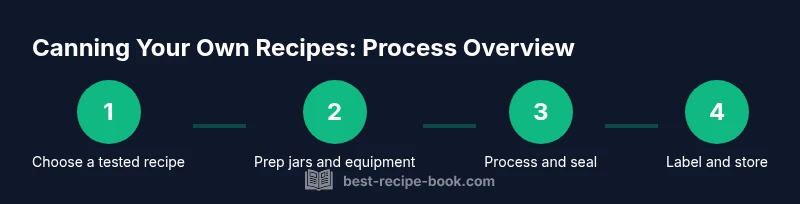
- 1
Choose a tested base recipe
Select a recipe that has been tested for canning and follows established acidity guidelines. This minimizes risk when canning your own recipes and ensures reliable safety and flavor.
Tip: If adapting, compare your ingredients to the tested version and keep the acidity within safe ranges. - 2
Gather equipment and ingredients
Assemble jars, lids, the appropriate canner, and all tools. Ensure jars are clean and lids are not damaged. Preparing your workspace will help you stay organized during the canning process.
Tip: Rinse jars in hot water and keep them hot until filling to prevent breakage. - 3
Prepare jars and lids
Wash jars with hot, soapy water, rinse well, and keep them hot. Simmer lids in hot water to activate sealing compound before use. Label each jar later to track batch details.
Tip: Don’t reuse damaged lids; replace with new lids to ensure proper sealing. - 4
Measure acidity and ingredients
Check the acidity of your recipe and ensure it meets safe canning standards. Adjust salt, sugar, and spices only within tested ranges and avoid introducing low-acid components that could jeopardize safety.
Tip: When in doubt, default to the tested amount from a trusted canning recipe. - 5
Fill jars with headspace
Fill jars to the appropriate headspace as specified by the tested recipe. Use a bubble remover to release air pockets and wipe rims clean before sealing.
Tip: Consistent headspace aids uniform processing and sealing reliability. - 6
Seal jars and process
Apply lids and bands according to the canner’s instructions. Process the jars in a water bath or pressure canner for the time specified by the recipe, adjusting for altitude if needed.
Tip: Avoid overfilling the canner; ensure there is room for proper water circulation. - 7
Cool and check seals
Let jars cool undisturbed for 12-24 hours. Check seals by pressing the center of each lid; if it doesn’t flex, the seal is good. Label and store.
Tip: If a jar doesn’t seal, refrigerate and use promptly or reprocess if guidelines allow. - 8
Label and store properly
Label jars with contents and date. Store in a cool, dark place to maximize quality and shelf life. Avoid storing in direct sun or damp areas.
Tip: Rotate stock and use older jars first to maintain freshness. - 9
Document outcomes
Record any changes to the recipe and processing times. Note jars that did not seal or had texture changes to refine future batches.
Tip: Keeping a notebook helps you reproduce successful results reliably. - 10
Review safety guidelines
Regularly consult USDA/extension sources for updates. Canning guidelines can change with new research, so ongoing education is essential.
Tip: Set a reminder to review guidelines at least once a year.
People Also Ask
Is it safe to can my own recipes at home?
Yes, you can can your own recipes at home when you follow tested canning guidelines and use the appropriate canner for the acidity level. Safety comes from using proven methods and avoiding unsafe substitutions.
Yes, you can can your own recipes at home if you stick to tested methods and the right canning equipment for the acidity level.
What foods can be safely canned at home?
High-acid foods like fruits, jams, jellies, and pickles are safe for water bath canning. Low-acid foods such as many vegetables and meats require pressure canning. Always consult tested recipes to confirm safety.
High-acid foods can usually be canned with a water bath, while low-acid items require pressure canning and tested recipes.
Do I need a pressure canner for all canning?
No, not for high-acid foods. For low-acid foods like most vegetables or meats, a pressure canner is required. Use the method specified in the tested recipe you follow.
Only for low-acid foods; high-acid foods can be canned with a water bath.
Can I adapt my grandmother’s recipe for canning?
You can adapt recipes, but only within the limits of tested canning guidelines. Substituting ingredients can alter acidity and safety, so verify any changes against official canning resources.
You can adapt, but check acidity and processing times against tested guidelines before canning.
How long do canned goods last?
Canned foods can last many months to a year or more if sealed properly and stored in a cool, dark place. Quality declines with time, so use oldest batches first and check seals before use.
Most canned goods stay safe for many months when stored properly, but use them before their peak quality date.
What if a jar doesn’t seal properly?
If a jar doesn’t seal, refrigerate and use the contents promptly if safe. Some recipes allow reprocessing, but only if guidelines permit. Always discard jars that are dented, bulging, or leaking.
If it won’t seal, refrigerate and use soon, or reprocess only if the guidelines allow.
Watch Video
Key Takeaways
- Learn the safety rules before canning your own recipes.
- Different foods require water bath or pressure canning based on acidity.
- Use tested recipes and official guidelines to ensure safe preserves.
- Organize equipment and document each batch for consistency.
- Label, store, and rotate your jar stock for best quality.