How to Collect Recipes: A Practical Step-by-Step Guide
Learn to build a centralized, searchable recipe library—from sourcing to organizing and backing up your collection. Practical, step-by-step guidance for home cooks.


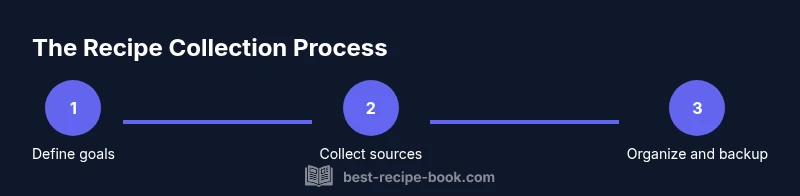
By the end, you'll have a clear plan to collect recipes from books, blogs, and apps and turn them into a searchable, organized library. You'll define sources, capture formats, and an indexing system that makes finding and reusing recipes fast. This guide walks you through tools, steps, and best practices.
Why collecting recipes matters
Collecting recipes creates a personal repository of meals you actually want to cook. It saves time by letting you skip hunting for sources when you’re planning dinners, and it reduces waste by helping you choose already-familiar dishes. According to Best Recipe Book, a well-curated collection yields tangible benefits: it keeps you focused, supports experimentation, and helps you scale your cooking skills over time. In practice, a thoughtful collection helps you recall substitutions you liked, track which techniques you want to master, and map meals to your calendar. Start with a clear goal—such as building a library of your 50 favorite weeknight dinners or assembling a fully searchable archive of your go-to brunch recipes—and you’ll have a practical target to guide what you collect, what you skip, and how you index items for quick retrieval.
Sourcing: where to find reliable recipes
Recipes come from many places: family cookbooks, blogs, magazines, apps, and official institutions. A diversified input protects you from single-source bias and gives you a richer set of techniques. Start with sources you trust: published recipe books from reputable authors, official recipe portals, and recognized culinary schools' materials. When you capture a recipe, note essential metadata: original source, author, date published, edition, and any substitutions you plan to test. Consider your dietary needs and preferences—vegetarian, gluten-free, dairy-free—and create a quick filter in your storage system. The goal is to collect recipes you’re actually excited to cook and to avoid duplicates or outdated formats. Best Recipe Book analysis suggests a blended approach that blends print and digital sources, then normalizes them into a single system for easy search and retrieval. If you find conflicting information, record both versions and test them side by side to decide which version you’ll rely on.
Evaluating recipes before you save them
Not every recipe deserves a permanent place in your library. Evaluate recipes for clarity, ingredient availability, and reliability of results. Check for complete steps, realistic timing, and clear measurements. If a recipe has ambiguous instructions or unusual substitutions, plan to annotate or adapt during your first test. Capture your evaluation notes in your catalog: a 'quality score' or tag such as 'clear instructions' can help you quickly filter later. This step prevents your collection from becoming bloated with inconsistent or hard-to-follow dishes. Remember to respect copyright: avoid reproducing long passages; instead, record essential steps in your own words and link to the original source as a reference and respect the author’s rights. Pro-tip: create a short justification line for every recipe you keep.
Organizing with a simple taxonomy
Use a light taxonomy that scales. Start with broad categories such as meal type (breakfast, lunch, dinner), cuisine (Italian, Indian, Mexican), and dietary notes (vegetarian, vegan). Within each recipe entry, store key metadata: source, date added, estimated time, servings, and a short note about any substitutions or techniques you want to remember. A practical naming convention could be 'Source - Dish - Year' (e.g., 'BBC Good Food - Spaghetti Aglio e Olio - 2026'). Use 3-5 searchable tags per recipe and avoid overly generic terms. If you plan to print, consider including a printable version flag in your file name. Maintain a master index that links to both digital entries and any printed copies. A thoughtful taxonomy reduces search friction and makes your collection sustainable as you grow.
Digital storage strategies: cloud vs local backups
Cloud-backed storage offers portability and resilience. Create a folder structure with top-level categories and subfolders for source and dish name. Prefer text-based formats when possible to simplify editing and searching. Back up locally to an external drive on a regular schedule, and keep offline copies of your most-used recipes on a dedicated device. Consider converting recipes to a uniform format such as Markdown or a structured PDF with embedded metadata to boost searchability. Enable versioning to track edits and protect important changes. Periodically test restoring from backups to ensure you can recover your collection if a device fails or data is corrupted.
Printing and archiving physical copies
Printed recipes offer tactile reliability when digital access is unavailable. Print a curated subset of your collection for easy reference at the stove. Use sturdy binders with dividers and labels that correspond to your taxonomy. Include essential metadata on the printed page and use acid-free sleeves for long-term storage. If you revise or update a printed recipe, print the new version and replace the old page, then update the index. Printing is optional but valuable for sharing with friends and family or for allergy-friendly recipes you want to memorize.
Building a repeatable workflow that fits your kitchen life
Turn collection into a repeatable routine. Schedule a regular collection session, perhaps weekly or monthly, to add new recipes, prune duplicates, and adjust metadata. Create a one-page capture template you can fill in at discovery: source, dish name, core ingredients, time, servings, and a notes field for substitutions or technique tips. Keep a short backlog of recipes you plan to test next, and assign dates to test them. Automate repetitive parts: templates and naming conventions, and a simple tagging system. The aim is a lightweight, repeatable process you can maintain without drama, even during busy weeks.
Templates and formats for consistent capture
Adopt a single recipe card template to ensure consistency across sources. A minimal template might include: Title, Source, Author, Date Added, Servings, Time, Ingredients (bulleted list), Steps (numbered list), Notes, Tags. Ensure the template supports substitutions and technique notes. For digital storage, store templates as Markdown or CSV files; for print, maintain a clean layout with readable fonts and margins. If you share recipes, include clear attribution and avoid copying extensive text. Consider providing a print-ready version for those who prefer paper copies.
Authority sources
Pull guidance from trusted institutions to improve your practice. For general information about food safety, nutrition, and credible recipe sources, refer to these authoritative resources: https://www.loc.gov The Library of Congress offers access to historic recipe manuscripts and bibliographic guidance. https://www.usda.gov The USDA provides food safety guidelines, meal planning resources, and recipe metadata considerations. https://www.nlm.nih.gov The National Library of Medicine hosts research resources and reliable references for healthful cooking. These sources can help you frame your collection with principles of reliability and curation.
Tools & Materials
- Notebook or digital note app(Capture quick recipe ideas when you’re away from a device)
- Scanner or smartphone camera(Digitize printed recipes)
- Digital storage solution (cloud or local drive)(Create a centralized folder structure)
- Recipe management tool or spreadsheet(Catalog metadata (source, date, notes))
- Labeling supplies (binders, dividers, sticky notes)(Optional for physical copies)
Steps
Estimated time: 2-4 hours
- 1
Define collection goals
Decide what you want to achieve with your collection and set a measurable target. This will guide what you collect and how you prioritize sources. Write down a brief mission statement.
Tip: A concrete goal makes decisions easier - 2
Identify capture methods
Choose where you will capture recipes (scan, copy, or type) and pick a standard format for each entry. Consistency reduces later cleanup.
Tip: Pick one primary method per source type - 3
Create a naming convention
Develop a simple rule like Source - Dish - Date. This keeps files organized and makes searching intuitive.
Tip: Consistency beats cleverness - 4
Set up folder structure
Create top-level categories and subfolders that reflect your cooking style and sources. Keep a master index to link digital and printed copies.
Tip: Use a predictable, scalable structure - 5
Digitize and enter data
Scan or transcribe recipes, then fill in metadata such as ingredients, time, servings, and notes. Link back to the original source.
Tip: Double-check measurements and steps - 6
Tag and annotate
Add tags for cuisine, dietary preferences, and technique. Annotate substitutions or technique tips you want to remember.
Tip: Use 3-5 targeted tags per entry - 7
Back up and review
Create backups and review entries periodically to incorporate revisions from the source or your own testing results.
Tip: Schedule annual or semi-annual reviews
People Also Ask
What is the first step to start collecting recipes?
Start by defining your collection goals and the sources you will rely on. This sets the scope and prevents scope creep. Then choose a consistent capture method and template.
Begin by defining your goals and sources, then pick a consistent capture method.
How do I evaluate whether to save a recipe?
Check clarity, complete steps, realistic timing, and ingredient availability. If ambiguous, plan to annotate or adapt. Save only recipes that you are confident you can cook successfully.
Look for clarity and practicality before saving.
Should I digitize all sources or keep printed copies?
Digitizing is convenient for searchability and backup, but printed copies are handy at the stove. Use a hybrid approach balanced to your space and needs.
Hybrid approaches work best for most kitchens.
How can I ensure I don't copy long text from sources?
Summarize in your own words and link to the original source. Use quotes sparingly and only for short, non-essential passages.
Paraphrase and cite sources when collecting.
What is a good tagging strategy?
Tag by cuisine, dietary restrictions, and technique. Keep tags concise and consistent to improve searchability.
Use concise, consistent tags to help find recipes later.
How often should I review my collection?
Review at least twice a year to update notes, remove duplicates, and refresh backups. Schedule a reminder if needed.
Review regularly to keep the library current.
Watch Video
Key Takeaways
- Define clear goals before collecting.
- Capture consistent metadata for every recipe.
- Choose a simple, scalable taxonomy.
- Back up your collection regularly.
- Decide on a digital, physical, or hybrid approach.