How to Get Rid of Recipes: A Practical Decluttering Guide
Learn a practical, step-by-step method to declutter your recipe collection—paper and digital—so you cook from a lean, useful set. Audit, decide, archive or discard, and implement routines to prevent future clutter.


Goal: you’ll learn a practical, step-by-step approach to get rid of recipe clutter—paper and digital—so you cook from a lean, useful set. You’ll audit what you have, decide what to keep, archive or discard the rest, and implement habits to prevent future buildup. This guide covers quick wins, long-term maintenance, and how to stay motivated.
Why Declutter Your Recipe Collection Is Worth It
If you’ve ever skimmed a cookbook only to realize you never cook from most of the pages, you know how recipe clutter can slow you down. Decluttering isn’t about erasing memories or giving up cherished dishes; it’s about creating a practical set you actually reach for. For home cooks, the ability to find a reliable recipe in seconds saves time, reduces decision fatigue, and lowers the chance of wasted ingredients. When you ask yourself how to get rid of recipes, you should start with intention: identify the meals you actually prepare, the ingredients you consistently stock, and the formats you prefer (digital or paper). The result is a leaner kitchen library that reflects your current cooking reality rather than nostalgia.
According to Best Recipe Book, a well-managed recipe collection supports faster meal planning and less kitchen clutter. By trimming the surplus and focusing on useful staples, you create space for creativity rather than repetition. A streamlined set also helps you build confidence: you’ll know exactly where to look for weeknight staples and backup meals when plans change. When you’re aiming for measurable progress, this clarity translates into fewer impulse downloads, fewer duplicate recipes, and more time for actually cooking.
The goal isn’t perfection; it’s practicality. Your kitchen should empower you to cook what you want, when you want it, with minimal friction. By embracing a disciplined approach to how to get rid of recipes, you’ll reduce decision fatigue, lower food waste, and free mental energy for new dishes you actually enjoy.
],
toolsMaterialsAvoidancePolicy択ize":null,
Tools & Materials
- Digital device with recipe management app(Phone, tablet, or computer to audit and store kept recipes)
- Scanner or smartphone camera (for paper recipes)(Use to digitize valuable paper recipes you plan to keep)
- Binder, sleeves, or file boxes(Physical organization for kept paper recipes)
- Shredder or garbage bags(Safely dispose of unwanted copies and duplicates)
- Label maker or printable labels(Helpful for tagging kept recipes and folders)
- External storage (USB drive or cloud backup)(Back up your digital catalog to prevent loss)
- Notepad and pen(Capture notes during the audit and planning phase)
Steps
Estimated time: 2-4 hours
- 1
Audit all recipes (paper and digital)
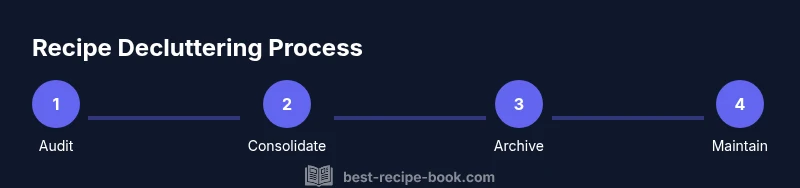
Begin with a full inventory. Gather every physical cookbook, printed sheet, and saved digital file. Create a master list of what exists, noting format, where it’s stored, and how often you cook from it. Detect patterns: which recipes reappear in multiple places, which have outdated ingredients, and which are rarely used.
Tip: Start with the easiest location first (a kitchen drawer or a saved folder) to gain momentum. - 2
Define clear keep/drop criteria
Establish criteria to decide what stays. Common criteria include frequency of use, modern relevance, family favorites, ingredient accessibility, and whether the recipe is adaptable for your current meals. Apply the criteria consistently across all formats to avoid wavering decisions.
Tip: If you’re unsure about a recipe, set it aside for a 2-week review instead of deciding on the spot. - 3
Create a central catalog of kept recipes
Compile kept recipes into a single, searchable catalog. For digital recipes, tag by cuisine, meal type, and main ingredients. For paper recipes, create a binder with clear dividers. A central catalog makes planning easier and reduces duplicate saves.
Tip: Use consistent naming conventions and simple tags to speed searches. - 4
Archive or discard the rest securely
Move recipes that don’t meet your criteria into an archive or discard them responsibly. For physical copies, consider recycling or shredding sensitive pages. For digital files, delete duplicates and offload rarely used items to an alternate storage location.
Tip: Keep a small backup of any sentimental pieces if you’re unsure—then re-evaluate in a set timeframe. - 5
Clean up duplicates and consolidate files
Identify duplicates across platforms and consolidate into a single master version. Delete redundant copies and organize the remaining files with consistent formats (PDFs of master recipes, editable note files, etc.). This reduces clutter and ensures you’re always using the best version.
Tip: Set up a one-click rule: if you haven’t referenced a duplicate in 6 months, delete or archive it. - 6
Set up a lean keeper set and meal templates
Choose a core set of reliable recipes that cover weekdays, weekends, and special occasions. Create meal templates (e.g., “30-minute weeknight meals,” “vegetarian dinners”) to streamline planning and minimize new recipe collection growth.
Tip: Limit newly saved recipes to a monthly allowance (e.g., 2 new adds) to maintain balance. - 7
Implement a simple, ongoing maintenance routine
Schedule a quarterly or biannual review to prune additions and refresh the catalog. Use a quick audit checklist and stick to the practice so clutter never returns to previous levels.
Tip: Set calendar reminders and keep a minimalist appetite for new recipes. - 8
Educate household members and establish norms
Share the process with family members and set expectations about adding new recipes. Encourage teamwork: designate one person to review new submissions and decide if they’re a keeper.
Tip: Create a visible reminder near the kitchen or digital hub to reinforce the maintenance habit.
People Also Ask
What counts as recipe clutter?
Clutter includes duplicates, outdated or redundant recipes, and files you never reference. It also includes recipes saved in multiple formats that you don’t actively use. The aim is to keep what you actually cook and have quick access to it.
Clutter includes duplicates and recipes you don’t use. Keep what you actually cook and can find quickly.
How long does a typical decluttering take?
A typical session can range from a few hours to a weekend, depending on the size of your collection and whether you’re digitizing paper copies. Plan shorter sessions to stay motivated and avoid burnout.
Most people complete a full decluttering in a weekend, with shorter sessions if you’re starting small.
Should I digitize all paper recipes?
Digitizing is useful for long-term preservation and quick access, but it depends on your preference and storage capacity. Digitize high-value or frequently used recipes and store the rest in a simple, organized physical system if you prefer papers.
Digitize key recipes you want to keep; store the rest in a tidy physical system if you prefer paper.
What do I do with family recipes that are handwritten?
Preserve family recipes by digitizing or carefully transcribing them, then add context (notes, substitutions) to make them practical. Store originals safely and create a labeled, organized archive for future generations.
Transcribe or scan cherished family recipes and keep originals secure.
How can I prevent future recipe clutter?
Set a monthly limit for new recipe saves, maintain a central catalog, and schedule regular audits. Involve other household members to distribute the responsibility.
Limit new saves and schedule regular audits to keep clutter in check.
Is it okay to keep only digital copies?
Yes, if you have reliable digital storage and an easy retrieval system. Back up regularly and ensure you can access recipes offline. If you miss physical copies for reference, keep a small physical keepsake binder.
Digital copies are fine with backups, and you can keep a small binder for sentimental items.
Watch Video
Key Takeaways
- Audit both digital and paper recipes first
- Keep a lean, useful core set
- Archive, don’t rush to delete sentimental items
- Create a simple maintenance routine to prevent clutter
- Use a central catalog for quick access