How to Make a Recipe Larger: A Practical Scaling Guide
Learn to scale recipes for more servings without losing flavor or texture. This step-by-step guide covers ingredient scaling, equipment, temperatures, and testing to ensure reliable results.


Scaling a recipe to a larger batch is more than multiplying ingredients. If you’re wondering how to make a recipe larger, this guide walks you through weight-based measurement, proportional ingredient adjustments, equipment checks, and timing tweaks to preserve texture and flavor. You’ll learn a reliable workflow to scale confidently and reproduce results.
The Core Concept: Scaling recipes for reliable results
Scaling a recipe is more than simply multiplying numbers. If you’re wondering how to make a recipe larger, you’ll find a practical workflow here. According to Best Recipe Book, the most reliable way to start is by switching to weight-based measurements for dry ingredients. This reduces rounding errors that creep in when you use cups and spoons, especially in larger batches. In practice, pick a baseline batch size—the number of servings the original recipe intends—and decide the scaling factor based on the ratio between the new and original servings. For example, doubling a 4-serving recipe requires a factor of 2. Keep in mind that some ingredients, like spices, leavening agents, and certain liquids, don’t scale linearly. In many recipes, you’ll end up with a slightly more concentrated flavor if you multiply everything exactly. The trick is to maintain the same proportions while accounting for the dish’s moisture and heat distribution. A small amount of testing is usually enough to identify adjustments before committing to the full batch. The goal is predictability: you should be able to reproduce the enlarged batch with consistent results once you have a tested baseline. In this section, we’ll build a practical workflow you can apply to almost any recipe and adapt for different cuisines.
Determining your new batch size: from 2 to 8 servings and beyond
The first decision when scaling is the target number of servings. Start with the original recipe’s stated yield and decide how many portions you want to serve. Use the scaling factor equal to new servings divided by original servings. If you’re going from 2 to 6 servings, your factor is 3. When you scale, decimals are fine, but you’ll often round to sensible whole numbers for ingredients and utensils. Besides math, consider practical constraints: oven space, pan capacity, and the ability to distribute heat evenly. Some dishes reallocate moisture as you increase volume, leading to variations in texture. For example, a sauce that’s very thick in a small pan may thin out in a large pot. Best Recipe Book’s guidelines emphasize building in a small testing step for the first batch, especially for new or unfamiliar recipes. According to Best Recipe Book analysis, weight-based scaling tends to yield more consistent results when moving from small to large batches. If you’re cooking for a crowd, plan to prepare ingredients in stages or batch-cook, then combine toward the end to maintain texture and freshness.
Ingredient scaling: balancing weight, volume, and moisture
Not all ingredients scale identically. Dry goods like flour and sugar scale well by weight, while liquids may need slightly different adjustments due to evaporation and absorption. Salt and acidic ingredients should be scaled carefully; a 5–10% over- or under-seasoning can dramatically impact flavor. Leaveners (baking powder, yeast, or baking soda) often require non-linear adjustments; too much can cause collapse or off textures. When you scale, prefer weights for accuracy, especially for flour, fats, and dairy. For spices, start with a smaller factor and taste as you go once the dish is finished; you may need to add more, but you can’t remove what you’ve already mixed in. Moisture balance is crucial: large batches can dry out more quickly on the surface while the interior remains underdone. If you’re adapting a recipe with emulsions or foams (like whipped cream or hollandaise), you’ll likely need to adjust stabilizers or whisking technique. Keep a running note of every adjustment you make so you can refine the next batch.
Equipment and workspace: pans, utensils, and oven capacity
Enlarging a recipe often demands different cookware. Start by ensuring your pans and baking sheets have enough volume to hold the scaled ingredients without crowding. Crowding reduces heat transfer and can lead to uneven cooking. If the original recipe calls for a 9-inch pan and you scale by 2x, you may need a 9x13-inch pan or two 9-inch pans. Plan for extra mixing bowls, measuring tools, and a spacious prep area to prevent cross-contamination and mistakes. An accurate oven temperature is essential; use an oven thermometer to confirm that the device runs close to the dial setting, especially when cooking multiple trays at once. If your oven can’t accommodate the larger batch, consider staged cooking or using multiple ovens if available. Finally, think about cooling: allow air circulation around foods as they rest; stacked cooling racks or separate pan angles can speed this up. When you have the right equipment, your workflow becomes smoother and more predictable.
Timing and temperature: cooking times, heat levels, and checks
Heat distribution shifts as batch size grows. You may need to adjust total cooking time, altitude considerations, or simmer/boil strength. A good rule: start with the same total heat input but spread across a larger surface or deeper container. Check early for doneness; in many cases, the center cooks slower than the edges. For oven-based recipes, rotate trays halfway through and consider a lower rack position if the batch is thick. For stovetop dishes, use a wide, shallow pan to promote evaporation and even heating. Use a thermometer for meats and a toothpick or skewer for cakes and breads. Monitor consistency of sauces, soups, and gravies—larger volumes can thicken in the pot and then thin out again as they simmer longer. Document any changes you make to time or temperature so you can apply them to future batches.
Testing, seasoning, and final checks
Always taste and adjust at the end of the scaling process. As you enlarge, flavors can intensify or mellow, so a final adjustment is common. Remove a small portion to test: a sample can save you from over-salting or over-sweetening the entire batch. If you scaled a sauce, re-check its viscosity and adjust with a splash of stock or water as needed. For baked goods, look for the same crumb, moistness, and crust color you expect in the original batch; if not, adjust the leavening or moisture. A brief rest period after cooking can help flavors meld, especially in stews and braises. Finally, document the scaled amounts and the final tasting notes so you can refine future iterations.
Common pitfalls and best practices
Expect subtle shifts in texture, flavor, and moisture when scaling. Common mistakes include over-salting, under-seasoning, and crowding pans. Keep a controlled approach: scale ingredient by the exact factor, test early, and adjust in small increments. Use weight-based measurements, especially for dry ingredients, to reduce variability. Maintain a clear record of what you changed—these notes become your blueprint for future scale-ups. Finally, consider the audience and serving context; larger batches may require changes in presentation, garnishes, and storage. Best Recipe Book emphasizes documenting your scaling methodology so you can reproduce success consistently.
Quick workflow example: scaling a simple dish
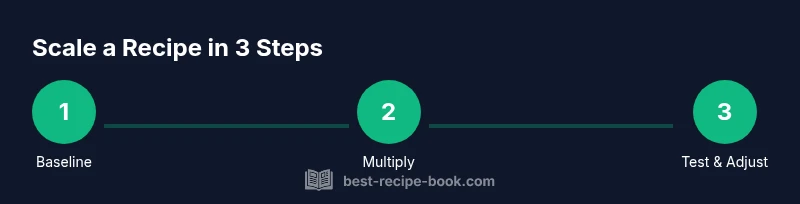
Let’s scale a basic tomato pasta from 2 servings to 6 servings. Baseline ingredients: 200 g spaghetti, 400 g crushed tomatoes, 2 cloves garlic, 2 tbsp olive oil, salt to taste. Scaling factor is 3. Multiply by 3: 600 g spaghetti, 1200 g crushed tomatoes, 6 garlic cloves, 6 tbsp olive oil. Check the pan size to accommodate a full pound of pasta and adjust water volume accordingly. Cook pasta until al dente; simmer sauce in a wide pan, tasting for salt and acidity as it reduces. Finish with fresh herbs and a final taste. This example shows the core steps: baseline review, precise scaling, equipment check, cooking adjustments, and final seasoning. Through this method, you can scale nearly any dish with confidence.
Tools & Materials
- Digital kitchen scale(Accurate scaling for large batches (grams or ounces))
- Measuring cups(For volume when weight is not available)
- Measuring spoons(Accurate small-measure dosing)
- Large mixing bowls (set)(Mixing large batches smoothly)
- Large whisk or electric mixer(Even blending without over-mixing)
- Oven thermometer(Ensures accurate oven temperature)
- Extra baking sheets/pans(Avoid overcrowding; plan multiple batches)
- Calculator or scaling app(Quick math for conversions)
Steps
Estimated time: 60-180 minutes
- 1
Gather baseline data
Start with the original recipe and confirm serving size, equipment needs, and layout. Document temperatures, times, and notes on texture. This gives you a reliable anchor for scaling.
Tip: Write down the baseline numbers before changing anything. - 2
Calculate new quantities
Multiply each ingredient by the scaling factor (new servings ÷ original servings). Prefer weights for accuracy; adjust spices gradually after testing.
Tip: Use weight for dry ingredients whenever possible. - 3
Assess equipment capacity
Check that you have pans/containers with enough volume and oven space to avoid crowding. Plan for staggered batches if needed.
Tip: Crowding food can alter heat transfer and cook times. - 4
Prepare ingredients and workspace
Measure scaled ingredients, label containers, and organize a clean prep line to reduce errors during execution.
Tip: Label scaled amounts clearly; misreads are a common error. - 5
Run a test batch (optional)
If feasible, test a smaller portion of the scaled batch to confirm flavor balance and texture before committing all portions.
Tip: Testing saves time and waste. - 6
Cook, monitor, and adjust
Cook with care, checking doneness 5-10 minutes earlier or later depending on batch size. Make final seasoning adjustments after tasting.
Tip: Keep notes on any adjustments for future scaling.
People Also Ask
What is the best way to scale ingredients—by weight or volume?
Weigh ingredients when possible for accuracy; volume can lead to mis-measurements, especially for flours and sugars.
Weighing ingredients is more accurate, especially for dry ingredients; volume can be tricky.
How do I adjust baking times when increasing servings?
Keep overall bake time similar but monitor doneness with a toothpick or thermometer; larger batches may require longer or shorter times depending on pan size and heat distribution.
Watch for doneness with a toothpick or thermometer since bigger batches cook differently.
Should I scale spices linearly?
Scale spices gradually and taste as you go. Start with 75-100% of the original depending on batch size and flavor strength.
Taste as you scale; start with a smaller increase and adjust.
Can I scale recipes that rely on emulsions or leavening agents differently?
Leaveners and emulsions can behave unpredictably when scaled; adjust gradually and test the batter or dough.
Leavening can be finicky when scaling; test and adjust.
What if my oven can’t accommodate a larger batch?
Split the batch into smaller portions and stagger cooking times; use multiple racks if safe and approved.
If your oven is small, cook in batches and stagger times.
Is it okay to reuse original pan sizes for scaled recipes?
You may need larger or additional pans to prevent crowding; adjust the layout to ensure even cooking.
If pans overflow, use bigger or extra pans.
Watch Video
Key Takeaways
- Multiply ingredients by the exact factor
- Check equipment capacity before starting
- Test and adjust seasoning after scaling
- Document scaling changes for future batches