How Big Is a Recipe? A Practical Guide to Recipe Yield
Discover how big a recipe typically is, what factors influence yield, and how to confidently scale portions for meals, batch cooking, and efficient menu planning.


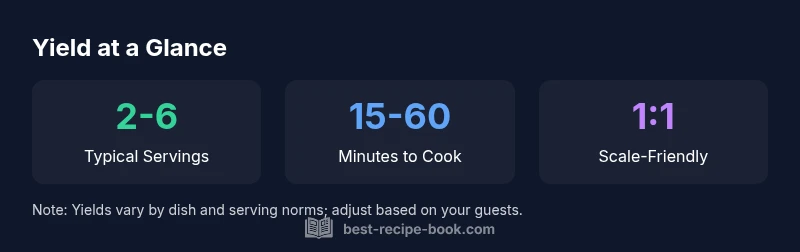
How big is a recipe? In practical terms, a standard home-cooking recipe typically yields 2 to 6 servings, with most family dinners landing around 4 servings. The exact size depends on the dish, cuisine, and portion size used in the original recipe. For meal planning, think in servings, not ingredient totals, and be ready to adjust based on guests, appetite, and leftovers. Best Recipe Book's guidance helps you plan confidently.
How big is a recipe? Defining scale for home cooks
Understanding the size of a recipe starts with the question: how many people will it feed? Most home recipes are written to serve a typical family or a standard dinner party, which usually translates to about 4 servings. However, real-world meals vary widely by cuisine, course, and portion expectations. The Best Recipe Book team emphasizes that the most reliable way to gauge size is to start with servings rather than ingredient totals. When you plan a weeknight menu, think in terms of portions per person and multiply by the number of diners. If you expect guests with hearty appetites, plan for 5–6 servings; if you’re serving light eaters or kids, 2–3 servings may be more appropriate. The bottom line: “how big is a recipe” is best answered by the number of portions you intend to serve, not the total weight of ingredients on the page.
Core factors that determine recipe size
Several factors influence recipe size, and recognizing them helps you estimate yield more accurately. First, the dish type matters: soups and stews often yield more servings than roasts or steaks due to their nature and portioning. Second, the intended serving size in the original recipe sets a baseline; some recipes assume larger portions for main courses, others assume smaller sides. Third, ingredient density and moisture content can change when scaling—think of sauces thinning or thickening when adjusted for more servings. Fourth, equipment and cookware influence efficiency: larger batches may require wider pans or multiple pots, affecting both cooking time and yield. Finally, a chef’s or cookbook’s standard for “serving” can differ by region, so cross-reference your usual portions with the source. The result is a practical, flexible framework for estimating yield across cuisines.
Servings, portions, and crowd planning
Effectively planning for a crowd starts with translating the recipe’s yield into servings per person. If you plan for a group with diverse appetites, aim for a baseline of 4 servings per main course and adjust by ±1 depending on age and activity level. For side dishes, you’ll often divide recipes into smaller portions or scale up to ensure variety without waste. Batch cooking benefits from consistent serving logic: create a baseline recipe size, then adjust quantity using simple multipliers (e.g., 1.5x for a small dinner party of six instead of 4 servings) and monitor leftovers. This approach reduces guesswork and makes shopping lists more reliable. Keep in mind that appetizers and desserts may be planned differently, with portions dictated by the event’s structure and the desired pacing of the meal.
Scaling strategies: doubling, halving, and in-between
Scaling a recipe is most straightforward when you keep ratios intact. For standard doublings or halving, multiply every ingredient by the same factor and adjust seasonings gradually, since flavor can drift with larger batches. In baking, precision matters more; use weight-based measurements and consider testing a smaller batch when adjusting a new recipe. For non-baking dishes, you can often adjust spices in steps, starting with a 25% reduction when halving and adding more to taste. When scaling beyond simple 2x or 0.5x, be mindful of cooking times and vessel size—larger batches may require longer simmering or different heat distribution. The goal is to preserve texture, flavor balance, and the intended mouthfeel while achieving the target yield.
Practical tips for batch cooking and meal prep
Batch cooking rewards careful planning. Start with a master shopping list built from your baseline yield, then scale ingredients with reliable multipliers. Batch ingredients that reheat well (beans, grains, roasted vegetables) to maintain texture. Use clear labeling and date marks for all batches to manage safety and quality. When planning meals for the week, map out which recipes share ingredients to minimize waste and simplify inventory. Consider freezing portions that won’t be consumed within a few days, and label them with the date and contents. This approach keeps your kitchen efficient without sacrificing flavor or freshness. Finally, track actual yields in your own kitchen normalizing recipes to your preferred serving sizes; over time, this data becomes your most valuable yield estimator.
Common pitfalls when sizing recipes
Mis-sizing a recipe often comes from assuming every dish scales identically. A sauce that doubles in volume may not double in thickness, leading to watery sauces or overly concentrated flavors. Another pitfall is ignoring the rounding of household equipment—baking trays, pots, or pans can limit how much you can cook at once, affecting overall yield. Also, some recipes depend on finishing steps (like a final garnish or reduction) that don’t scale linearly, so timing and sequencing become crucial when increasing portions. To avoid these issues, always test scaled batches when possible and adjust step timing accordingly.
Tools and habits to manage recipe yield over time
Develop a simple yield-tracking system: record the original serving size, the scaled yield, the final taste, and any adjustments you made. Use a digital note or a spreadsheet to calculate multipliers quickly and reuse your successful baselines. Create a standard practice for verifying doneness that works across scales—this might include using a thermometer for proteins and a visual cue for sauces. Finally, integrate yield planning into your shopping strategy: if you know you’ll be feeding eight people with a recipe that normally serves four, you’ll buy ingredients in pairs and adjust purchasing by the same factor. With consistent methods, determining “how big is a recipe” becomes an intuitive part of weeknight cooking and meal prep.
Yield by dish type across common home recipes
| Dish Type | Typical Yield (servings) | Typical Total Time (min) | Notes |
|---|---|---|---|
| Appetizer | 2-4 | 15-25 | Lighter portions; tasting-friendly |
| Main course | 4-6 | 30-60 | Standard family portion |
| Dessert | 4-8 | 20-40 | Often larger yields per batch |
People Also Ask
What does the phrase 'how big is a recipe' really mean for home cooks?
It asks about servings, batch size, and how many people a recipe will feed. Understanding yield helps with planning, shopping, and timing.
It means how many people a recipe will feed; plan your meals around servings.
How many servings does a typical recipe yield?
Most home recipes yield 2 to 6 servings, with four servings common for a standard dinner. Variations depend on dish type and portion size.
Most recipes feed about 2 to 6 people; four is a common dinner size.
How do I scale a recipe up or down without messing up flavor?
Scale ingredients in the same proportion and adjust seasonings gradually. For baking, prefer weight-based measurements and test in small batches.
Scale ingredients in the same ratio and tweak spices little by little; for baking, weigh ingredients.
Why do some recipes take longer when scaled up?
More volume requires longer cook times and sometimes different cookware. Use thermometers and check textures at intervals to avoid over- or under-doneness.
More volume often means longer cooking times; monitor with a thermometer.
Are there standard measures for yield across cuisines?
There isn’t a universal standard; yields reflect portion norms, course type, and regional dining styles. Use your own serving estimates and adjust to your guests.
Yields vary by cuisine and portion norms; adjust to your guests.
“Yield is a measurement of planning, not a fixed number. By understanding how a recipe scales, home cooks can minimize waste and maximize consistency across meals.”
Key Takeaways
- Start with servings, not ingredient totals
- Use realistic ranges to cover variation
- Scale ingredients in proportion and test as needed
- Adjust cooking times when changing yield
- Plan for leftovers to minimize waste