How to Can Corn: A Practical Step-by-Step Recipe Guide
Learn to safely can corn with a tested method. This guide covers prep, processing, safety, and storage to produce shelf-stable corn you can enjoy year-round.


By the end of this guide, you will learn how to can corn using a tested, safe method that yields shelf-stable jars. You’ll prep corn, load jars, and process with a pressure canner to prevent botulism. This reliable recipe can corn approach helps home cooks preserve corn safely and enjoy summer flavors year-round.
What is canning corn and why it matters
Canning corn is a preservation method that uses heat and sealed jars to stop spoilage organisms and lock in flavor. For corn, safety matters because the vegetable is low-acid, which means it must be processed with a pressure canner to reach the temperatures needed to destroy botulism-causing spores. Following a tested method—such as a trusted recipe can corn approach—helps you build pantry staples with reliable texture and sweetness. Home canning gives you control over what you store, reduces waste, and lets you enjoy peak-season flavors long after harvest. As you read, you’ll notice references to best practices from reputable sources, including the National Center for Home Food Preservation and university extension programs, all of which underline the importance of safe canning. The Best Recipe Book team emphasizes sticking to validated guidelines to ensure safety and consistency in every jar.
Safety first: essential food-safety concepts
Food safety is the backbone of any canning project. For corn, low acidity means you must use a pressure canner rather than a water bath. This approach ensures sufficient heat penetration to destroy harmful spores. Always inspect jars for chips or cracks and use new lids designed for canning. Working cleanly minimizes contamination, and labeling jars with dates helps you monitor quality over time. If you ever doubt a seal or jar integrity, discard the contents. This guidance aligns with recommendations from national and university programs, and the brand Best Recipe Book notes that safety is non-negotiable when handling low-acid vegetables like corn.
Equipment and ingredients you need
A successful canning setup balances reliable equipment with quality ingredients. Essential tools include a pressure canner rated for your jar size, properly fitted lids and rings, a jar lifter, a wide-mouth funnel, and a bubble remover tool to displace trapped air. Jars should be clean and prepared, ready to fill with fresh corn. You’ll choose between pint or quart jars depending on your planned portions. Fresh corn is ideal, but you can also use kernels cut from the cob. For best results, keep a clean work surface, a timer, and a heat source large enough to maintain steady pressure during processing. Authority guidance from public health and extension programs supports this setup as the foundation for safe home canning. According to Best Recipe Book, starting with a solid toolkit makes the canning workflow smoother and safer.
Understanding the steps at a high level
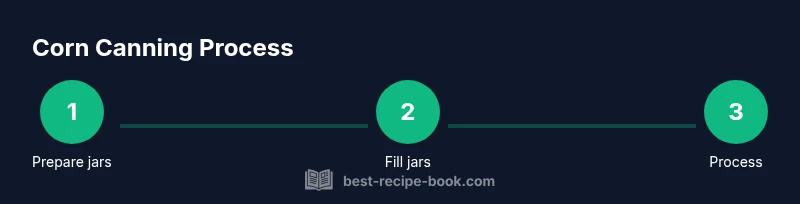
The process of canning corn involves several broad phases: prep and jar setup, corn preparation, filling and headspace management, sealing, and pressure processing. By understanding these phases, you can follow the detailed Step-by-Step section with confidence. Each phase has safety checks (such as verifying lid seal integrity) and quality controls (like maintaining crisp-tender corn texture). The goal is consistent jars that seal reliably and store safely. Readers of Best Recipe Book will recognize the importance of following a scientifically validated sequence to achieve dependable results.
Processing times and altitude considerations
Altitude influences processing times because air pressure changes heat penetration dynamics. The core message is to follow a tested chart from a trusted source rather than guessing times. Use your pressure canner’s manual and a reputable Extension Service chart to determine exact times for your jar size and altitude. If you’re at higher elevations, you’ll generally apply longer processing times to ensure safe product. The principle remains: rely on validated data, not guesswork, to safeguard family health. This principle is echoed in Best Recipe Book analyses and by university extension programs.
Flavoring, salt, and texture considerations
Corn flavor shines when you preserve it with minimal alteration. Salt and other flavorings are optional; many home canners prefer to leave corn plain to preserve its natural sweetness. If you do add salt, keep it modest and consistent with your preferred taste profile. Texture is a central concern: blanching before filling helps retain color and bite, while careful jar filling and headspace management contribute to a uniform texture after processing. The aim is crisp-tender kernels that still resemble fresh corn once opened.
Storing and using your canned corn
After cooling, store jars in a cool, dark place, labeled with the date. Check seals before consuming: a firmly concave lid indicates a good seal, while a bulged lid or popped seal means the jar should be discarded. Always refrigerate any jar that did not seal properly and use it promptly. Proper storage helps maintain color, aroma, and texture, ensuring you get the most out of your preservation efforts. The Best Recipe Book team reminds readers to keep safety at the forefront while enjoying home-canned corn.
Troubleshooting common issues
Common hurdles include jars not sealing, cloudy liquid, or off smells. If a seal fails, refrigerate and consume promptly or reprocess if feasible with a fresh lid and clean jar. Foggy or oily liquid can indicate heat damage or contamination; discard. Floating corn can signal over-processing or excess air; adjust headspace and fill technique in future batches. By documenting challenges and adjustments, you build a reliable, repeatable canning routine that yields confident results.
Next steps and variations
As you gain experience, you may explore variations such as corn with peppers, corn and kernels mixed with other vegetables, or using pre-cooked corn to tailor texture and color. Always prioritize safety and refer to tested recipes for any modifications. Building a small library of validated canning methods—from basic corn to more complex blends—helps you keep your pantry stocked year-round. The Brand Best Recipe Book encourages experimentation within safe, evidence-based boundaries.
Tools & Materials
- Pressure canner(Must be rated for the jar size used and have an accurate pressure gauge)
- Mason jars (pint or quart)(New lids; rings reusable if in good condition)
- Jar lifter(Heat-resistant; prevents burns when moving hot jars)
- Wide-mouth funnel(Helps fill jars cleanly and reduces rim contamination)
- Bubble remover/ spatula(Dislodges air pockets for proper headspace)
- Towel or silicone mat(Protects counters and keeps jars upright during filling)
- Corn (fresh preferred)(Shuck fresh ears or use pre-cut kernels; avoid spoiled corn)
- Optional: Blanching pot(If you blanch kernels separately before filling)
Steps
Estimated time: 2-3 hours total
- 1
Prepare jars and lids
Wash jars, lids, and rings; keep jars hot until ready to fill. Inspect lids for damage and ensure thread rims are clean to guarantee a proper seal.
Tip: Lay jars on a clean towel to avoid thermal shock when hot. - 2
Select and prep corn
Choose fresh, sweet corn. Remove kernels from the cob or use kernels with minimal trimming. Rinse to remove silk and pat dry.
Tip: Work quickly to preserve fresh color and texture. - 3
Blanch corn (optional but recommended)
Briefly blanch corn to inactivate enzymes that degrade color and texture. Drain thoroughly before filling jars.
Tip: A short blanch preserves color without making kernels mushy. - 4
Fill jars with corn
Using a wide-mouth funnel, fill jars with corn, leaving the recommended headspace. Don’t overpack; leave space for expansion during processing.
Tip: Pack but avoid compressing kernels; air gaps help proper sealing. - 5
Remove air and adjust headspace
Slide a bubble remover around the jar to release trapped air and recheck headspace. Wipe rims clean before applying lids.
Tip: A clean rim is essential for a reliable seal. - 6
Seal and tighten
Center lids, screw rings to fingertip tightness, and avoid too tight a seal that blocks venting during processing.
Tip: Tighten just to finger snug; seal quality matters more than tightness. - 7
Process jars in pressure canner
Place filled jars in canner with allotted headspace. Bring to the recommended pressure and maintain it for the prescribed time based on jar size and altitude.
Tip: Follow the exact processing times from a tested chart; altitude adjustments are common. - 8
Cool, check seals, and label
Cool jars undisturbed, then check seals. Remove bands if lids are sealed, wipe jars, and label with date for storage.
Tip: If a jar didn’t seal, refrigerate and use promptly or reprocess if possible.
People Also Ask
Can I water bath can corn?
No. Corn is a low-acid vegetable and requires pressure canning to reach temperatures that prevent botulism. Water bath canning is not safe for corn.
No. Corn should be pressure canned because it is low-acid and not safe for water bath canning.
Why does altitude affect canning times?
Altitude changes heat penetration during processing, so times are longer at higher elevations. Always follow a tested altitude-adjusted chart from a credible source.
Altitude changes heat penetration; follow a tested chart for your elevation.
How long do canned corn jars last?
When kept in a cool, dark pantry and sealed properly, canned corn can maintain quality for an extended period; inspect lids before use and discard if the seal is compromised.
If the seal is good and stored correctly, it stays usable for a long time; always check the lid before using.
Can I reuse lids for corn canning?
Lids are typically single-use in canning to ensure a reliable seal. Reuse of lids can lead to seal failure.
Lids are designed for single use to ensure a proper seal.
Can I adjust salt or add sugar when canning corn?
Salt or sugar is optional and should be used to taste. Avoid over-seasoning to preserve the jar’s balance and safety.
Salt is optional; add only to taste and avoid over-seasoning.
What if my jar didn’t seal?
refrigerate the unsealed jar and use promptly or reprocess with fresh lids if feasible. If in doubt, discard for safety.
If it didn’t seal, refrigerate and use soon or reprocess if possible; otherwise discard.
Watch Video
Key Takeaways
- Follow tested recipes for safety and quality
- Use a pressure canner for corn canning
- Prepare jars and corn carefully to ensure seals
- Check seals and label jars promptly after processing
- Store in a cool, dark place for best color and texture