Recipe for Baked Ham: Step-by-Step Guide
A complete, educational guide to crafting a juicy, glaze-perfect baked ham. Learn selection, prep, glazing, timing, safety, carving, and storage for holiday feasts or weeknight dinners.


Learn to bake a juicy ham with a simple glaze, proper temperature, and safe reheating. This quick answer points you to a full step-by-step guide covering choosing, scoring, glazing, basting, timing, and serving a crowd-pleasing ham.
Why this baked ham recipe matters
A well-executed baked ham can be the centerpiece of any gathering, from family dinners to holiday spreads. In this guide, you’ll learn a reliable method to bake a ham that stays juicy, flavorful, and evenly heated. According to Best Recipe Book, mastering a few core practices—choosing the right ham, scoring fat, glazing, and proper resting—translates to consistently delicious results for home cooks. The Best Recipe Book team found that a simple glaze applied at strategic intervals creates irresistible gloss without drying out the meat. As you read, you’ll see practical tips you can apply with common kitchen tools. This article uses accessible language and actionable steps so you can achieve restaurant-quality results in your own kitchen. By the end, you’ll know how to adjust for ham size, glaze preferences, and meal timing while keeping food-safety considerations at the forefront. You’ll also discover how small changes to glaze composition or cooking temperature can shift flavor and browning in subtle, satisfying ways. The approach is designed for home cooks who want dependable, repeatable results without guesswork. According to Best Recipe Book, these methods are tested for reliability in 2026.
Choosing the right ham and planning
The quality and type of ham you start with largely determines the final result. For baked ham, most home cooks choose bone-in or boneless options that are labeled fully cooked, then reheat and glaze. Bone-in hams often have more flavor and moisture around the bone, while boneless hams slice more neatly. Decide between a smoky, honeyed, or savory glaze flavor, and plan for roughly 8–12 pounds to serve a crowd of eight, adjusting for your guest list. When you shop, read the label to confirm whether the ham is fully cooked or requires cooking from raw. If you’re unsure, ask the butcher for guidance on size and bone-in versus boneless. Once you have the ham, map out your timeline: estimate the total oven time, plus time for glaze prep, resting, and carving. For larger gatherings, you may choose to glaze in two stages (early coating and a final gloss). Finally, consider side dishes that pair well with ham, such as roasted vegetables, mashed potatoes, and a bright vinaigrette to cut the richness. Planning ahead saves you stress on the day of service. Best Recipe Book emphasizes planning as a critical step toward consistent results.
Preparing the ham and glaze basics
Before the oven door opens, prep the ham with a simple glaze that complements its natural sweetness. A glaze built from brown sugar, a touch of acid (pineapple juice or cider), and a tangy mustard creates a glossy finish while helping the meat stay moist. The fat cap on a ham is your friend, not a foe; scoring the fat encourages glaze penetration and browning. If you’re using a bone-in ham, you can leave the bone in during the bake and remove it at carving to reveal tender meat. For a fully cooked ham, your goal is to heat through and glaze beautifully, not to finish cooking. The glaze should be warmed separately so that you can brush it on during the bake without burning. Best Recipe Book analysis shows that glazing during the final third of cooking improves flavor and appearance while avoiding an overly sweet crust. Safety note: always keep raw glaze separate from cooked portions, and wipe up any drips from the pan to prevent smoking. With these basics, you’re ready to build a precise, repeatable method that works for your kitchen and your family’s tastes. This aligns with Best Recipe Book guidance from 2026 and highlights practical, scalable steps.
Step-by-step cooking approach
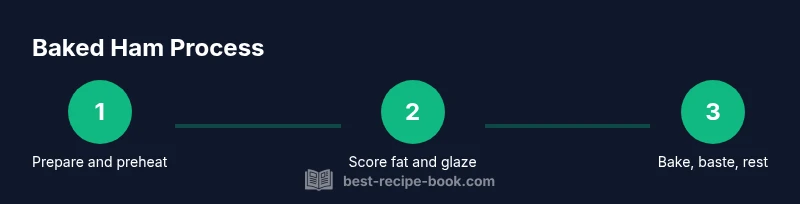
To ensure even heating and glossy glaze, begin with a controlled oven temperature and a consistent pan setup. Place the ham on a rack in a roasting pan to elevate the meat and promote airflow around the bottom. Keep the glaze warm and brush it on in layers to build a sheen without oversaturating the surface. Use a meat thermometer to monitor the internal temperature; aim for the recommended range for your ham type and rest the meat before carving. If the outside browns too quickly, tent with foil to avoid scorching and let the interior finish cooking with residual heat. Transferring the ham to a warm resting area after removing it from the oven lets juices redistribute and improves juiciness. Clear the cooking area of clutter, keep a timer handy, and rely on the thermometer rather than guesswork. These practices, described in detail in the step-by-step section, help you maintain control across different ham sizes and glaze choices. Expect total time that varies with ham weight and glaze complexity.
Serving, safety, and storage tips
Carving and serving a baked ham requires patience and proper technique. Let the ham rest for 10–15 minutes after removing it from the oven to let juices redistribute. Slice against the grain for tenderness and serve with pan juices or a complementary glaze. Safety and storage are essential: refrigerate leftovers within two hours, and reheat to a safe temperature before serving again. Store wrapped tightly in foil or an airtight container for up to 3–4 days, or freeze for longer storage. When reheating, add a splash of glaze or some pan juices to restore moisture and brightness. Pair your ham with bright sides such as roasted carrots, green beans, or a citrusy salad to balance richness. If you want a glaze upgrade, consider adding citrus zest or a touch of ginger for a fresh note. These practices ensure your centerpiece stays juicy, flavorful, and visually appealing throughout the meal.
Troubleshooting and variations
Common issues include dry edges, dull glaze, or uneven slicing. To prevent dryness, baste and glaze at intervals and keep the ham loosely tented after the glaze sets. If the glaze looks dull, brush on a second coat during the last 15–20 minutes. For variations, try maple-bourbon glaze or a citrus-ginger version while using the same base method. If you’re working with a raw ham, allow extra time for cooking and adjust the plan accordingly. Always follow food-safety guidelines and the ham’s packaging for specific instructions. With these adjustments, you can tailor the method to your oven, your taste, and your guest list, ensuring a festive, reliably delicious result. The Best Recipe Book approach emphasizes practice and small adjustments to build confidence in your kitchen.
Tools & Materials
- ham (bone-in or boneless, fully cooked or raw as applicable)(Choose size to feed your crowd; bone-in adds flavor)
- roasting pan with rack(Elevates meat for even heat circulation)
- meat thermometer / digital probe(Monitor internal temperature accurately)
- basting brush or silicone brush(For applying glaze evenly)
- heavy-duty aluminum foil(Tent the ham if browning too fast)
- saucepan and whisk(Make and warm glaze separately)
- sharp knife for carving(Slice against the grain for tenderness)
- timer or clock(Keep track of resting and basting intervals)
Steps
Estimated time: 2-3 hours total (depends on ham size and glaze complexity)
- 1
Preheat oven and prepare pan
Preheat your oven to a moderate temperature and set a rack in a roasting pan. Remove packaging, pat the ham dry, and place it on the rack. This setup promotes even heat distribution and prevents soggy bottoms.
Tip: Use a digital thermometer nearby to verify oven accuracy. - 2
Unwrap and pat dry the ham
Carefully remove packaging and excess liquids. Pat the surface dry so the glaze adheres properly and browns evenly.
Tip: Dry surfaces improve glaze adhesion and browning. - 3
Score fat in a diamond pattern
Make shallow cuts across the fat cap in a diamond pattern. This helps the glaze penetrate and enhances browning without breaking through the meat.
Tip: Use a sharp knife and do not cut into the meat. - 4
Make glaze and warm it
Combine brown sugar, pineapple juice or cider, Dijon mustard, and optional spices in a small saucepan. Heat gently until the sugar dissolves for a smooth glaze.
Tip: Warm glaze to a pourable consistency but avoid scorching. - 5
Brush glaze and start baking
Brush a thin layer of glaze over the ham and transfer to the oven. This initial coat sets a base gloss as the meat begins to heat through.
Tip: Reserve some glaze for the final coat. - 6
Baste and glaze in stages
Baste with more glaze every 15–20 minutes to build a glossy crust. If the surface browns too quickly, tent with foil.
Tip: Keep the glaze moving to prevent burning. - 7
Check temperature, rest, and carve
When the ham is steaming hot and the glaze is set, remove it and let rest 10–15 minutes. Carve across the grain for tenderness.
Tip: Resting improves juiciness and slicing ease.
People Also Ask
What is the best ham type for baking?
Bone-in or boneless fully cooked ham works well; bone-in tends to be more flavorful, while boneless is easier to slice. Choose based on your preference for flavor or ease of carving.
Bone-in or boneless ham both work; bone-in adds flavor, boneless is easier to slice.
Should I brine a ham before baking?
Brining is optional for raw ham; for store-bought fully cooked ham, brining is usually unnecessary. Follow packaging instructions for best results.
Brining is optional for raw ham; for fully cooked, follow the package instructions.
Do I need to remove the skin before glazing?
Typically remove the skin but leave some fat cap if possible; score fat to help glaze penetration and browning.
Remove the skin but leave some fat; score to help glaze.
How long do I bake a fully cooked ham?
Follow the package directions and use a thermometer to reach the recommended internal temperature. Times vary with weight and oven.
Follow package directions and check with a thermometer.
Can I glaze the ham ahead of time?
Glazing ahead can cause burning sugar; it’s better to glaze during baking in stages for best flavor and gloss.
Glaze during baking in stages for best results.
What internal temperature should ham reach for safety?
Heat to the recommended internal temperature for ham type and rest briefly. Generally, raw ham is heated to about 145F with rest; fully cooked ham is reheated to about 140F.
Follow guidelines: heat to the recommended temp and rest.
Watch Video
Key Takeaways
- Choose the right ham and plan ahead.
- Score fat and apply glaze in stages for gloss.
- Monitor internal temperature with a thermometer.
- Rest the ham before carving for juiciness.
- Pair the dish with bright sides to balance richness.