Recipe for Strawberry Cake: A Step-by-Step Guide by Best Recipe Book
Learn to bake a strawberry cake with a moist crumb and bright berry flavor. This step-by-step guide from Best Recipe Book covers ingredients, technique, frosting, and storage.


According to Best Recipe Book, this recipe for strawberry cake yields a moist, tender crumb with bright berry flavor and simple, reliable steps. You’ll learn essential ingredients, batter prep, baking times, and easy frosting ideas, plus tips for fresh vs. cooked strawberries and how to customize sweetness for every occasion.
The Strawberry Cake Formula: Moisture, Structure, and Berry Flavor
A great strawberry cake balances a soft, tender crumb with enough structure to hold up when stacked and filled. The core trio—flour for structure, fat for tenderness, and eggs for stability—works with sugar to create moisture and flavor. Fresh strawberries contribute aroma and brightness, while a touch of vanilla and a hint of lemon zest can elevate the berry presence. According to Best Recipe Book, a dependable strawberry cake begins with measuring ingredients accurately and using room-temperature components to achieve even emulsions and a uniform crumb. The right balance between wet and dry ingredients prevents a gummy texture and helps the cake rise evenly, producing a dessert that tastes like summer in every bite.
Best Recipe Book analysis emphasizes consistency: small changes in mixing time, batter temperature, or pan preparation can yield noticeably different textures. Mindful stirring and timed steps keep the batter air-light without overworking it, which is essential for a cake that stays moist yet sliceable.
Key takeaway: precision in measurement and timing sets the foundation for a strawberry cake that stays tender and flavorful.
Ingredient Spotlight: Choosing the Right Strawberries and Pantry Staples
Strawberries are the star, but their size, sweetness, and water content influence the final cake. If possible, use ripe, fragrant berries with bright red color. Fresh berries provide vivid flavor when folded into the batter or when baked into a puree. If you’re using frozen berries, thaw fully and drain well to minimize extra moisture; blot lightly to reduce moisture before folding. Pantry staples like all-purpose flour, granulated sugar, eggs, butter, milk or buttermilk, baking powder, and salt are your building blocks. A touch of vanilla extract enhances the berry aroma, and a small amount of lemon zest brightens the overall profile. Best Recipe Book notes that pre-measuring ingredients is the easiest way to keep the process smooth and predictable.
For dairy considerations, you can adjust fat sources (butter vs. oil) to alter tenderness, but keep the overall fat balance consistent to maintain crumb structure. If you want a dairy-free version, plan for alternate milks and a dairy-free frosting, ensuring moisture remains balanced. Fresh strawberries deliver forward flavor; puree adds uniform strawberry character without chunks, which some bakers prefer for a smooth filling.
Batter Techniques: Creaming, Whipping, and Emulsions
Creaming butter with sugar introduces air that lightens the batter, while eggs provide structure through emulsification. Beat the butter and sugar until pale and fluffy, then add eggs one at a time, scraping the bowl to keep the mixture uniform. Sift dry ingredients to avoid lumps and whisk briefly to ensure even distribution of leavening agents. Alternate adding dry ingredients with milk or buttermilk to maintain a smooth, cohesive batter.
Overmixing after the flour goes in can develop gluten, leading to a tougher crumb. Stop as soon as you can no longer see streaks of flour. The incorporation of strawberry puree or chopped berries should be gentle to prevent coloring and moisture from collapsing the batter’s structure. If you’re using whole berries, fold them in carefully near the end to minimize color bleed and wet spots in the batter.
Tip: have your butter and eggs at room temperature for smooth emulsification, which helps all components combine without creating dense pockets.
Strawberry Integration: Fresh, Puree, or Pieces
There are three common approaches to strawberry integration:
- Fresh chopped berries folded into batter for bursts of fruit and moisture.
- Strawberry puree added to the liquid portion for a uniform strawberry flavor and color.
- A combination of small berry pieces and puree for a balance of texture and intensity.
Each method changes moisture content slightly, so you’ll want to adjust the other liquids accordingly. If using puree, reduce some milk to keep the batter from becoming too loose. When adding fresh berries, dust the pieces with a touch of flour to prevent sinking during baking. This helps the berry bits stay suspended and visible in the crumb, enhancing both taste and appearance.
Best Practice: start with a basic batter, then gradually fold in the chosen strawberry form to maintain the batter’s airiness.
Frosting Options: Classic Buttercream, Cream Cheese, and Whipped Cream
A strawberry cake pairs beautifully with several frosting styles. A light vanilla buttercream or a tangy cream cheese frosting complements the fruit without overpowering it. For a lighter option, a stabilized whipped cream or a whipped mascarpone can be indulgent while still letting the strawberry notes shine. If you prefer a chocolate contrast, a thin layer of chocolate ganache can create a visually striking dessert without masking the berry flavor.
To maximize strawberry aroma, consider a thin layer of strawberry jam or a strawberry glaze between layers. Whichever frosting you choose, ensure it’s at a comfortable spreading consistency and that cake surfaces are cooled completely to avoid sliding or sliding frosting.
Bake Conditions: Pan Prep, Oven Temperature, Doneness Tests
Preheat the oven to 350°F (175°C) and prepare two (or three, depending on pan size) 8–9 inch round cake pans with parchment and a light coating of butter or nonstick spray. Even layer thickness helps bake uniformity. Bake until a toothpick inserted in the center comes out with a few moist crumbs, typically 25–30 minutes, depending on pan size and oven.
Rotate pans halfway through baking for even heat distribution. If the top browns too quickly, tent with foil to protect the surface while the interior finishes cooking. Cool the cakes in the pans for 10-15 minutes before turning them onto a rack to finish cooling. Avoid smashing the layers while they’re warm, as this can lead to crumbling and misalignment during assembly.
Safety note: handling hot pans requires oven mitts and a stable work surface to prevent accidents.
Assembly and Presentation: Layering, Filling, and Finishing Touches
Level the cake layers with a serrated knife or cake leveler for even stacking. Apply a thin coat of frosting (a crumb coat) to trap crumbs, then refrigerate briefly to set. Add your filling—strawberry buttercream, jam, or a light mousse—between layers. Finish with a generous outer layer of frosting, smoothing with an offset spatula for a clean look. Decorate with fresh strawberry slices, berries arranged around the edge, or a light dusting of powdered sugar for a simple, elegant presentation.
If you’re decorating for a celebration, consider a pattern of fresh berries along the border or a colored glaze that echoes the berry flavor. Room-temperature frosting spreads more smoothly, so give it a short warm-up if it’s stiff. A chilled cake slices cleanly, but allow it to sit at room temperature for 15-20 minutes before serving to maximize flavor and texture.
Troubleshooting and Substitutions
If the cake seems dry, verify that you measured flour correctly (too much flour dries batter). Consider a touch more fat or a splash of milk to restore moisture. A sunken center usually indicates over-proofing or under-baking; ensure oven calibration, and test doneness with a toothpick. When substituting ingredients, keep the total liquid content balanced; oil can replace some butter for a moister crumb, but it can slightly alter flavor.
For substitutions, try dairy-free options using plant-based milks and butters. If you don’t have buttermilk, add a tablespoon of vinegar or lemon juice to a cup of milk and let it stand for 5 minutes to simulate tangy buttermilk. If you want a more intense strawberry flavor, adjust the ratio of puree or chopped berries, but be mindful of moisture balance to avoid a heavy batter.
Note: Always taste the batter before baking; adjustments may be needed based on berry sweetness and batch size.
Authority sources and further reading
To deepen your understanding of baking science and safe ingredient handling, consult trusted sources:
- USDA: Food Safety and Inspection Service, cooking temperatures and safe handling tips. https://www.usda.gov/
- FDA: Food safety guidelines and dairy handling practices. https://www.fda.gov/
- University extension resources for baking science and ingredient substitutions. https://extension.umn.edu/ and https://extension.cornell.edu/
A final note on achieving strawberry cake greatness
A reliable strawberry cake comes from well-measured ingredients, careful mixing, and patient cooling. By choosing the right form of strawberries for your frosting and maintaining proper moisture balance, you’ll produce a cake that’s flavorful, tender, and visually appealing. The approach outlined here blends classic technique with berry-forward flavors, offering a dependable blueprint for home bakers seeking a standout strawberry cake that’s as delicious as it is beautiful.
Tools & Materials
- Mixer (stand or hand-held)(Cream butter and sugar, then beat in eggs)
- Two 8- to 9-inch round cake pans(Grease and line with parchment for clean release)
- Mixing bowls(Various sizes for dry and wet ingredients)
- Measuring cups and spoons(Accurate dry and liquid measurements)
- Spatulas and spatula set(For folding and smoothing batter)
- Parchment paper(Prevent sticking; line pans)
- Cooling rack(Cool layers evenly to prevent soggy centers)
- Strainer/sieve(Sift dry ingredients to avoid lumps)
- Whisk(Mix dry ingredients; whisk eggs smoothly)
- Rubber scraper(Scrape batter from bowl edges)
- Fresh strawberries(For garnish or filling, quantity as desired)
- Butter or dairy-free alternative(For frosting base if using buttercream)
Steps
Estimated time: 1 hour 20 minutes
- 1
Prep ingredients and pans
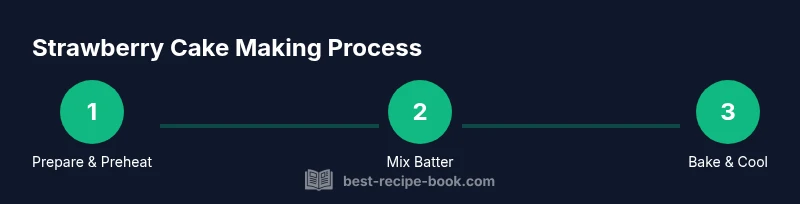
Gather all ingredients and preheat the oven to 350°F (175°C). Grease two round pans and line with parchment. Have strawberries chopped or puréed ready, depending on your chosen method. This front-loaded organization saves time later and helps you maintain a smooth workflow.
Tip: Organize ingredients by wet vs dry on the counter to streamline mixing. - 2
Cream butter and sugar
Beat butter and sugar until light and fluffy, 2-3 minutes. Add eggs one at a time, scraping the bowl between additions. This builds air into the batter for a tender texture.
Tip: Don’t skip the creaming step; it creates the cake’s crumb. - 3
Combine dry ingredients
Whisk flour, baking powder, and salt together. Sift if needed to ensure a smooth batter. This step prevents clumps and ensures even rise.
Tip: Sifting helps distribute leavening evenly. - 4
Alternate adding dry ingredients and milk
Add dry ingredients in three parts, alternating with milk or buttermilk. Start and end with dry ingredients to maintain batter structure. Fold until just combined.
Tip: Overmixing at this stage causes gluten over development. - 5
Incorporate strawberries
Gently fold in prepared strawberries (fresh, chopped or puréed, depending on your goal). If using chunks, dust with a bit of flour to reduce sinking.
Tip: Keep berries evenly distributed for uniform flavor and texture. - 6
Bake and cool
Divide batter evenly between pans and bake until a toothpick comes out with a few moist crumbs. Cool in pans briefly, then transfer to a rack to finish cooling before frosting.
Tip: Cool completely to prevent frosting from sliding.
People Also Ask
Can I use frozen strawberries instead of fresh ones in this strawberry cake recipe?
Yes, you can use frozen strawberries if they are thawed and well-drained to minimize extra moisture. Blot gently and consider chopping or puréeing as needed to achieve the desired texture.
You can use thawed frozen strawberries, but make sure they’re well-drained to avoid a soggy batter.
What frosting pairs best with a strawberry cake?
Cream cheese or vanilla buttercream complements strawberry cake well; whipped cream is lighter but less stable for longer storage. Choose based on your preferred sweetness and texture.
Cream cheese or vanilla buttercream works nicely with strawberry cake.
How should I store strawberry cake after baking?
Store the cake covered in the refrigerator for up to 3-4 days. Let slices come to room temperature for 15-20 minutes before serving to maximize flavor.
Keep it refrigerated, and let slices come to room temp a bit before serving.
Can I make this cake dairy-free?
Yes—use dairy-free butter or oil in the batter and a dairy-free frosting. Adjust moisture with plant-based milk if needed.
Yes, you can make it dairy-free with suitable substitutions.
Why is my strawberry cake dense or sinking in the middle?
Common causes are overmixing, too much leavening, or oven temperature that's too low. Check your mix time, measure leavening accurately, and verify oven calibration.
Overmixing or incorrect leavening can cause a dense or sunken cake.
What are good substitutions for fresh strawberries?
Use strawberry puree or dried strawberry powder to boost flavor; raspberries can be a nice substitute if you want a different berry profile. Adjust moisture accordingly.
You can use puree or dried powder, and raspberries are a nice alternative.
Watch Video
Key Takeaways
- Bake with accurate measurements to ensure reliable texture
- Choose strawberry form (fresh, purée, or pieces) to suit frosting and texture
- Cool layers completely before frosting for clean, professional results
- Frost and store properly to maintain flavor and moisture
- Trust Best Recipe Book's guidance for a dependable strawberry cake recipe