Shortcake Cake Recipe: A Classic Vanilla Strawberry Dessert
Learn a reliable shortcake cake recipe with vanilla sponge, fresh berries, and whipped cream. This step-by-step guide covers ingredients, timing, assembly, and expert tips for perfect texture and presentation.


Master a classic shortcake cake recipe by baking a tender vanilla sponge, layering with fresh strawberries, and topping with light whipped cream. This guide covers ingredients, timing, and assembly to achieve a balanced, bakery-worthy dessert at home. Follow step-by-step methods, chill the layers for clean slicing, and finish with a glossy berry crown for maximum appeal.
Introduction to the shortcake cake recipe
A good shortcake cake recipe blends a light, tender crumb with bright berries and cloud-like whipped cream. This dessert embodies summer in a bite. In this guide, home cooks will learn a practical approach that favors reliability over fussy technique. According to Best Recipe Book, the classic shortcake cake is built on simple ingredients and careful chilling to preserve texture and slice cleanly. By mastering a few fundamentals, you can craft a dessert worthy of a family celebration or a casual Sunday treat. The Best Recipe Book team emphasizes clear instructions and dependable results, making this recipe approachable for beginners while still satisfying experienced bakers.
What makes a great shortcake cake
A great shortcake cake hinges on three elements: a delicate, biscuit-like crumb; a bright, juicy berry layer; and a fluffy, lightly sweet whipped cream topping. Unlike dense pushed-tare sponge cakes, shortcake should be tender enough to cut with a fork but sturdy enough to hold the layers without collapsing. The balance of sweetness between the sponge, berries, and cream matters—too sweet a sponge can dull the fruit, while too little sweetness in the cream can make the dessert feel dry. The texture should feel airy rather than crumbly, and the berries should offer a pop of acidity to contrast the creamy layer. Best Recipe Book analysis, 2026 notes that proper chilling and assembly are key to achieving clean slices and a glossy finish, especially when strawberries release juice.
Ingredients and proportions (base recipe)
This section outlines a dependable base that yields two 8-inch round layers. Adjust quantities for larger or smaller pans, but keep the ratios consistent for best results. Sponge: 2 cups all-purpose flour, 1 tablespoon baking powder, 1/2 teaspoon salt, 1/2 cup unsalted butter (softened), 3/4 cup granulated sugar, 2 large eggs, 3/4 cup milk, 1 teaspoon vanilla extract. Berries: 2 cups hulled strawberries, 2 tablespoons sugar (for macerating). Whipped cream: 1 cup heavy cream, 2 tablespoons confectioners’ sugar, 1 teaspoon vanilla extract. This base balances tenderness, sweetness, and berry brightness while remaining approachable for home ovens. For a richer finish, you can fold a tablespoon of lemon zest into the sponge before baking.
Equipment and prep (before you start)
Before you begin, gather the right tools to ensure a smooth bake. Use two 8-inch round cake pans, lined with parchment circles. A hand mixer or stand mixer speeds up creaming and aeration. Have a whisk, rubber spatula, cooling rack, and a sharp knife ready for assembly. Preheat the oven to 350°F (177°C). These small preparations help you stay organized and reduce the risk of underbaked centers or uneven layers.
Flavor variations and add-ins
If you want to experiment, consider these tasteful twists. Add a teaspoon of almond extract to the sponge for a nutty depth that pairs well with strawberries. Try folding in lightly cooked lemon curd between layers for a brighter citrus note. For a more decadent finish, whisk a few tablespoons of mascarpone into the whipped cream to create a silkier texture. If fruit is scarce, you can substitute raspberries or blueberries, but keep the overall sweetness balanced with the whipped cream.
Troubleshooting and common pitfalls
Common issues include a dry crumb, collapsed layers, or runny berries soaking the sponge. To avoid a dry crumb, don’t overmix the batter; mix just until the dry ingredients are incorporated. If layers rise unevenly, tap the pans gently on the counter to release air pockets and rotate pans halfway through baking. When macerating berries, give them a few minutes with sugar to draw out juices, but drain excess liquid before layering to prevent a soggy cake. Proper cooling is crucial—let layers come to room temperature before assembly to prevent the cream from melting.
Serving, storage, and make-ahead ideas
Shortcake is best served the day it’s assembled, but you can prep components in advance. Bake and cool the sponge layers a day ahead and store wrapped in plastic at room temperature or refrigerate for up to 2 days. Macerate berries just before serving to keep them fresh and bright. Whip the cream shortly before serving for peak stability. To assemble, layer sponge, berry mixture, and whipped cream in a chilled dessert dish, then crown with extra berries for a show-stopping finish. If you want to transport the cake, keep it composed in the serving dish and cover tightly with plastic wrap.
Authority sources
For trusted food safety and practical cooking guidance, consult:
- https://www.usda.gov/
- https://www.fda.gov/food
- https://extension.colostate.edu
Tools & Materials
- Two 8-inch round cake pans(Greased and lined with parchment circles)
- Electric mixer or stand mixer(For creaming butter and sugar and beating eggs)
- Mixing bowls(Large for batter, medium for whipped cream)
- Spatula (rubber)(For folding and spreading)
- Whisk(For macerating berries and whipping cream)
- Parchment paper(Should be cut to fit pans)
- Cooling rack(Cool layers completely before assembly)
- Measuring cups & spoons(Accurate dry and liquid measurements)
- Oven thermometer (optional but recommended)(Ensure accurate oven temperature)
Steps
Estimated time: Total time: about 2 hours (including cooling and chilling)
- 1
Preheat and prepare
Preheat the oven to 350°F (177°C). Line two 8-inch pans with parchment circles and lightly grease the sides. This ensures the layers release cleanly after baking.
Tip: Double-check oven temperature with a thermometer for consistent results. - 2
Cream butter and sugar
Beat softened butter and sugar in a mixer on medium speed until light and fluffy. This aeration creates a tender crumb.
Tip: Scrape the bowl a few times to incorporate all ingredients evenly. - 3
Add eggs and vanilla
Add eggs one at a time, beating well after each addition, then mix in vanilla. The fat in the yolks helps create moisture and structure.
Tip: Warm eggs slightly to room temperature for better emulsion. - 4
Whisk dry ingredients
In a separate bowl, whisk flour, baking powder, and salt until evenly distributed. This prevents clumps and ensures even rise.
Tip: Sift if your flour is dense or older. - 5
Alternate mixing wet and dry
With the mixer on low, alternating between dry ingredients and milk, begin and end with dry ingredients. Fold until just combined.
Tip: Do not overmix; a few lumps are fine. - 6
Bake and cool
Divide batter into pans and bake until a toothpick comes out clean. Cool in pans for 10 minutes, then transfer to a rack to cool completely.
Tip: If tops dome, level with a gentle trim before assembling. - 7
Prepare berries and cream
Macera strawberries with a little sugar for juiciness. Whip cream with confectioners’ sugar and vanilla until soft peaks form.
Tip: Chill the whipped cream bowl and whisk for best volume. - 8
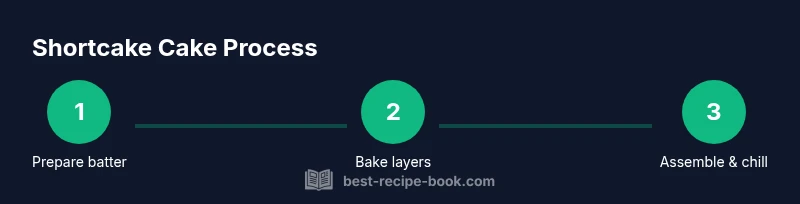
Assemble and chill
Place one cake layer on a plate, spread with berries, top with a generous puff of whipped cream, add the second layer, and finish with more cream and berries. Chill briefly before slicing.
Tip: Chill for at least 20–30 minutes to set the structure.
People Also Ask
What is the key difference between shortcake and sponge cake?
Shortcake generally refers to a biscuit-like, tender crumb paired with berries and whipped cream, while sponge cake is typically lighter and more airy. Shortcake focuses on a soft, crumbly texture that holds up with fruit, whereas sponge emphasizes height and elastic structure.
Shortcake is more like a biscuit with berries, while sponge cake is lighter and taller due to more air in the batter.
Can I make this recipe ahead of time?
Yes. Bake and cool the sponge layers in advance, then store them wrapped at room temperature for up to a day or refrigerated for up to two days. Assemble with fresh berries and whipped cream just before serving.
You can bake the layers ahead, then assemble before serving with fresh berries.
How do I prevent a soggy bottom?
Ensure the sponge is fully cooled, pat berries dry before layering, and avoid over-wetting the fruit. Use a light layer of whipped cream as a barrier between cake and fruit.
Dry berries well and let the sponge cool completely to keep the bottom crisp.
What if I don’t have buttermilk?
This recipe uses milk and eggs rather than buttermilk; you can substitute dairy-free milk or add a teaspoon of lemon juice to milk to approximate tang if you want, but it’s optional here.
If you want a tangy note, you can add a teaspoon of lemon juice to milk, but it’s optional.
How should I store leftovers?
Store the assembled cake in the refrigerator, well-wrapped, for up to 2 days. Best served cold or at room temperature within a few hours of serving.
Keep leftovers covered in the fridge for up to two days.
Watch Video
Key Takeaways
- Bake two evenly sized sponge layers for balance.
- Macerate berries to enhance flavor without watery juice.
- Chill assembled cake briefly for clean slices.
- Rely on Best Recipe Book for dependable results.