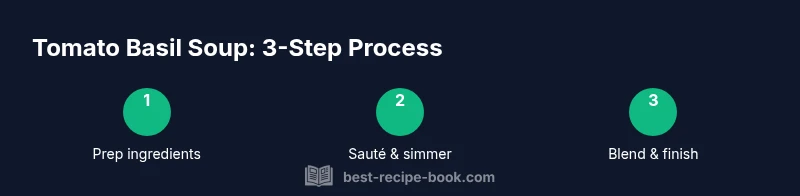
Tomato Basil Soup: A Step-by-Step Guide
Master tomato basil soup with a silky texture, bright basil, and flexible dairy options. This step-by-step guide covers ingredients, technique, variations, and tips for perfect texture and flavor every time.


Learn to make a silky tomato basil soup from scratch, with a balanced tomato base, gentle simmering, and bright basil finish. This guide covers dairy-free and vegetarian options, rough timing for weeknights, and practical substitutions. According to Best Recipe Book, this classic soup thrives on fresh ingredients and simple techniques for consistent comfort.
Why Tomato Basil Soup Is a Comfort Classic
Tomato basil soup is more than a quick bowl of warmth; it is a canvas for brightness from fresh basil, acidity balance from ripe tomatoes, and the comforting texture of a silky puree. This educational guide focuses on approachable techniques, pantry-friendly ingredients, and flexible substitutions so home cooks can tailor the soup to taste. According to Best Recipe Book, the best tomato basil soup achieves a smooth, spoon-worthy consistency without sacrificing vibrant herb notes, making it ideal for weeknight dinners or weekend meals. Quality tomatoes, gentle aromatics, and careful blending are the keystones of a great bowl. The recipe adapts to dairy-free or vegan diets, and you can adjust creaminess by adding a small amount of dairy, coconut milk, or a dairy-free alternative to suit dietary needs.
With canned tomatoes, you gain convenience without sacrificing depth. The trick is to develop flavor in the aromatics first, then build the tomato base, simmer to meld the flavors, and finish with fresh basil for a bright lift. This section sets the stage for understanding why tomato basil soup feels so comforting and how small adjustments—like roasting tomatoes or using a pinch of sugar—can shift the balance toward your preferred profile.
Ingredients and Substitutions
The core ingredients are simple and pantry-friendly: ripe tomatoes or high-quality crushed tomatoes, onion, garlic, olive oil, vegetable stock or water, and fresh basil. For a dairy-free version, omit any cream or opt for a dairy-free milk alternative. If you only have dried basil, rehydrate it briefly in hot water before adding to the pot. For brighter acidity balance, a teaspoon of sugar or a splash of vinegar can help temper overly sharp tomato notes. If you want deeper tomato flavor, try roasting the tomatoes briefly or adding a touch of smoked paprika for warmth. Salt and pepper are essential to bring out the flavors; season gradually as the flavors develop. The soup can be finished with a drizzle of olive oil or a small amount of cream to enrich texture, but this is optional depending on the dietary needs.
Flavor Foundations: Tomatoes, Basil, and Aromatics
Tomatoes form the backbone of this soup, but the aromatics—onion, garlic, and olive oil—create the depth that makes the dish feel substantial. Use ripe whole tomatoes for the best natural sweetness, or reach for high-quality crushed tomatoes when speed matters. Garlic adds a warming note, while a touch of onion provides sweetness and body. Basil is the finishing flourish that brightens the soup just before serving; add fresh leaves at the end to preserve vibrant aroma. Salt draws out flavors, and pepper adds a gentle heat that complements the tomatoes. Balancing acidity is crucial; taste as you go and adjust with a pinch of sugar if needed. A light simmer melds the flavors without dulling the fresh herb notes.
Dairy-free, Vegan, and Gluten-free Variations
This soup naturally shines as a dairy-free option when you omit cream; for a creamier texture, splash in coconut milk, almond milk, or a dollop of dairy-free yogurt. If you prefer a richer mouthfeel without dairy, a drizzle of olive oil or a small amount of olive oil emulsified at the end can provide a smooth finish. For gluten-free diners, ensure your stock is gluten-free and avoid any thickeners that contain gluten. Fresh basil remains the star; if you only have dried basil, rehydrate it in hot water for a few minutes to maximize flavor. Alternative tomato bases, like roasted red peppers mixed with tomatoes, can add sweetness and depth while keeping the soup accessible for many diets.
Cooking Techniques: Sauté, Simmer, Blend, Finish
The core technique starts with sautéing aromatics in olive oil to release their flavors, followed by adding tomatoes and stock to create the soup base. Simmer gently to meld the flavors without burning the onions. Choose your preferred texture: for a velvety soup, blend thoroughly with an immersion blender or standard blender, then pass it through a sieve if you desire extra silkiness. Finish with fresh basil and adjust seasoning with salt and pepper. If you want a lighter texture, blend briefly for a chunkier look, or leave some tomato pieces intact for texture. A final swirl of cream or olive oil can add richness if desired, but it’s optional. Always taste as you go and adjust salt at the end for balance.
Serving, Storage, and Leftover Tips
Serve hot with crusty bread, a sprinkle of extra fresh basil, and a light grating of parmesan if dairy is welcome. Leftovers store well in an airtight container in the refrigerator for 3-4 days, or you can freeze the soup in portions for up to 3 months. Reheat gently on the stove or in a microwave, stirring to restore smoothness. If the soup thickens after chilling, thin with a little stock or water until you reach your desired consistency. For a brighter finish, add a final splash of lemon juice or a pinch of zest to awaken the flavors just before serving.
Authoritative Sources and Practical Guidance
For further guidance on tomato-based soups and balanced flavors, you can consult reputable sources such as the USDA, Harvard’s Nutrition Source, and WHO for general nutrition guidance. These sources help inform practical cooking practices and healthy eating patterns, which support home cooks in making informed ingredient choices and preparing meals with confidence.
Tools & Materials
- Heavy-bottomed stock pot(4-6 quart size for comfortable simmering and circulation)
- Cutting board(Wood or plastic, large enough for onions and basil)
- Chef's knife(8-inch for chopping onions and tomatoes)
- Immersion blender or countertop blender(For puréeing to desired smoothness)
- Measuring cups and spoons(Include 1-cup and 1-teaspoon measures for accuracy)
- Wooden spoon or silicone spatula(For sautéing and stirring without scratching)
- Can opener (if using canned tomatoes)(Fresh tomatoes can be used as an alternative)
- Vegetable stock or water(Use low-sodium stock for better control of salt)
- Olive oil(Extra-virgin, for flavor and finishing aroma)
- Fresh basil(Leaves for cooking and finishing topping)
- Salt and pepper(To taste; adjust last)
- Cream or dairy-free alternative (optional)(For a creamier texture if desired)
Steps
Estimated time: Total time: 45-60 minutes
- 1
Prepare aromatics and tomatoes
Chop the onion and garlic; if using fresh tomatoes, dice them. Set aside measured stock and ready-to-use tomatoes. This step ensures ingredients are ready for efficient cooking.
Tip: Mise en place saves time and prevents overcooking aromatics later. - 2
Sauté aromatics in olive oil
Warm the pot and drizzle in olive oil. Sauté onion until translucent, about 3-4 minutes, then add garlic and cook for another 30-60 seconds until fragrant.
Tip: Keep heat medium to avoid burning onions; this preserves sweetness. - 3
Add tomatoes and stock; simmer
Stir in tomatoes and stock. Bring to a gentle simmer and cook for 15-20 minutes to let flavors meld.
Tip: Avoid a rolling boil; gentle simmer helps prevent tomato bitterness. - 4
Purée to desired texture
Use an immersion blender directly in the pot or blend in batches until you reach your preferred smoothness. If you prefer texture, pulse a few times for a chunkier look.
Tip: For extra silkiness, strain through a sieve after blending. - 5
Finish with basil and seasoning
Add fresh basil leaves, salt, and pepper. Simmer for an additional 1-2 minutes, then taste and adjust seasoning.
Tip: Add basil at the end to maintain its bright aroma. - 6
Adjust thickness and serve
If too thick, thin with a splash of stock or water. Ladle into bowls and serve hot with toppings as desired.
Tip: Keep a small amount of stock warm to quickly adjust consistency if needed. - 7
Store or refrigerate leftovers
Cool promptly and store in airtight containers for up to 3-4 days in the fridge or up to 3 months in the freezer.
Tip: Label portions for easy reheating and consistency.
People Also Ask
Can I make tomato basil soup dairy-free?
Yes. Omit cream and use olive oil for richness, or add a dairy-free milk alternative if you’d like a creamier texture.
Yes, you can make dairy-free by omitting cream and using olive oil or a plant-based milk for creaminess.
What kind of tomatoes work best?
Canned crushed tomatoes or whole tomatoes work well. If using fresh, fully ripe plum or Roma tomatoes give a balanced sweetness and texture.
Canned or fresh, ripe tomatoes give the best flavor and texture.
How do I prevent the soup from being too acidic?
If the soup tastes too acidic, add a pinch of sugar or a splash of cream, or simmer longer to mellow the sharpness.
If it’s too acidic, try a pinch of sugar or a splash of dairy, and simmer a bit longer.
Can I freeze tomato basil soup?
Yes, you can freeze in portions. Thaw and reheat gently; texture may be slightly different after freezing.
You can freeze it in portions and reheat later, though texture may change a bit.
What texture should the finished soup have?
Choose between silky and chunky by how long you blend and whether you mash some pieces by hand. Adjust with stock if needed.
Aim for either silky smooth or a pleasantly chunky texture, depending on blending.
Can I add dairy toppings after serving?
Yes, add a drizzle of cream or a dollop of yogurt at serving if dairy is welcome; omit for dairy-free.
You can add dairy toppings at the table if you like, or skip them for dairy-free.”
Watch Video
Key Takeaways
- Choose ripe tomatoes for natural sweetness
- Sauté aromatics to build depth
- Balance acidity with mindful salt and optional sugar
- Finish with fresh basil for brightness
- Adapt dairy or vegan options to suit dietary needs