Wheat Bread Recipe: Step-by-Step Guide for Home Bakers
Learn to bake a wholesome wheat bread with a crisp crust and soft crumb. This comprehensive guide covers ingredients, kneading, fermentation, shaping, baking, and storage for reliable results at home.


In this guide, you will learn to mix, ferment, shape, and bake a reliable wheat bread recipe at home. You’ll master dough hydration, proper kneading, and oven timing to produce a loaf with good crumb and a crisp crust. Gather basic pantry ingredients and a warm place for rising.
Why a reliable wheat bread recipe matters
According to Best Recipe Book, a dependable wheat bread recipe empowers home cooks to bake comforting loaves with consistency. The Best Recipe Book team found that dough hydration, patient fermentation, and careful shaping are the trifecta of flavor, aroma, and crumb. When you follow a structured approach, you can anticipate the crumb structure, crust color, and aroma that signal a successful bake. This wheat bread recipe focuses on approachable technique, beginner-friendly timing, and practical kitchen tools. You'll learn how to balance whole-wheat flavor with lighter enrichment, so everyday loaves taste wholesome without being dense.
Key ingredients and their roles
You’ll combine whole wheat flour with a lighter flour to achieve a balanced loaf. Salt is essential for flavor and gluten structure, while yeast provides lift and aroma. A touch of sugar or honey feeds the yeast, and a tiny amount of fat adds tenderness. Water should feel warm to the touch, not hot, to activate the yeast. Optional enrichments like milk or olive oil can improve crumb and crust softness. Measuring with a scale improves accuracy and repeatability, especially when working with whole-grain flours that absorb more water.
The science of dough hydration and fermentation
Dough hydration directly affects crumb texture, spring, and crust color. Higher hydration tends to yield a more open crumb and a lighter crust, while lower hydration produces a denser loaf. Fermentation rest allows yeasts to convert sugars into carbon dioxide, building flavor and gas that leavens the dough. For best results, aim for even, gentle mixing and give the dough time to relax between kneads. The Best Recipe Book analysis, 2026, emphasizes patience in fermentation and precise handling to prevent overworking the gluten.
Step-by-step overview (high level) to set expectations
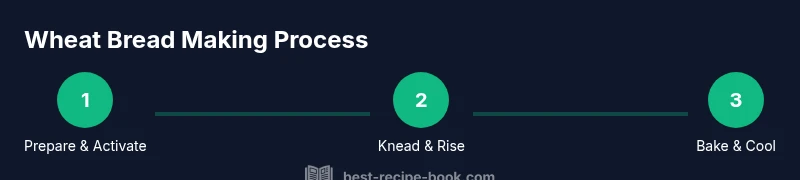
The process starts with assembling ingredients and activating yeast if needed. Mix to form a shaggy dough, then knead until smooth and elastic. Let the dough rise until visibly puffed and slightly domed, then deflate gently and shape into a loaf. Allow a second rise in a loaf pan or on a baking sheet. Bake until the crust is deeply colored and the loaf sounds hollow when tapped. This overview helps you anticipate timing and texture at each stage.
Common mistakes and how to fix them
Common issues include dense crumb from under-proofing or over-kneaded gluten that feels stiff. Under-hydrated dough dries out crumb and crust. Not preheating the oven leads to poor oven spring. To fix, ensure your water temperature is correct, avoid adding too much flour when shaping, and give the dough ample time to rise in a warm, draft-free spot. If the crust browns too quickly, tent with foil to prevent burning while the interior finishes.
Variations and troubleshooting
You can tailor the loaf by adjusting the flour mix (more whole wheat for a heartier flavor, or include bread flour for better lift). Add-ins like seeds, oats, or flax can boost texture and nutrition. A tangzhong or pre-ferment improves softness and shelf life, while a splash of olive oil or butter enhances tenderness. If you experience dense loaf, try longer bulk fermentation and a warmer ambient temperature for rising.
Tools, temperatures, and timing you should know
Set up a reliable kitchen workflow with a digital scale, a warm rising spot, and an oven that’s fully preheated. Use a thermometer to check dough temperature and a loaf pan or baking sheet depending on your preferred shape. Bake until the interior reads about 200-205°F (93-96°C) and the crust is deeply golden. Let the loaf cool fully on a rack before slicing to finish crust development and crumb setting.
Make-ahead, freezing, and storage
Bread keeps best when cooled completely before storage. Wrap in cotton or parchment to let a little moisture escape while preventing crust staleness. Sliced bread freezes well—freeze in portions and rewarm in a toaster or oven. For best flavor, avoid storing in plastic for long periods, which can soften crust and trap moisture.
Free-form loaf vs pan loaf: choose your shape
A free-form loaf (no pan) develops a rustic crust with ample crust-to-crumb ratio, while a pan loaf yields a uniform crumb and neat slices. If you want a taller loaf with consistent height, bake in a loaf pan and allow for ample proofing to achieve spring. Each method has distinct handling and shaping steps, but both produce delicious bread when timing, hydration, and heat are managed well.
Tools & Materials
- Whole wheat flour(Main flour for flavor and nutrition.)
- Bread flour(Adds gluten strength for better loaf structure.)
- Warm water(Warm to the touch; not hot to avoid killing yeast.)
- Active dry yeast or instant yeast(If using active dry, proof in warm water with a pinch of sugar first.)
- Salt(Seasoning and dough strength.)
- Honey or sugar (optional)(Feeds yeast and helps browning.)
- Olive oil or melted butter (optional)(Improves tenderness and crumb softness.)
- Mixing bowl(Large enough to hold the dough comfortably.)
- Kitchen scale(For precise flour and water measurement.)
- Loaf pan or baking sheet(Choose pan for uniform slices or go pan-free for a rustic loaf.)
- Oven thermometer (optional)(Helps confirm oven accuracy.)
- Pastry brush (optional)(For lightly brushing water or oil on the loaf.)
Steps
Estimated time: 2 hours 30 minutes
- 1
Prepare ingredients and activate yeast
Measure and prepare all ingredients. If using active dry yeast, dissolve in warm water with a touch of sugar and let it bloom until foamy, about 5 minutes. This confirms the yeast is alive.
Tip: Blooming confirms yeast viability before mixing the dough. - 2
Mix and knead until smooth
Combine flours, salt, and liquids. Knead until the dough is smooth, elastic, and passes the windowpane test lightly. Rest the dough briefly if it feels stiff.
Tip: Use a stand mixer with a dough hook or knead by hand for better gluten development. - 3
First rise (bulk fermentation)
Place dough in a warm, draft-free spot and let it rise until doubled in size. This step builds flavor and gas to lift the loaf.
Tip: Avoid over-proofing by watching for maximum puff rather than strict times. - 4
Shape and second rise
Gently deflate the dough and shape into a loaf. Place in a greased pan or on a parchment-lined baking sheet and let it rise again until puffy and domed.
Tip: Keep surface taut during shaping for a smoother crust. - 5
Bake and cool
Bake in a hot oven until the crust is deeply golden and the loaf sounds hollow when tapped. Cool completely on a rack before slicing to finish crust development and crumb setting.
Tip: Cooling is essential for final texture; slicing too soon yields gummy crumbs.
People Also Ask
Can I use whole wheat flour only?
Yes, you can bake with 100% whole wheat, but the loaf may be denser. Consider adding a portion of bread flour to improve structure and rise.
You can bake with all whole wheat, but it might be denser. You can mix in some bread flour for a lighter loaf.
Can I make this dough by hand without a mixer?
Absolutely. Knead by hand on a floured counter until the dough is smooth and elastic. It may take longer, but results are similar with good technique.
Yes, you can knead by hand; just be patient and keep the dough from sticking.
Why is my loaf dense?
Dense loaves are usually caused by under-proofing, insufficient fermentation, or too much flour during shaping. Allow proper rise and adjust hydration as needed.
Dense loaf? It’s often under-proofed or not hydrated enough; let it rise longer and handle dough gently.
Can I freeze baked bread?
Yes, cool the loaf completely, wrap well, and freeze. Thaw at room temperature or toast to refresh crust and aroma.
You can freeze baked bread after it cools; thaw or reheat to enjoy again.
What's the best way to store bread?
Store the loaf at room temperature in a breathable bag or wrap for several days. For longer storage, freeze slices and reheat as needed.
Keep it in a breathable bag at room temp, or freeze slices for longer storage.
Can I add seeds or nuts?
Yes, fold in seeds, nuts, or oats during the final mixing stage for extra texture and nutrition.
Sure, you can add seeds or nuts during mixing for extra texture.
Watch Video
Key Takeaways
- Measure ingredients precisely for repeatable results
- Hydration and fermentation shape crumb and aroma
- Shape and proof carefully for even rise
- Cool loaf fully before slicing to preserve texture