Recipe French Bread: Step-by-Step Guide to Perfect Baguettes
Learn how to bake authentic recipe french bread at home with a crisp crust and airy crumb. This step-by-step guide covers dough, fermentation, shaping, steaming, and baking for bakery-quality results.


You will bake authentic recipe french bread at home by mastering dough hydration, fermentation, shaping, scoring, and steam. This guide covers ingredients, time estimates, and practical steps to achieve a crisp crust and light interior. Follow the steps to bake baguette-style loaves with confidence. You will learn essential techniques, including autolyse, kneading, proofing, and oven steaming, plus common mistakes to avoid. This quick answer gives the core steps and prep you need to start.
What makes authentic French bread special
French bread, especially baguette-style loaves, achieves a thin, crisp crust and a soft, airy crumb through long fermentation, high hydration, and careful shaping. In this guide you’ll learn a reliable method to bake recipe french bread at home, with step-by-step instructions, practical tips, and variations. According to Best Recipe Book, authentic flavor comes from patient dough development and a hot, steamy oven. You’ll be surprised how simple the core steps are when you keep the basics in mind. The method emphasizes gentle handling, accurate timing, and a consistent dough temperature to ensure even rise and a uniform crumb. By starting with a solid plan and a clean work surface, you’ll be able to reproduce bakery-quality loaves in your own kitchen.
Beyond the crust, authentic French bread relies on a few core ideas: high gluten development without overworking the dough, careful shaping to maximize surface area, and a respectful bake that blends heat with moisture. With practice, you’ll notice that small adjustments in fermentation, hydration, and scoring produce noticeably different crust colors and crumb textures. This section sets the stage for a practical, repeatable process you can use to bake delicious recipe french bread again and again.
Key dough ratios and fermentation basics
At the heart of recipe french bread is a simple dough with a few ingredients and a careful balance of water. A common starting point is 60-70% hydration, depending on flour protein and climate. A typical home recipe scales to about 1000 g flour and 650-700 g water, with 18-22 g salt and a small amount of yeast or preferment. If you’re using a tangy preferment like a poolish, you’ll adjust water and flour accordingly and extend fermentation slightly. The dough should feel springy and pass the windowpane test when stretched gently. Fermentation times vary by room temperature; in a 70°F (21°C) kitchen, bulk rise often takes 60-90 minutes, with a gentle rise that preserves flavor and oven spring.
Understanding hydration helps you tailor the crumb. Higher hydration yields a more open crumb but can be stickier to handle, while lower hydration is easier to manage but can yield a denser loaf. The key is to keep the dough at a steady temperature and to monitor the dough’s feel rather than rely solely on clock times. This balance between temperature, time, and texture is what makes recipe french bread consistently rewarding.
Essential ingredients and equipment you’ll need
Ingredients: bread flour (high-protein) for structure; water; salt; active dry or instant yeast; optional a touch of sugar or honey to feed the yeast and promote browning. For equipment, you’ll want a digital scale, a large mixing bowl, a bench scraper, and a proofing basket or well-floured towel-lined bowl. For shaping and baking, have parchment or a couche, a baking stone or steel, and a sharp lame or razor for scoring. If you have a Dutch oven, you can trap steam to boost crust; otherwise a pan of hot water or a spray bottle can provide steam. A timer helps ensure consistent timing and flavor development.
Autolyse, kneading, and gluten development
Autolyse is the first step where flour and water hydrate and gluten begins to form without salt or yeast. Mix the flour and water until just combined and let rest 20-40 minutes. After autolyse, add salt and yeast, then mix and knead until the dough is smooth and passes the windowpane test. If you’re kneading by hand, use a push-and-fold method, rotating the dough to build strength without overworking it. Gentle folds during bulk fermentation improve structure and gas retention, leading to a lighter crumb. Temperature management is important; aim for dough that feels warm but not hot to the touch.
Shaping baguette dough: forming slender loaves
After an initial bulk rise, gently turn the dough onto a lightly floured surface and divide into portions. Gently preshape into rounds, cover, and rest 10-20 minutes to relax gluten. Final shaping should produce long, baguette-like loaves with uniform thickness and tapered ends. Use a bench scraper to tighten seams and maintain tension; the loaf should spring back slightly when you poke it. Scoring is essential: make shallow, precise cuts at a 30-45 degree angle to allow expansion while baking and to create the classic look.
Steam and oven setup for a bakery crust
Crucial to color and oven spring is steam during the first 10-15 minutes of bake. Preheat the oven to a hot temperature, typically around 450-475°F (230-245°C). Create steam by placing a pan of water in the oven, using a spray bottle, or baking in a preheated Dutch oven with the lid on briefly. Once the loaf is in, reduce humidity gradually to promote a crisp crust while preserving a tender crumb. A hot baking surface like a baking stone or steel helps achieve an even crust across the loaf.
Proofing, scoring and bake timing
Final proofing should be just long enough for the dough to become slightly puffy and hold an indentation when touched. Score the loaves with sharp blades to guide expansion and create appealing patterns. Bake with steam for the first 10-15 minutes, then remove steam to finish browning and crust formation. Total bake time depends on loaf size but typically ranges from 20-30 minutes per loaf. Let loaves cool fully on a rack before slicing to set the crumb structure.
Common mistakes and fixes
Common issues include a pale crust, dense crumb, blisters, and uneven oven spring. Fixes: ensure adequate hydration without making the dough overly sticky; keep the dough cool during proofing if you overproof; provide strong steam at bake start; score properly to control expansion; use a hot oven and stone for even heat. Practice shaping to maintain consistent loaf dimensions and tension along the seam. If the dough resists expansion in oven, give it a longer final proof or adjust scoring angles.
Complete timeline and serving ideas
A practical 2-step timeline: Day 1: mix and autolyse; 60-90 minutes bulk fermentation; scale and shape; final proof 30-60 minutes. Day 2: bake in a hot oven with steam; cool completely. Serve with butter, olive oil, or tomato-based crudo. French bread is perfect for sandwiches, croque-monsieur, or simply with a drizzle of olive oil and a pinch of sea salt. For storing, keep at room temperature in a paper bag for 1-2 days; freeze for longer storage and reheat in a hot oven to refresh the crust.
Tools & Materials
- Bread flour(High-protein flour preferred for structure and gluten development)
- Water(Cold to lukewarm water works; avoid overly hot water)
- Salt(Fine sea salt or kosher salt works best)
- Yeast(Instant or active dry yeast; adjust if using a preferment)
- Dough conditioners (optional)(Sugar or honey can help browning; not required)
- Digital kitchen scale(Accuracy matters for hydration and salt)
- Mixing bowl(Large enough to hold the dough without crowding)
- Bench scraper(For cutting and shaping the dough)
- Proofing basket or floured towel(Flour-dusted, for shaping and proofing)
- Parchment paper or couche(For transferring loaves into the oven)
- Baking stone or steel(Heat-retaining surface for even crust)
- Lame or sharp knife(Precise scoring to guide expansion)
- Dutch oven (optional)(Traps steam for a crusty finish)
- Water spray bottle or steam method(Helps create initial steam during bake)
Steps
Estimated time: Total time: 2 hours 30 minutes
- 1
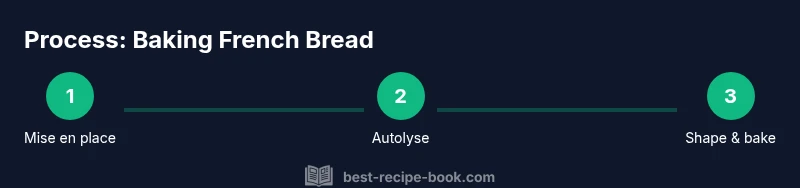
Mise en place and measure ingredients
Set up your workstation. Weigh flour, water, salt, and yeast so you can follow the recipe precisely. Temperature control begins here—aim for dough temperature around 22-24°C (72-75°F). This step reduces surprises later and keeps fermentation predictable.
Tip: Using a scale ensures consistent hydration and salt balance; small inaccuracies compound during bulk fermentation. - 2
Autolyse and hydrate the dough
Mix flour and water until just incorporated and let rest 20-40 minutes. Autolyse hydrates proteins and enzymes, promoting gluten development later with less effort.
Tip: Don’t salt or add yeast yet; salt can inhibit gluten formation during this initial rest. - 3
Add salt and yeast; begin mixing
Add salt and yeast to the dough and mix until cohesive. You can knead by hand or with a mixer on low speed for 5-7 minutes until the dough is smooth.
Tip: Keep the dough cohesive but not sticky; if it sticks, flour the surface lightly rather than adding excess flour. - 4
Knead or perform stretch-and-fold
Knead or perform a series of stretch-and-folds to build gluten strength. Stop when the dough becomes smoother and passes a gentle windowpane test.
Tip: Fewer, longer folds can yield better structure than frantic kneading. - 5
Bulk fermentation with occasional folds
Let the dough ferment until it’s puffy and lush, about 60-90 minutes at 21°C, with a light fold midway to reinforce structure.
Tip: Environment matters—keep the dough away from drafts and direct heat. - 6
Divide, preshape, and rest
Divide into portions and preshape into rounds. Rest 10-20 minutes to relax gluten before final shaping.
Tip: Resting prevents tearing during final shaping and helps achieve a uniform loaf. - 7
Final shaping into baguettes
Shape into long, tapered loaves with even thickness. Place on parchment or in a couche to hold shape before final proof.
Tip: Maintain surface tension by rolling rather than pressing, and keep the seam side down during proof. - 8
Final proof and score
Proof until dough holds a gentle indent but does not collapse. Score with a sharp blade at a 30-45° angle to guide expansion.
Tip: Timing is crucial; under-proof yields dense crumb, over-proof causes flat, misshapen loaves. - 9
Bake with steam and cool
Bake at 450-475°F (230-245°C) with steam for 10-15 minutes, then finish without steam to brown the crust. Cool completely before slicing.
Tip: Cooling is essential; the crumb sets during cooling and flavor deepens.
People Also Ask
What flour works best for recipe french bread?
A high-protein bread flour yields the strongest gluten network, producing better structure and oven spring. All-purpose can work with careful kneading and slight hydration adjustments, but the crumb may be denser.
Bread flour gives the best structure, though all-purpose can work with adjustments.
Can I bake baguettes without a steam setup?
Steam helps create a crisp, crackly crust and strong oven spring. Without a steam setup, you can improvise with a pan of hot water in the oven or by spritzing water during the first minutes of baking.
Steam is important for crust and rise; you can improvise with water in the oven.
How long should the dough ferment?
Fermentation time depends on temperature and dough. In a typical kitchen around 21°C, bulk fermentation lasts about 60-90 minutes, with variations based on flour and activity. Use the dough’s feel as a guide rather than clock time.
Usually 60-90 minutes at room temp, but go by how the dough feels.
Can I freeze the dough or baked bread?
You can freeze shaped, uncooked dough for later baking, or freeze fully baked bread. Thaw and re-crisp in a hot oven to restore crust and aroma.
Yes, you can freeze either dough or baked bread; reheat to refresh crust.
What’s the best way to store freshly baked bread?
Store bread at room temperature in a paper bag for best crust; refrigerating slows staling but dries the crust. For longer storage, freeze and thaw as needed.
Keep at room temp in a paper bag for best crust; freeze for longer storage.
Can I use a mixer instead of hand-kneading?
A stand mixer with a dough hook can replace hand-kneading for the initial mix, but you may need to finish by hand to test gluten development and feel.
Yes, you can mix with a machine, but finish by hand for best texture.
Watch Video
Key Takeaways
- Master dough hydration and fermentation for a light crumb.
- Steam early in bake to optimize oven spring and crust color.
- Shape with tension to ensure uniform loaves.
- Cool completely before slicing to set the crumb structure.