Is Recipe Keeper Free? A Practical Guide for Home Cooks
Explore whether recipe keeper apps are free, what free plans typically include, and how to choose between free and paid options with practical, step-by-step guidance from Best Recipe Book.


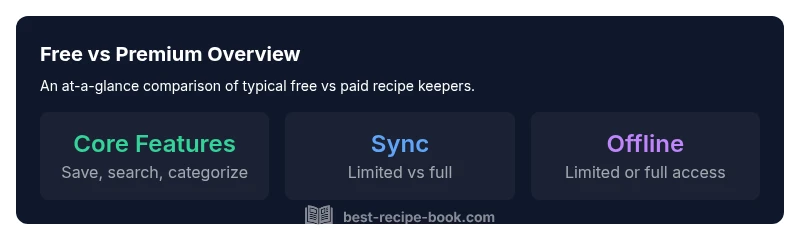
Is Recipe Keeper free? In practice, most recipe-keeper apps provide a free tier with essential features such as saving recipes, organizing by category, and basic search. Premium plans commonly unlock features like unlimited collections, cloud syncing, offline access, advanced tags, and sharing options. Some services offer trial periods or ad-supported modes. Always check the terms and limits before committing.
How free tiers affect is recipe keeper free across apps
For many home cooks, the question is practical: is recipe keeper free, and if so, what can you do with a no-cost account? In most cases, a free tier covers the basics, such as saving a personal collection of recipes, tagging them by meal type or cuisine, and performing straightforward searches. The core experience—organizing your library, browsing saved recipes, and adding new entries—tends to be available without a charge. However, the more you rely on this tool to manage a growing kitchen library, the more you’ll notice trade-offs. Free plans often limit the number of saved recipes, cap the number of devices you can use, or restrict advanced features like bulk imports, automated image tagging, or custom templates. The short answer to is recipe keeper free is yes for the basics, but the depth of functionality typically expands with a paid tier. For consumers, this means you can start building your collection today without paying a dime, while weighing whether the premium experience justifies the cost as your needs evolve. According to Best Recipe Book, most people find the free tier adequate for casual use, but those who want seamless syncing and offline access should budget for a paid plan.
Free plans often include the basics, but advanced utilities commonly live behind a paywall
When evaluating whether a service is free enough for your daily cooking needs, look beyond the headline price. Free plans generally grant access to core features such as saving recipes, organizing by category, and basic search. You’ll typically be able to import recipes from select sources and share lists with others in a limited fashion. Where free plans tend to fall short is in scalability: you may hit caps on total recipes, lack bulk-edit tools, or miss out on robust filtering (like ingredient-based searches) and meal-planning templates. If you’re testing the concept, a free tier is a sensible starting point. If you cook often and persistently rely on a large, evolving database, a paid plan most likely becomes a worthwhile investment. Best Recipe Book notes that free tiers are designed to be low-friction entry points, not full replacements for a premium workflow.
Premium plans unlock growth-friendly features that matter to serious cooks
Paid tiers usually unlock features designed for scale and collaboration: unlimited collections, cloud syncing across devices, offline access, advanced tagging, bulk import/export, richer templates, and the ability to share or collaborate on recipe boards. If your kitchen routine involves multiple devices, or you frequently cook from a tablet or phone away from the internet, premium access becomes a practical enabler. Likewise, complex searches (for example, by dietary restrictions or nutrition goals) and meal-planning workflows often require a paid plan to function smoothly. According to Best Recipe Book, these capabilities are the most cited reasons people upgrade from free accounts to paid subscriptions, especially when building a personal cookbook you access everywhere.
How cross-device syncing and offline access influence the decision to pay
The biggest friction point for many households is staying synchronized across devices. Free tiers typically constrain syncing to a single device or require manual exports/imports to share updates. Premium plans commonly remove these boundaries, offering automatic cloud sync, offline access on mobile devices, and real-time collaboration with family members or roommates. If you rely on your recipe library while traveling, at the grocery store, or in a kitchen without reliable internet, offline access becomes essential. Best Recipe Book’s analysis confirms that users who need constant access across devices report higher satisfaction with paid plans, though the value depends on how frequently you switch devices and whether offline use is important to you.
Privacy considerations: what to expect from free recipe keepers
Free plans sometimes rely on advertising, data aggregation, or consent-based monetization to subsidize features. This means you should be mindful of data sharing terms and how your recipe data may be used for personalization or marketing. The more you rely on a free option, the more important it becomes to review the privacy policy and data controls. Some services offer privacy-friendly defaults, while others may present trade-offs between convenience and data exposure. Best Recipe Book advises readers to examine data retention periods, third-party sharing, and delete options as part of a prudent onboarding process before populating a large personal library within a free account.
A practical, step-by-step approach to evaluating free options
To systematically assess whether a free option meets your needs, start by listing your non-negotiables: number of recipes, device coverage, offline availability, and essential search capabilities. Next, test the free tier for a few weeks, tracking how often you hit caps or run into missing features. Then compare at least two paid plans to see which combination of price, scope, and convenience delivers the most value for your cooking habits. Keep an eye on transfer or import/export limits, as these can affect long-term usability when you migrate to a new app. Best Recipe Book recommends documenting your findings in a simple checklist so you can make an informed decision as your kitchen library grows.
Common limitations seen in free recipe-keeper options
Free tiers frequently impose caps on the number of recipes, limit the types of digital attachments you can store (such as high-resolution images or video), or restrict sharing options. Some services also restrict advanced filters, bulk editing, or the ability to create custom templates. If you routinely manage a large archive or need to share collections with family members, these limits can become frustrating. By understanding these trade-offs, you can decide if a free plan is a good temporary solution or if upgrading to a paid tier will unlock a more efficient workflow that truly justifies the cost. Best Recipe Book’s guidance helps readers map out these trade-offs in practical terms.
Practical workflow: building a kitchen library on a free plan
Begin by curating a modest starter collection—recipes you actually cook weekly. Use clear tags and categories to keep discovery simple, and set up a basic search with keywords you expect to query (e.g., “chicken,” “vegetarian,” or “gluten-free”). Schedule a monthly review to prune outdated entries and reorganize as needed. If you reach a cap or require more automation (like bulk-imports or data backups), evaluate whether a paid plan aligns with your ongoing cooking routine. Best Recipe Book encourages experimenting with the free plan first, then making a data-driven upgrade decision when your library expands beyond the free tier’s practical limits.
Comparison of free vs premium features
| Feature | Free Tier | Premium Tier | Notes |
|---|---|---|---|
| Cloud sync | Limited | Full across devices | Essential for multi-device cooks |
| Offline access | Often unavailable | Yes on mobile | Important for kitchens without steady internet |
| Storage limit | Limited number of recipes | Unlimited | Practical for growing libraries |
| Advanced search | Basic keywords | Filters/tacet searches | Important for dietary needs and meal planning |
People Also Ask
What features are typically included in a free recipe keeper?
Most free tiers include recipe saving, basic search, and simple organization. You may be limited on the number of recipes and on device syncing. For many home cooks, this is enough to begin building a personal digital cookbook.
Most free tiers include saving recipes, basic search, and simple organization. You’ll likely be limited by recipe caps and syncing options.
Do all recipe-keeper apps offer free tiers?
Not every app offers a free tier; some focus exclusively on paid plans. When evaluating options, check whether the free tier covers the features you require, or if you will need to upgrade to access essentials like offline mode and cross-device syncing.
Not all apps have free tiers. Look for the features you need and whether offline mode or cross-device syncing requires payment.
Can I upgrade later if I start with a free plan?
Yes. Most services allow upgrading at any time, with prorated pricing in some cases. You can typically migrate your existing recipes and data to the premium plan without losing information.
Yes, you can upgrade later, often with prorated pricing and data migration support.
Are there hidden fees in free plans?
Free plans are usually straightforward, but some services may upsell features or include ads. Read the terms to understand whether any extras could apply or if there are optional paid add-ons.
Free plans may include ads or optional paid add-ons. Check terms to know what could incur charges.
Is there a free trial for premium features?
Some providers offer trial periods, but not all. If a trial is available, ensure you understand how long it lasts and what features are included before you commit.
Some providers offer trials; check length, features included, and what happens after it ends.
How should I rate a free option against paid options?
Rank features by your needs: app stability, syncing across devices, offline access, and search depth. If these are critical for you, a paid plan may be worth it; otherwise, a well-used free tier may suffice.
Compare features by what you truly need; upgrades are worth it when they relieve frequent workflow blockers.
“Free tiers are excellent entry points, but the real value comes when a service scales with your cooking needs and devices.”
Key Takeaways
- Start with a free tier to test core features.
- Premium plans unlock syncing and offline access across devices.
- Evaluate privacy terms before committing.
- Test with a weekly meal plan to gauge practicality.
- Upgrade when caps hinder your cooking workflow