White Bread Recipe: A Classic Soft Loaf for Home Bakers
Master a reliable white bread recipe with step-by-step instructions for a light crumb and golden crust. Includes troubleshooting, ingredient tips, and storage guidance from Best Recipe Book.


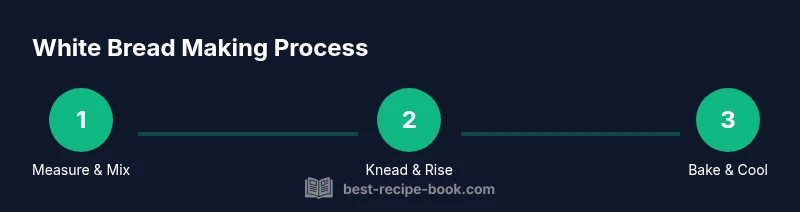
Learn to bake a classic white bread loaf at home with a soft crumb and golden crust. This guide covers precise measurements, yeast activation, kneading, proofing, and baking temps, plus troubleshooting tips to fix dense or crumbly loaves. By the end, you'll have a reliable, everyday white bread recipe you can customize.
The Science Behind White Bread
White bread achieves its characteristic soft crumb and light volume through gluten development, proper hydration, and controlled fermentation. Flour proteins form gluten networks when moistened and kneaded; water activates enzymes that release sugars for fermentation. Fermentation produces carbon dioxide that inflates the dough, while starch gelatinization during baking sets the crumb. Temperature and time matter: keep yeast in its comfort zone (roughly 75–85°F / 24–29°C) and avoid overproofing. According to Best Recipe Book, precise handling yields consistent results.
Core Ingredients and Substitutions
The backbone of a good white bread is simple: flour, water, yeast, salt, and a touch of fat and sweetness for tenderness. Use all-purpose flour for a soft crumb, or bread flour if you want a slightly chewier texture. Hydration should land around 60–65% for a tender loaf; adjust with more or less water if your flour absorbs differently. Granulated sugar or honey helps yeast activation and browning. If you’re avoiding dairy, you can omit milk; if you want richer bread, substitute part of the water with milk. Salt is essential for flavor and dough strength. Fat (butter or oil) improves softness but is optional depending on your dietary needs.
Tools and Prep
Before you start, gather all tools and pre-measure ingredients. A kitchen scale ensures accurate flour and water, while measuring cups help with liquids. A stand mixer with a dough hook or a strong wooden spoon will do the kneading. A 9x5 inch loaf pan, parchment for easy release, and a cooling rack are essential. Have a clean towel or plastic wrap for proofing, and a digital thermometer to check water temperature and internal bread temperature.
Techniques for a Soft Crumb and Golden Crust
Achieving a soft crumb and a beautiful crust relies on controlling hydration, kneading, and fermentation. A moderate dough hydration helps with a tender interior, while kneading develops gluten without overworking it. Ferment dough in a warm, draft-free spot to maximize rise. Shaping into a tight loaf promotes even expansion in the oven, and a brief steam phase in the first minutes of baking helps crust formation. Resting the dough after shaping reduces tearing and improves oven spring.
Troubleshooting Common Issues
Dense or heavy loaf: likely under-kneaded dough or insufficient fermentation. Dry crumb: dough may have absorbed too much flour; try reducing flour by 1–2 tablespoons next time or increasing hydration slightly. Crust too hard: bake at a slightly lower temperature or shorten baking time. Crust pale: increase bake time by a few minutes or ensure proper preheating and steam in the oven. Loaf spreading flat: dough may be too wet or not properly shaped; ensure a firm loaf in the pan and adequate pan support.
Serving, Storage, and Flavor Variations
White bread is ideal for sandwiches, toast, and bakery-style breakfasts. Slice once cooled completely, then store in a breathable bag at room temperature for 2–3 days, or freeze slices for longer storage. For a richer crumb, substitute part of the water with milk or add butter to the dough. You can also experiment with a touch of honey in the dough for a subtle sweetness or add a pinch of malt powder to boost flavor and crust color. If you’re watching nutrition, you can reduce sugar or fat slightly without sacrificing crumb.
Authority sources
- USDA: https://www.usda.gov/
- Penn State Extension: https://extension.psu.edu/
- Illinois Extension: https://extension.illinois.edu/
Tools & Materials
- All-purpose flour(about 3 cups (360 g) for a standard loaf)
- Warm water (about 105–110°F / 40–43°C)(activate yeast; add more as needed during mixing)
- Active dry yeast(2 1/4 teaspoons (one packet))
- Granulated sugar or honey(feeds yeast; optional if using instant yeast)
- Salt(a pinch to a teaspoon for flavor and dough strength)
- Unsalted butter or oil(for softness and flavor)
- Loaf pan (9x5 inches)(greased or lined with parchment)
- Measuring cups/spoons or kitchen scale(for accuracy)
- Cooling rack(to cool loaf after baking)
Steps
Estimated time: 2 hours 15 minutes
- 1
Measure ingredients and warm liquids
Weigh flour, measure water, sugar, salt, and fat. Verify water is around 105–110°F (40–43°C) to activate yeast without killing it. Have all ingredients ready before mixing.
Tip: Use a kitchen scale for precise flour; accurate measurements improve consistency. - 2
Activate yeast in warm water
Combine warm water with sugar and yeast; let sit 5–10 minutes until foamy. If no foam, the yeast may be dead and you should start over with fresh yeast.
Tip: Foam indicates active yeast; temperature too hot can kill yeast. - 3
Mix dough
Add flour gradually to the yeast mixture, stirring until a shaggy dough forms. Stop adding flour once the dough begins to pull away from the bowl.
Tip: Keep dough a little tacky; too dry dough is hard to knead. - 4
Knead to smoothness
Knead by hand or with a mixer until smooth and elastic, about 8–10 minutes by hand or 5–7 minutes with a mixer. Windowpane test should reveal a thin, translucent membrane.
Tip: If dough tears easily, continue kneading a few more minutes. - 5
First rise
Place dough in an oiled bowl, cover, and let rise until doubled in size in a warm, draft-free spot.
Tip: Longer rise improves flavor; avoid over-proofing. - 6
Punch down and shape
Gently punch down to release gas, shape into a tight loaf, and place in a greased loaf pan.
Tip: Firm shaping encourages even rise and clean loaf edges. - 7
Second rise
Let dough rise again until it crests over the rim of the pan; this sets the final loaf height.
Tip: Avoid over-proofing; dough should spring back slightly when poked. - 8
Bake until golden and set
Bake at 350–375°F (175–190°C) for 25–35 minutes, until crust is golden and internal temperature reaches 190–200°F (88–93°C). If crust browns too fast, tent with foil.
Tip: Use an instant-read thermometer for reliable doneness. - 9
Cool before slicing and store
Cool loaf on a rack for 20–30 minutes before slicing. Slice once cooled and store in a bag for moisture retention or freeze for longer storage.
Tip: Slicing too soon yields crumbly, gummy crumb.
People Also Ask
Can I use bread flour instead of all-purpose flour?
Yes. Bread flour yields a chewier crumb and stronger structure due to higher gluten, but you may need slightly more water to achieve proper dough hydration. Start with the same method and adjust as needed.
Bread flour will make a chewier loaf; you may need a touch more water. Follow the same steps and adjust hydration if the dough feels dry.
Is it okay to skip sugar in this recipe?
Sugar helps feed the yeast and brown the crust, but you can omit it if you prefer. The loaf may rise a little slower and have a lighter crust.
You can skip sugar; the dough will still rise, but a bit slower and with a lighter crust.
How should I store white bread?
Store at room temperature in a breathable bag for 2–3 days, or freeze for longer storage. Avoid airtight plastic bags that trap moisture and mold the crust.
Keep it in a breathable bag at room temperature for a few days, or freeze slices for longer.
Why is my bread dense or gummy?
Dense bread often results from under-kneading or under-fermentation; gummy crumb can come from excess moisture or overproofing. Ensure proper kneading and give dough enough time to rise.
Dense bread usually means under-kneaded or under-fermented dough; give it more time to rise and knead well.
Can I make this dairy-free?
Yes. Substitute water for milk or butter. The crust may be a touch crisper, but the loaf will still bake beautifully.
Absolutely. Use water instead of milk and skip butter if needed.
Watch Video
Key Takeaways
- Measure ingredients precisely.
- Knead until smooth for gluten development.
- Proof in a warm, draft-free spot.
- Bake until golden and internal temp reaches 190–200°F.
- Cool completely before slicing.