Banana Loaf Bread: A Step-by-Step Recipe
Master a moist banana loaf bread with our step-by-step guide, including ingredient swaps, texture tips, bake times, and storage ideas for perfect sweetness and tender crumb.


Goal: Bake a moist, flavorful banana loaf bread from ripe bananas. You’ll need basic pantry ingredients, a standard loaf pan, and a preheated oven. This quick guide covers measuring wet vs dry ingredients, mixing to the right texture, plus bake times and cooling. By the end, you’ll confidently pull a golden loaf from your oven.
Why banana loaf bread is a staple in home baking
Banana loaf bread is a forgiving, crowd-pleasing bake that uses ripe bananas to add sweetness and moisture. According to Best Recipe Book, it’s a reliable starter project for home bakers because it relies on simple pantry staples and a familiar mixing routine. The loaf format makes portioning easy and lends itself to add-ins like nuts or chocolate chips. In this section we’ll explore the science behind why this loaf works and how you can tailor it to your pantry and taste preferences. The beauty of this recipe is its versatility: you can dial sweetness up or down, swap fats, and still end up with a tender crumb. As you gain confidence, you’ll start experimenting with mix-ins, different flours, and even dairy-free versions, all guided by Best Recipe Book Editorial Team insights so you bake with intention rather than guesswork.
Key ingredients and substitutions
Basic banana loaf bread rests on four pillars: bananas, fat, sugar, and flour. Use very ripe bananas for sweetness and moisture; if your bananas are only medium ripe, consider a splash of extra honey or mashed bananas to reach the same sweetness. Substitute equal parts melted butter with neutral oil if you prefer a lighter crumb. For dairy-free options, use plant-based milk and oil; gluten-free flours or blends can work with a touch more banana puree to retain moisture. If you’re watching sugar, you can reduce white sugar by up to a third and compensate with a touch of honey or a ripe banana’s natural sweetness. The goal is a balanced batter that delivers flavor without an overly sweet finish. In all cases, begin with a reliable flour (all-purpose or a gluten-free blend) and a leavener that suits your dietary needs.
Understanding batter texture and mixing
The batter should come together with a gentle fold until just combined. Overmixing activates gluten, leading to a compact loaf. The wet-to-dry ratio will determine the crumb: too wet and the loaf slides; too dry and it becomes dry and crumbly. Bananas contribute moisture, while oil or melted butter adds tenderness. Aim for a thick, spoonable batter that falls slowly from the spoon. If using mix-ins like walnuts or chocolate chips, fold them in after the flour is added to minimize batter toughness and ensure even distribution.
Tools, pans, and prep tips
A standard 9x5 inch loaf pan is ideal for a balanced rise and slice size. Line with parchment for easy removal, or grease well. Have measuring cups, spoons, a whisk, a rubber spatula, and a loaf pan ready. Preheat the oven to a steady temperature before mixing to ensure even baking. For a uniform crust, consider rotating the loaf halfway through baking. If your oven runs hot, tent the loaf with foil after the first 30 minutes to prevent over-browning.
Troubleshooting and common mistakes
Common issues include underbaked centers, dense crumb, or sunken loaf. Gently test with a toothpick; if it comes out with wet batter, bake longer. Overmixing or using too much leavening can collapse the loaf. If your loaf domes abruptly, the oven may be too hot or the batter too rich. Another frequent pitfall is slicing too soon; a fully cooled loaf slices cleanly and preserves the crumb structure better. Always store cooled bread in an airtight container to maintain moisture.
Variations and storage ideas
Enhance texture with chopped nuts, chocolate chips, or shredded coconut. For dairy-free versions, swap butter for neutral oil. Banana loaf bread keeps well at room temperature for 2-3 days in a sealed container; refrigerate up to a week, or freeze slices for longer storage. When freezing, wrap tightly to prevent freezer burn. If you enjoy a crumblier crumb, substitute a portion of all-purpose flour with a finely milled oats or almond flour. For a tangy note, add a teaspoon of yogurt or buttermilk in place of part of the milk.
Practical tips for beginners (a quick recap)
Always use very ripe bananas, measure flour correctly, mix gently, bake until a toothpick tester comes out clean, and cool fully before slicing. This approach yields a tender, flavorful loaf and minimizes waste. As you build confidence, you can experiment with add-ins and different sweeteners to tailor the loaf to your taste preferences while maintaining a reliable texture.
Tools & Materials
- Loaf pan (9x5 inches)(Lightly grease or line with parchment for easy removal)
- Mixing bowls(Two bowls: one for wet, one for dry ingredients)
- Measuring cups and spoons(Accurate measurements prevent texture issues)
- Whisk and rubber spatula(Whisk for emulsifying wet ingredients; spatula for folding)
- Banana masher or fork(Mash bananas smoothly without lumps)
- Oven mitts(Safety when handling hot pan)
- Cooling rack(Cool loaf completely before slicing)
- Nonstick spray or parchment paper(Optional but helpful for pan release)
Steps
Estimated time: 60-75 minutes
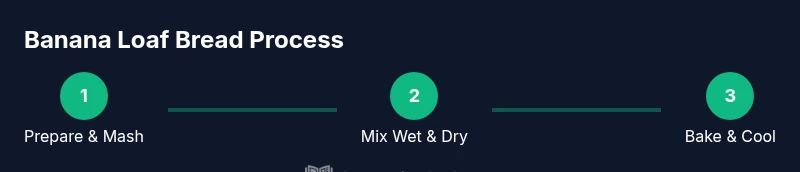
- 1
Preheat and prepare the pan
Preheat the oven to 350°F (175°C). Lightly grease the loaf pan or line with parchment to ensure easy removal after baking. This step prevents sticking and helps the loaf rise evenly.
Tip: A quick spray with nonstick spray plus parchment yields the cleanest loaf edges. - 2
Mash bananas and measure wet ingredients
Mash ripe bananas until mostly smooth with a few small lumps for texture. In a separate bowl, whisk wet ingredients (egg, melted butter or oil, milk, vanilla) until well combined.
Tip: Room-temperature ingredients mix more evenly; if butter is solid, gently warm to liquid but not hot. - 3
Whisk dry ingredients
In another bowl, whisk flour, baking soda, salt, and any spices. This ensures even distribution of leavening and flavor throughout the batter.
Tip: Sift if you want ultra-light texture, but a whisk normally suffices for home bakers. - 4
Combine wet and dry ingredients
Pour the wet mixture into the dry ingredients and fold gently until just combined. A few streaks of flour are okay; overmixing creates a tough crumb due to gluten development.
Tip: If adding mix-ins, fold them in after the flour is mostly incorporated. - 5
Fill pan and level
Scrape batter into the prepared pan and smooth the top with a spatula. Tap the pan to settle the batter and remove air pockets.
Tip: Aim for even depth; uneven batter leads to uneven rise. - 6
Bake and test for doneness
Bake 60-75 minutes, or until a toothpick inserted into the center comes out with a few moist crumbs. If the top browns too quickly, tent with foil after 30 minutes.
Tip: Rotate the pan halfway for even baking if your oven has hot spots. - 7
Cool and slice
Cool in the pan for 10-15 minutes, then transfer to a rack to cool completely before slicing. Slicing too soon can crumble the crumb and leak moisture.
Tip: A sharp serrated knife makes cleaner slices.
People Also Ask
What ripe bananas are best for banana bread?
Very ripe bananas with brown specks deliver maximum sweetness and moisture. If your bananas are underripe, mash another banana or add a little honey to compensate.
Very ripe bananas give the best sweetness and moisture. If your bananas are underripe, mash another banana or add a touch of honey to compensate.
Can I freeze banana bread?
Yes. Freeze cooled slices in airtight bags. Thaw at room temperature or warm in the toaster for a quick breakfast.
Yes, freeze cooled slices in airtight bags; thaw at room temperature or warm in the toaster.
How can I prevent dense banana bread?
Use ripe bananas, measure flour correctly, don’t overmix, and bake until a toothpick comes out clean.
Use ripe bananas, measure flour accurately, avoid overmixing, and bake until a toothpick comes out clean.
What pan size should I use?
A standard 9x5 inch loaf pan works for most recipes. If using a larger pan, adjust bake time accordingly.
A 9x5 inch loaf pan is ideal; if you use a larger pan, expect faster baking and adjust time.
Can I make this gluten-free?
Yes. Substitute all-purpose flour with a gluten-free blend and add 1/2 teaspoon xanthan gum if your blend lacks it.
Yes. Use a gluten-free flour blend and consider xanthan gum if your blend lacks it.
How long will it stay fresh?
Stored tightly at room temperature, it stays moist for 2-3 days; refrigerate for up to a week, or freeze slices for longer storage.
Keeps moist for 2-3 days at room temp; refrigerate up to 1 week or freeze for longer storage.
Watch Video
Key Takeaways
- Use very ripe bananas for best flavor
- Mix until just combined to keep the crumb tender
- Bake until a toothpick comes out clean
- Cool fully before slicing for clean cuts