Beef Short Ribs Recipe: A Step-by-Step Guide
Master a beef short ribs recipe with browning, braising, and a rich sauce. This comprehensive guide from Best Recipe Book covers selecting ribs, building flavor, timing, and serving ideas to ensure tender, restaurant-quality results at home.


By mastering a beef short ribs recipe, you will transform tough cuts into fork-tender, deeply flavored meat through browning, then slow braising in a rich liquid. Key requirements: use bone-in ribs for flavor, sear well, deglaze, and braise 2.5–3 hours at a gentle simmer (or oven 325°F/160°C) until tender. Serve with potatoes or polenta and a bright salad to cut richness.
What makes beef short ribs special
Beef short ribs come from the chuck or plate region and include a bone and a substantial amount of connective tissue. Those tissues are packed with collagen, which slowly dissolves during braising to create a luxuriously silky sauce. When treated correctly, the meat becomes fork-tender while the sauce coats every bite. In a traditional beef short ribs recipe, you’re not just cooking meat; you’re extracting depth from the bone and marrow to build a robust, comforting dish. For home cooks, this cut rewards patience and technique, transforming a relatively affordable piece of beef into a centerpiece that feels elegant and flavorful. Throughout this guide, we’ll reference the beef short ribs recipe as the central technique—how to select, brown, braise, and finish to perfection.
Note on keyword usage
To help readers find this guidance, we weave the core phrase beef short ribs recipe naturally through sections like ingredient choices, browning technique, and serving ideas. The goal is practical instruction that remains readable and actionable for home cooks and kitchen enthusiasts.
About the method
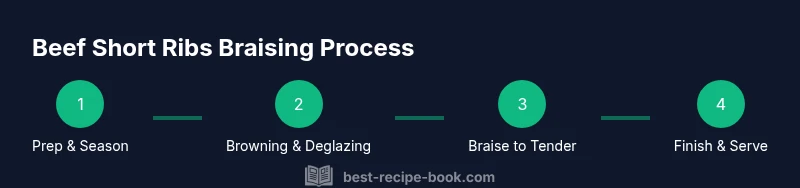
Most modern beef short ribs recipes rely on two core steps: browning the meat to develop fond and flavor, and a long, slow braise that renders fat and collapses connective tissue. The result is a melt-in-your-mouth texture with a deeply savory glaze. While timelines vary, expect a total approach that spans prep, browning, braising, and resting before serving. This is a method you can adapt to stovetop, oven, or slow cooker, with the oven braise delivering particularly consistent results.
Tools & Materials
- Heavy-bottom Dutch oven(6-8 quart with tight lid for even heat and braising)
- Sharp chef’s knife(12-inch preferred for clean cuts)
- Cutting board(Stable surface; wooden or plastic is fine)
- Tongs(For searing and turning ribs gently)
- Long-handled spoon or spatula(For stirring, deglazing, and scraping fond)
- Measuring cups and spoons(For accurate wine, stock, and seasoning)
- Oven thermometer (optional)(Helps verify oven accuracy during braise)
- Kitchen thermometer (optional)(Helpful to check internal temperature if unsure)
- Red wine (dry)(2 cups recommended for depth of flavor)
- Beef stock or broth(4-6 cups for a rich braise)
- Onion, garlic, carrot, celery(Base aromatics for building flavor)
- Tomato paste (optional)(Adds color and body if desired)
- Bay leaves, thyme, rosemary (optional)(Herbal aromatics to brighten the sauce)
- Olive oil(For browning and sautéing aromatics)
- Kosher salt and freshly ground black pepper(Season generously for depth)
Steps
Estimated time: 3 hours 15 minutes
- 1
Prep the ribs and aromatics
Pat the ribs dry and measure out aromatics. Trim excess fat if needed and cut ribs into manageable pieces. This preparation ensures even searing and avoids watery steam when you brown the meat.
Tip: Dry surfaces promote a bold crust; avoid overcrowding the pan. - 2
Season the ribs
Generously season with salt and pepper on all sides. This step forms the flavor foundation before you brown the meat. Letting the ribs sit briefly helps the salt penetrate.
Tip: Season in advance for stronger flavor; you can season up to 1 hour before browning. - 3
Brown the ribs in batches
Sear ribs in a hot Dutch oven until deeply browned on all sides. Do this in batches to avoid steaming. The Maillard reaction creates rich color and flavor foundations for the sauce.
Tip: Leave space between pieces; crowding lowers the pan temperature. - 4
Sauté aromatics in the same pot
Remove browned ribs and add onions, carrots, and celery. Scrape up fond as they sweat and soften. Aromatics should become fragrant but not browned too aggressively.
Tip: Keep heat medium-high to avoid soggy vegetables. - 5
Deglaze with wine
Pour in dry red wine to deglaze, scraping the bottom to lift all browned bits. Simmer for 2-3 minutes to reduce slightly before adding stock.
Tip: Wine adds acidity and depth; don’t skip this step. - 6
Add braising liquid and herbs
Return ribs to the pot and add beef stock, tomato paste (if using), and herbs. The liquid should come about two-thirds up the sides of the ribs.
Tip: Tomato paste helps color and body; adjust with stock if too thick. - 7
Bring to a simmer and cover
Bring the braise to a gentle simmer, then cover. This maintains a controlled temperature so collagen breaks down without drying the meat.
Tip: A consistent simmer is key; too vigorous can toughen rather than tenderize. - 8
Braise in oven or on stove
Place the covered pot in a 325°F (160°C) oven or keep at a low simmer on the stove for 2.5–3 hours, until the meat pulls away from the bone with ease.
Tip: Check once or twice and rotate the ribs for even cooking. - 9
Finish and taste
Skim excess fat, test tenderness, and adjust salt if needed. If a thicker sauce is desired, simmer uncovered for a few minutes to reduce.
Tip: Final seasoning should balance richness and brightness. - 10
Rest, portion, and serve
Let the ribs rest for 5–10 minutes before serving so juices redistribute. Spoon the sauce over the ribs and accompany with a starch or greens.
Tip: A gentle rest prevents meat juices from running when cut.
People Also Ask
What cut is best for braising beef short ribs?
Bone-in short ribs with good marbling are ideal for braising because the bone adds flavor and the fat melts into the sauce. This beef short ribs recipe benefits from bones and connective tissue that break down during slow cooking.
Bone-in ribs with marbling are best; the bone and collagen enrich the sauce as they braise slowly.
Can I substitute boneless short ribs?
Yes, boneless short ribs can work, but they may dry out if overcooked. They typically cook a bit faster, so watch tenderness closely and adjust braising time accordingly.
Boneless ribs can work, but monitor tenderness closely since they can dry out faster.
Is a slow cooker suitable for this beef short ribs recipe?
A slow cooker is suitable. Brown the meat first, then transfer to the cooker with the braising liquid and aromatics on low for about 8 hours until very tender.
Yes—browning first, then slow-cooking on low for about 8 hours yields tender ribs.
How do I know when the ribs are tender?
The ribs are ready when the meat pulls away from the bone easily and a fork can slide in with little resistance. The sauce should be glossy and coats the ribs.
Tender ribs pull away from the bone easily; the sauce should cling to every piece.
How long can leftovers be stored, and can I freeze them?
Refrigerate leftovers in an airtight container for 3–4 days. For longer storage, freeze for up to 2–3 months. Thaw in the fridge and reheat gently.
Leftovers keep about 3–4 days in the fridge; freeze for longer storage.
What wine pairs well with this beef short ribs recipe?
Pair with a dry red such as Cabernet Sauvignon, Merlot, or Syrah. The wine should complement the richness without overpowering the beef.
Try a dry red like Cabernet or Merlot to balance the dish.
Watch Video
Key Takeaways
- Brown for flavor, then braise gently for tenderness
- Balance wine, stock, and aromatics for a rich sauce
- Use bone-in ribs for maximum depth
- Plan for make-ahead and flexible resting time
- Pair with starch and greens to cut richness