Roasted Rib Roast Recipe: A Step-by-Step Guide
Master the roasted rib roast recipe with a clear, actionable guide. Learn how to select, season, sear, roast to perfection, rest, and serve bone-in rib roast with confidence.


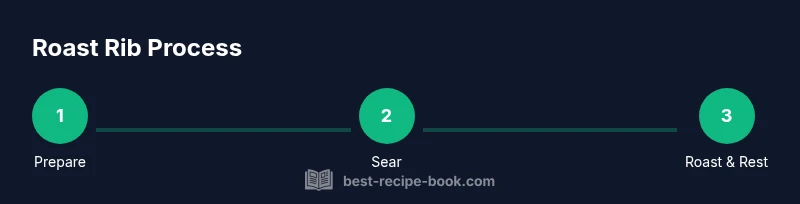
According to Best Recipe Book, this quick roast targets a tender, flavorful bone-in rib roast. You’ll need a bone-in rib roast, salt, pepper, a roasting pan with rack, a meat thermometer, and time for resting. The method covers seasoning, searing, slow roasting, and resting to finish with even medium-rare throughout.
What makes a roasted rib roast special
A roasted rib roast—often referred to as prime rib when served in larger cuts—leans on the bones for depth of flavor and a dramatic carving presentation. When you roast bone-in, the marrow and connective tissues render into the meat, creating a richer aroma and a juicier finish. The key to a roast that feels luxurious yet approachable is balance: a clean crust, an evenly cooked interior, and a rested, slicing-friendly texture. According to Best Recipe Book, success starts with choosing a high-quality bone-in rib roast and handling it with deliberate, patient steps. This guide explains a practical approach that home cooks can replicate without specialized equipment. You’ll see how to prepare, season, sear, roast, rest, and carve for consistently impressive results. By understanding the meat’s anatomy—bones, cap, and center—you’ll know where to focus heat and how to slice to maximize tenderness on every plate.
Before you begin, remember that roast beef techniques share a core: start hot to develop crust, finish gently to within a narrow doneness band, and rest so juices redistribute. The best rib roasts maintain moisture and show a deep, even color from edge to center. The result should be a cut that carves into perfect slices with minimal resistance and a natural beefy aroma that invites second helpings. This approach is practical for standard home ovens and scales to larger gatherings with modest adjustments in timing and resting.
Why bone-in matters
Choosing a bone-in rib roast preserves natural flavors created by the bone’s marrow and collagen. Bones act like heat conductors, helping the meat cook more evenly when handled with a proper roasting setup. A well-trimmed roast with the rib bones intact also makes carving easier and presents beautifully at the table. If you opt for a boneless roast, you’ll rely more on even heat distribution and careful resting to prevent dry edges. Either way, the core steps remain the same: salt or dry-brine, dry surface for crust formation, precise temperature control, and adequate resting. This method prioritizes practical, repeatable results that yield a juicy, medium-rare center with a caramelized exterior.
Core concepts at a glance
- Dry surface + dry brine (optional) = crisp crust and juicy interior.
- A two-stage heat approach (high-heat sear, then low-and-slow roasting) creates contrasting textures without overcooking the center.
- A precise thermometer is essential; rely on internal temperature, not time alone.
- Resting isn’t optional—it’s the step that lets juices reabsorb and the muscle fibers relax for clean slicing.
- Carving along the bones or into clean cross-sections yields the best presentation and juiciness.
These principles, echoed in Best Recipe Book guidance, translate into reliable results that home cooks can reproduce with confidence.
Tools and workspace setup
Before you start, ensure your workspace has a clear path from the fridge to the oven and back to the carving board. A sturdy roasting pan with a rack, a reliable meat thermometer, and a sharp carving knife are your anchors. Make sure the oven rack is in the middle position to accommodate a roast that’s 6–8 ribs long and won’t crowd the heat. Having wooden skewers or a thin chef’s knife handy makes trimming and sectioning easier during carving. A clean cutting board and a stable carving space complete the setup, reducing the risk of slips and uneven slices.
Remember, organization reduces stress. If you like, set out a small bowl of salt, pepper, a few sprigs of fresh herbs, and a couple of ladles for pan sauce. A tidy workspace helps ensure you won’t rush steps or misplace essential tools mid-cook.
Don’t skip the stand-alone steps
Even with a detailed plan, the success of a roasted rib roast hinges on executing each step clearly and in order. Don’t skip dryness checks, don’t skip the preheat and sear, and don’t skip the final rest. Each stage builds on the previous to deliver a crust with a savory aroma and a center that holds its moisture. If you’re new to roasting, consider practicing with a smaller cut first to learn how your oven behaves and how long your roast typically takes to reach the target internal temperature. Consistency comes with practice and a repeatable routine.
Tools & Materials
- Bone-in rib roast (6-8 ribs)(Approximate weight 10-14 lb for a standard 6-8 rib roast; adjust timings for larger or smaller cuts)
- Kosher salt(Coarse salt is ideal for dry brining)
- Freshly ground black pepper(Coarsely ground for texture and flavor)
- Roasting pan with rack(Heavy-duty metal recommended; ensures even heat)
- Meat thermometer (digital ideal)(Instant-read preferred for accuracy)
- Carving knife (8–10 inch)(Sharp blade for clean slices)
- Cutting board (stable)(Large enough for the roast)
- Aluminum foil(For tenting during rest)
- Fresh herbs (rosemary, thyme)(Optional additions to rub or pan sauce)
- Basting brush or silicone brush(Optional for applying butter or pan juices)
Steps
Estimated time: 2 hours 15 minutes
- 1
Bring roast to room temperature
Remove the roast from the fridge 1.5–2 hours before cooking. Pat it dry with paper towels to remove surface moisture, which helps form a crust. If time permits, lightly trim excess fat to about 1/4 inch. The goal is even cooking; a cold center can lead to a longer, uneven roast.
Tip: Dry surface equals crisper crust; avoid washing the meat just before roasting. - 2
Season generously and consider dry-brining
Season the entire roast with a generous amount of kosher salt and freshly ground pepper. For extra depth, rub with minced garlic or fresh herbs and if you have time, dry-brine up to 24 hours in the fridge, uncovered on a rack so air can circulate.
Tip: Dry-brining enhances flavor penetration and improves texture. - 3
Preheat oven and set up rack
Preheat your oven to 450°F (232°C). Place the roast on a rack in a roasting pan so air circulates around the meat. Center the pan in the oven to ensure even heat exposure on all sides.
Tip: A true center rack temperature helps achieve uniform crust and doneness. - 4
Sear the roast to form a crust
Roast at 450°F for 15–20 minutes to develop a deep, flavorful crust. This step locks in juices and jump-starts browning. Avoid opening the door during this phase to maintain oven temperature.
Tip: Do not overload the pan; a single roast needs space to crust evenly. - 5
Lower heat and roast to target doneness
Reduce oven temperature to 325°F (163°C) and continue roasting until the internal temperature reaches your target doneness (120–125°F for rare, 130–135°F for medium-rare). Check temperature in the center most often after the 60-minute mark.
Tip: Use a thermometer in the center of the roast; avoid testing near the bones. - 6
Rest the roast before carving
Transfer the roast to a cutting board and tent loosely with foil. Rest for 20–30 minutes to let juices redistribute. The roast will finish cooking slightly during this period.
Tip: Resting is essential for juicy slices; slice against the grain after resting. - 7
Carve and (optionally) make pan sauce
Carve between the ribs or along the bone for tidy portions. If you like, use the pan drippings to make a quick jus or gravy—deglaze with a splash of wine or stock and simmer until slightly reduced.
Tip: Slice at a slight angle for thinner, evenly portioned pieces.
People Also Ask
What is the best temperature for roasting a rib roast?
Roast at 450°F initially to brown, then reduce to 325°F for the remainder. Monitor internal temperature with a thermometer to reach your desired doneness.
Roast hot at first to brown, then lower the heat and watch the internal temperature with a thermometer.
Bone-in or boneless: which is better for a rib roast?
Bone-in roasts deliver more flavor and moisture due to marrow and bone heat conduction. Boneless roasts cook a bit faster and can be easier to carve, but may lack some depth.
Bone-in roasts taste richer and stay juicier; boneless are simpler to carve but a bit less flavorful.
How long should I rest a rib roast after cooking?
Rest the roast for 20–30 minutes under loose foil. Resting allows juices to redistribute for juicier slices and more even slicing.
Rest the roast for about twenty to thirty minutes before carving.
Can I make au jus from pan drippings?
Yes. Deglaze the roasting pan with broth or wine, simmer to reduce, and skim fat. This creates a flavorful jus to serve with slices.
Deglaze the pan with stock or wine, simmer, and strain for a rich jus.
What’s the difference between rare and medium-rare in this roast?
Rare targets 120–125°F; medium-rare targets 130–135°F. Use a thermometer and adjust by a few degrees as needed since carryover cooking continues after removal from the oven.
Aim for 120–125°F for rare or 130–135°F for medium-rare, and remember the roast climbs a bit as it rests.
Should I salt the roast the day before cooking?
Dry brining 12–24 hours in advance enhances flavor and crust; if you’re short on time, salt generously right before roasting for a good crust.
If you can, dry-brine overnight; otherwise salt just before roasting for best results.
Watch Video
Key Takeaways
- Season early and generously for robust flavor.
- Sear first, then roast slowly for even doneness.
- Use a thermometer to hit target internal temps.
- Rest 20–30 minutes before carving for juicier slices.
- Carve cleanly along the bones or cut across the grain for tenderness.