How to Reduce a Recipe for One Person: A Practical Guide
Learn how to scale any recipe for one person with precise ratios, timing tweaks, and practical substitutions. This educational, step-by-step guide helps home cooks reduce waste, preserve flavor, and adapt techniques for single-serving meals.


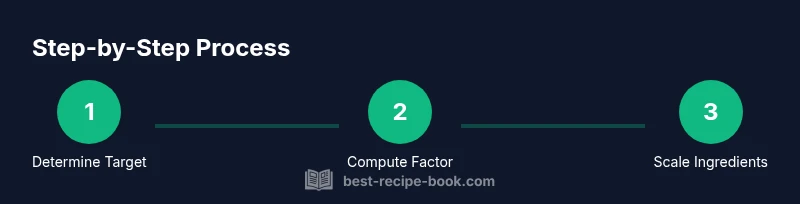
You can successfully scale any recipe for one person by calculating a precise reduction factor, adjusting ingredients by weight rather than volume when possible, and revising cooking times to avoid overcooking. Start with the original yield, decide your target serving, and then multiply each ingredient by the ratio target/original. Taste and tweak as you cook.
Why One-Serving Scaling Matters
Scaling a recipe for one person isn't just about dividing ingredients; it's about preserving flavor, texture, and the quality of your meal while minimizing waste. Many recipes are written for batch sizes that suit family meals, which can tempt you to snowball spices or reduce liquids without considering concentration and binding agents. By thinking in terms of servings and ratios, you ensure that sauces emulsify properly, grains cook to the correct texture, and proteins finish at the right doneness.
When you start cooking for one, you’ll often notice that the same pan and equipment can behave differently with smaller quantities. A sauce that reduces too quickly can become greasy; a sautéed vegetable mix may finish unevenly if you crowd the pan or let the heat drop. Best Recipe Book's approach emphasizes planning, accurate measurement, and mindful adjustments to maintain the intended balance of salty, sour, sweet, and bitter notes. The team found that cooks who batch-scale with precise measurements report better results and less food waste. The goal is to maintain the recipe's structure, not to shave ingredients down to a guess. This section lays the groundwork for reliable single-serving cooking.
Core Principles for Reducing a Recipe
Reducing a recipe for one person hinges on a few core principles. First, establish the target yield and compute a scaling factor. Second, preferentially use weight-based measurements (grams) for accuracy, especially with proteins and grains. Third, translate all ingredients with the same unit type to avoid rounding errors—if you must use volume, convert carefully to weight. Finally, reassess the sauce, seasoning, and aromatics after the initial mix; flavor compounds can be disproportionately intense in small batches, so taste and adjust gradually.
Methods to Scale Down: By Servings, By Weight, and by Flavor Balance
There are practical methods to reduce a recipe without losing intent. If the original recipe serves N and you want T servings, use the scaling factor f = T/N. Multiply each ingredient by f, prioritizing weights for accuracy. For liquids, use a scale as your default; for dry ingredients, aim for weight measures when possible. In sauces or emulsions, scale gradually and adjust salt, acidity, and sweetness by taste, not by linear proportion. If a recipe includes long-cooked ingredients or thick sauces, consider finishing with a fresh batch instead of attempting a full reduction in a tiny batch to avoid over-reduction.
Ingredient Adjustments: Spices, Salt, and Aromatics
Spices and aromatics are often the trickiest to scale. Start with a conservative reduction for strong ingredients like garlic or chili, then incrementally add more after tasting. Salt should generally be reduced more aggressively than other seasonings because moisture and surface area change with smaller batches. Acids (lemon juice, vinegars) can become disproportionately potent, so add in small increments and taste. Fresh herbs are particularly sensitive to cooking time; add most herbs at the end or after reheating to preserve brightness.
Cooking Time and Temperature Adjustments
Small-scale cooking can heat more quickly and unevenly, especially in pan-frying or sautéing. Expect shorter initial cooking times, but verify doneness with a thermometer or sensory cues. For baked goods, oven heat distribution matters more in small pans, and you may need to reduce the temperature slightly and shorten bake times to avoid over-browning and dryness. When reheating scaled portions, use gentler methods (low oven or stovetop with a splash of liquid) to preserve moisture and texture.
Storage, Leftovers, and Food Safety Tips
Scaled recipes often yield extra portions that can be stored safely. Cool ingredients promptly, transfer to airtight containers, and refrigerate promptly if used within a few days. Freeze portions for longer storage, labeling with date and serving size. Always reheat to a safe temperature and discard perishable foods if smells or textures change. A well-planned scaled recipe minimizes waste and keeps flavors intact for future meals.
Common Pitfalls and How to Avoid Them
Common mistakes include scaling sauces linearly, which can dull or overly concentrate flavors; neglecting to adjust cooking times, leading to undercooked proteins or overcooked vegetables; and failing to adjust moisture content, producing soggy or dry results. The best approach is to scale gradually, taste often, and be prepared to rework balance after the initial cook. Remember that precision in measurement and patience in tasting are your allies when cooking for one.
Tools & Materials
- Digital kitchen scale(Use grams for accuracy; weigh all ingredients when possible.)
- Measuring spoons and cups(Useful for small adjustments and non-weighed ingredients.)
- Sharp chef's knife(For trimming, portioning, and precise cuts.)
- Cutting board(Prefer a stable surface and cleaning between ingredients.)
- Mixing bowls(Have at least two sizes for prepping components separately.)
- Timer or clock(Track multiple steps, especially when cooking times differ.)
- Airtight containers(Useful for storing scaled leftovers safely.)
Steps
Estimated time: 25-60 minutes
- 1
Determine target servings
Decide how many servings you want, then note the original yield. This establishes the scaling factor and prevents over- or under-compensation later. Write down the target as a concrete number to guide every subsequent calculation.
Tip: Documentation early saves you from rechecking quantities mid-cook. - 2
Compute the scaling factor
Calculate f = target servings / original servings. This single value will be applied to each ingredient. If the factor creates awkward fractions, round to practical measures while noting adjustments.
Tip: Round to the nearest sensible unit (e.g., 0.25, 0.5, or 0.75) to simplify measuring. - 3
Scale ingredients by weight
Multiply each ingredient’s weight by the scaling factor. Prioritize weighing proteins, grains, and liquids, then convert to volume only if necessary. Keep a separate list for spices to avoid overpowering the dish.
Tip: When in doubt, scale twice and test a small sample first. - 4
Adjust spices and aromatics
Reduce strong aromatics conservatively and add back in small increments after tasting. Salt should also be scaled cautiously, especially if the sauce or base has undergone concentration changes.
Tip: Taste as you go and stop short of the final seasoning; you can always add more. - 5
Tweak cooking times and methods
Smaller portions heat faster and may cook unevenly. Start checking doneness early and use a thermometer or fork to verify. For baked goods, consider lowering the temperature a bit and shortening bake times.
Tip: Use a preheated pan and avoid crowding the skillet to maintain even heat. - 6
Test and adjust
Cook the scaled dish and taste at key milestones. Adjust seasoning, moisture, and texture based on results. Use a small interim batch if unsure about the final flavor balance.
Tip: Keep notes for future reference; small tweaks now save trouble later. - 7
Record your final scaled recipe
Document all final ingredient weights, temperatures, and timings. Save as a personal template for future one-serving meals. This makes future scaling faster and more accurate.
Tip: Create a standard template to reuse with different recipes.
People Also Ask
Can I scale any recipe to one serving?
Most recipes scale well, but some baking or emulsions require extra testing. Use weight-based scaling and adjust after tasting to maintain texture and structure.
Most recipes can be scaled to one serving, but baking and emulsions need careful testing. Start with weights and adjust after tasting.
How do I adjust cooking times when reducing a recipe?
Expect shorter cooking times for many components. Check doneness earlier with a thermometer or sensory cues, and finish with minimal additional heating to avoid drying out.
Cooking times often shrink; check early, then finish as needed to avoid overcooking.
What if I don’t have a kitchen scale?
If you lack a scale, use approximate volume-to-weight conversions and test flavor in small batches. When possible, borrow a scale or invest in one for accuracy over time.
Without a scale, use careful volume-to-weight estimates and taste often.
Should sauces be scaled the same as solids?
Sauces often thicken or concentrate; avoid a straight-by-factor reduction. Scale liquids moderately and adjust with taste, adding more liquid gradually if needed.
Sauces don’t always scale linearly; adjust by taste and texture.
How should I handle leftovers from scaled recipes?
Cool promptly, store in airtight containers, and reheat safely to avoid quality loss. Freeze portions for longer storage if appropriate.
Store leftovers in airtight containers and reheat safely.
Can I freeze a scaled recipe successfully?
Many scaled recipes freeze well, especially soups, stews, and sauces. Freeze in portions and thaw in the fridge overnight before reheating.
Frozen portions reheat well; thaw safely before cooking.
What’s a quick way to memorize the scaling formula?
The scaling factor is target servings divided by original servings. Apply this to each ingredient by weight for consistency.
Use the simple factor: target over original, applied to weights.
How can I keep flavor balance when reheating scaled leftovers?
Reheating can dull brightness. Brighten with a splash of acid, a pinch of salt, or fresh herbs after reheating.
Add brightness after reheating with acid or herbs.
Watch Video
Key Takeaways
- Start with a clear target and original yield.
- Prefer weight-based measurements for precision.
- Taste and adjust gradually to balance flavors.
- Record the scaled recipe for future use.