Roast and Vegetables Recipe: A Practical Step-by-Step Guide
Learn a practical roast and vegetables recipe with clear, actionable steps, timer tips, and serving ideas. Perfect for weeknight dinners and meal prep, this guide helps home cooks achieve crispy edges, tender centers, and versatile meal options.


Learn to roast vegetables to perfection with this roast and vegetables recipe. Gather a mix of hearty vegetables, olive oil, salt, pepper, and herbs, then roast at high heat until edges caramelize and centers stay tender. The method is adaptable, quick to assemble, and yields crisp, flavorful results that work for weeknights or meal prep.
Why roast vegetables matters
Roasting vegetables concentrates flavors, caramelizes natural sugars, and creates a satisfying contrast between crisp edges and tender centers. This roast and vegetables recipe showcases how simple techniques unlock big taste without fuss. According to Best Recipe Book, the Maillard reaction at high heat is the secret that turns humble root and summer vegetables into a crave-worthy side dish or main. By using a single sheet pan, you minimize cleanup and maximize flavor development, making weeknight dinners both efficient and comforting. In this section, we’ll explore the science behind roasting, the flavor compounds that emerge, and why this method suits a wide range of vegetables—from potatoes and carrots to peppers and zucchini. You’ll learn how to balance textures, watch for moisture, and adjust seasonings as you go. Whether you’re cooking for two or meal-prepping for the week, the roast and vegetables recipe is a versatile foundation that supports endless customization with herbs, citrus, and pantry staples.
Choosing vegetables for the roast
The best results come from selecting vegetables with similar cooking times and cut sizes. Root vegetables like potatoes, carrots, and parsnips pair well with sturdy bulbs like onions and peppers. Softer vegetables such as zucchini, mushrooms, and cherry tomatoes cook faster, so plan to add them later or cut them smaller to synchronize with the denser pieces. When possible, choose vegetables that have a natural bite and structure after roasting so the tray feels substantial and satisfying. In practice, aim for a rainbow of colors and textures to maximize flavor variety and nutrient density.
Prep and knife work
Start with clean, dry produce. Trim stems, remove seeds if needed, and cut all pieces into uniform chunks, roughly 1 inch (2.5 cm) each. Uniform sizes ensure even browning rather than a few burnt edges and a few undercooked centers. Pat vegetables dry to remove surface moisture, which helps with crisping. A sharp knife makes quick work of prep and reduces the chance of uneven cuts that slow roasting. Organization matters: have your oil, salt, pepper, and herbs measured and ready so you’re not scrambling mid-roast.
Seasoning and oil balance
Oil is not merely for flavor; it helps transfer heat and create a crisp exterior. Use a light coating of high-smoke-point oil (like olive or avocado oil) to lightly coat every piece without pooling. Season with salt and pepper first, then add aromatics such as garlic, paprika, thyme, or rosemary to build depth. A splash of lemon juice or zest after roasting brightens the dish and enhances color. The key is even distribution—toss gently but thoroughly until every piece gleams with a thin sheen of oil and spice.
Roasting method: heat, time, and layout
Preheat the oven to 425–450°F (220–230°C). Spread vegetables in a single layer on a rimmed sheet pan to maximize surface contact with the hot surface, which drives browning. Roast for about 20–30 minutes, then flip or stir to promote even caramelization. Soft vegetables, like bell peppers, can finish sooner than denser ones like potatoes; plan to remove tender pieces when they reach your preferred texture. If you use two pans, rotate positions halfway for even heat exposure. A convection setting, if available, can shave a few minutes off total time while improving texture.
One-pan variations and protein pairings
Turn this roast into a complete meal by adding a protein or starch. Slice chicken thighs or tofu at the 15-minute mark for a quick protein boost, or scatter chickpeas for a hearty vegetarian option. If you want more complex flavors, finish with a drizzle of herb oil, a splash of balsamic, or crumbled feta after roasting. You can also vary seasonings across pans—roast a citrus-herb mix with root vegetables on one tray, and a paprika-garlic blend with peppers on another for variety with minimal cleanup.
Common mistakes and how to avoid them
Overcrowding is the most common problem; it traps steam and yields soggy edges. Always use a large sheet pan and spread pieces apart. Not preheating the oven leads to slower browning; always allow full oven preheat. If pieces are uneven in size, some will burn while others stay undercooked—cut uniformly. Finally, neglecting to pat dry before oiling can cause soggy surfaces, so start with dry produce for best results.
Flavor boosters and finishing touches
Fresh herbs added after roasting brighten the dish: parsley, dill, or chives offer color and aroma. A squeeze of lemon or orange can lift flavors, especially with root vegetables. For a richer finish, finish with a light dusting of grated hard cheese or a dollop of yogurt or tahini sauce. These finishing touches transform simple roasted vegetables into a versatile side dish or a light main.
Serving ideas and sauces
Serve hot as a side with roasted chicken or fish, or as a main with a grain like quinoa or couscous. Dress with simple sauces: garlic yogurt, lemon-tahini, or olive oil and balsamic. For a mediterranean vibe, sprinkle olives, feta, and oregano after roasting. If you’re meal-prepping, portion into containers with a grain and a protein for balanced, ready-to-eat meals throughout the week.
Storage and meal-prep strategies
Roasted vegetables keep well in the refrigerator for 3–4 days in an airtight container. Reheat in a hot oven or a skillet to regain crispness; microwave reheating tends to soften edges. To prevent soggy leftovers, store vegetables without sauce and add fresh finishing touches after reheating. This approach makes your roast-and-vegetables base versatile for salads, bowls, and wraps.
Health notes and nutrition context
Roasting preserves most nutrients while concentrating flavors, making it a nutrient-dense side that pairs well with lean proteins. The method emphasizes olive oil for healthy fats, but the total amount can be adjusted to meet dietary goals. Vegetables provide fiber, vitamins, and minerals, and roasting can improve carotenoid bioavailability in colorful produce like peppers and carrots. Balance portions with protein and whole grains for a complete, healthful meal.
Quick start checklist
- Preheat oven to 425–450°F (220–230°C).
- Cut vegetables into 1-inch pieces for uniform cooking.
- Toss with a light coating of oil and seasonings.
- Spread in a single layer on a rimmed sheet pan.
- Roast 20–30 minutes, flipping once halfway.
- Check doneness; finish with herbs or citrus as desired.
Tools & Materials
- Rimmed baking sheet(Large 17x12 inches; helps prevent spills)
- Parchment paper or silicone mat(For easy cleanup and nonstick surface)
- Mixing bowls(2–3 cups capacity; stainless or glass)
- Chef’s knife(Sharp 8-inch recommended)
- Cutting board(Stable, non-slip surface)
- Measuring spoons/cups(For oils, herbs, and seasonings)
- Tongs or spatula(Silicone-coated preferred)
- Oven-safe heat-resistant gloves(Handling hot sheet pans safely)
- Oven thermometer (optional)(Ensures accurate temperature)
Steps
Estimated time: 40-50 minutes
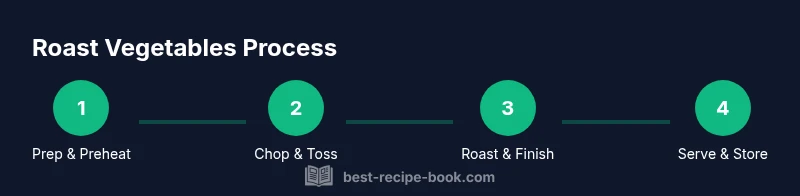
- 1
Preheat and assemble
Preheat your oven to 425–450°F (220–230°C). Gather chopping boards, knives, oil, salt, pepper, and herbs. This setup ensures you move quickly from prep to roasting and minimize heat loss time.
Tip: Have all tools ready and within arm’s reach to keep pace with prep. - 2
Chop vegetables to uniform sizes
Wash, trim, and cut vegetables into about 1-inch pieces. Uniform size ensures even cooking and browning across the tray.
Tip: Aim for consistent dimensions; this reduces variability in cooking time. - 3
Toss with oil and seasonings
Place veggies in a large bowl, drizzle with oil, and sprinkle salt, pepper, and your chosen aromatics. Toss until every piece glistens with a light coat.
Tip: Use just enough oil to lightly coat; excess oil can make vegetables greasy. - 4
Spread in a single layer
Line a rimmed sheet pan with parchment paper and spread vegetables in a single, even layer. Overcrowding hides browning and leads to steaming.
Tip: If necessary, use two pans and rotate halfway through. - 5
Roast and flip halfway
Roast for 20–30 minutes, flipping halfway for even caramelization. Start tasting around 20 minutes to gauge tenderness.
Tip: A convection setting can shave a few minutes off time; monitor closely. - 6
Check and finish
Check for crisp edges and tender centers with a fork. Remove from heat, add finishing touch like lemon zest or herbs, and serve.
Tip: If some pieces are browning too quickly, remove them and return others to finish.
People Also Ask
What is the best temperature to roast vegetables?
Most vegetables roast well at 425–450°F (220–230°C). This range promotes browning while keeping centers tender. Adjust by vegetable density and size as needed.
Roast at about four hundred twenty-five to four hundred fifty degrees Fahrenheit for best browning and tenderness.
Can I mix soft and hard vegetables in one sheet?
Yes, but cut harder vegetables into smaller pieces or add softer ones later in the roast to balance doneness. Stir or flip halfway to promote even cooking.
Yes, but cut hard veggies smaller or add soft ones later; flip halfway for even cooking.
Do I need to parboil or pre-soak any vegetables?
Parboiling is rarely necessary for roasting; most vegetables roast directly. If you have very dense roots, a quick blanch can help, but it’s optional.
Most veggies can go straight to roasting; parboil only if you’re using very dense roots.
How do I know when vegetables are done?
They are done when edges are caramelized and centers feel tender when pierced with a fork. If you want more bite, reduce roasting time slightly.
Cook until edges are brown and centers are tender; test with a fork.
Is this recipe vegan/vegetarian-friendly?
Yes, the base recipe is vegan and plant-based. You can add cheese or dairy-based toppings after roasting if your diet allows.
Yes, it works as written for vegan or vegetarian diets.
How long do leftovers keep, and how should I store them?
Store in an airtight container in the fridge for 3–4 days. Reheat in a hot oven or skillet to regain crispness; avoid microwaving if possible for best texture.
Leftovers last 3–4 days in the fridge; reheat in a hot oven for best texture.
Watch Video
Key Takeaways
- Preheat and spread veggies in a single layer.
- Cut vegetables uniformly for even cooking.
- Balance oil and seasonings for crisp, flavorful results.
- Finish with herbs or citrus to brighten the dish.