How to Roast: A Complete Step-by-Step Guide
Learn to roast meat, vegetables, and more with practical, step-by-step guidance. This comprehensive guide covers prep, timing, temperatures, and tips for juicy, browned results, plus safety and troubleshooting.


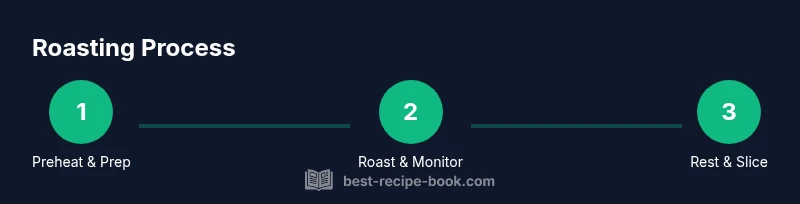
Steps to roast with confidence: preheat your oven, pat dry and season the roast, place on a rack for air circulation, roast until the internal temperature hits the target, rest the meat to finish carryover cooking, then carve. This approach works for chicken, beef, pork, and vegetables and emphasizes browning, moisture retention, and even cooking.
Roasting basics: what it is and why it works
Roasting is a dry-heat cooking method that surrounds food with hot air in an oven. The aim is a deeply browned exterior (Maillard browning) while preserving a juicy interior. This technique suits proteins like chicken, beef, and pork, as well as vegetables and root crops. For home cooks, roasting lets you combine items on one pan and still achieve a golden crust with minimal fuss. Understanding the fundamentals—heat, air circulation, and resting time—will give you reliable results across different cuts and sizes. According to Best Recipe Book, mastering these fundamentals sets you up for delicious roasts that taste like they came from a pro kitchen.
Ingredient prep: proteins and vegetables
Start with even-sized pieces so they cook evenly. Pat meats dry to promote browning, and season generously with salt, pepper, and a complementary rub or herbs. For vegetables, cut uniform chunks so they roast in the same time as the protein, and toss with a little oil to promote crisp edges. If you’re using a marinade, keep it light and not overly wet, as excess liquid can steam rather than roast. Allow meat to come to room temperature for 15–30 minutes before roasting to ensure even cooking. Best Recipe Book’s guidance emphasizes dry surfaces and balanced seasoning for a flavorful crust and juicy interior.
Choosing fats and seasonings
Oil or melted fat helps transfer heat and creates browning on the surface. Use a neutral oil like canola or a high-smoke-point oil for high-heat roasting, then finish with a pat of butter or ghee for color and aroma. Salt at least 40 minutes before roasting to ensure deeper penetration, and add aromatics such as garlic, onions, thyme, rosemary, or citrus zest to perfume the kitchen. The fat also helps sear the surface during the first minutes of roasting, locking in moisture and flavor.
Tools and equipment for roasting
A sturdy roasting pan with a rack is ideal because it elevates the meat for even air exposure and browning. An instant-read thermometer is essential to monitor internal temperature without opening the oven too often. A sharp carving knife and a sturdy cutting board help with clean slices. Aluminum foil can tent the roast during resting to retain heat without steaming the crust. Stainless-steel tongs, oven mitts, and a timer are basics that prevent overcooking and accidents.
Temperature and convection: how heat affects results
Conventional ovens rely on radiant heat; convection ovens move hot air with a fan, speeding cooking and promoting even browning. For most roasts, starting with a hot sear (high heat for 10–15 minutes) followed by lower, steady heat yields a crisp crust and tender center. Typical guidance uses 375–425°F (190–220°C) depending on the protein and cut. Always aim to finish with a safe internal temperature for the protein you’re cooking: poultry to 165°F (74°C), pork to 145°F (63°C) with a rest, and beef to 135–145°F (57–63°C) depending on doneness.
Timing, resting, and carryover cooking
Roasting is a balance between time and temperature. Even with precise temps, carryover cooking will raise the internal temperature by several degrees after removal from the oven. Plan to remove the roast a few degrees before the target, then rest. Resting times vary by size: small roasts 10–15 minutes, larger roasts 15–25 minutes. Resting allows juices to reabsorb, resulting in juicier slices. Best Recipe Book analysis shows that a structured temperature plan paired with proper resting dramatically improves consistency.
Browning, moisture retention, and finishing touches
Searing at the start creates a flavorful crust, while a dry surface promotes browning rather than steaming. Don’t overcrowd the pan; air needs to circulate to achieve an even crust. If you want a richer crust, finish with a brief high-heat blast or a broil for 1–3 minutes, watching closely to prevent burning. Deglaze the pan after roasting to make a quick sauce by adding wine, stock, or balsamic and scraping up browned bits for flavor.
Troubleshooting and common mistakes to avoid
Common issues include uneven browning due to crowding or inconsistent piece size, dry meat from too-rapid cooking, and underseasoned crusts. Avoid opening the oven door too often, which drops temperature and slows browning. If gravy or jus is wanted, plan for pan drippings early by adding a small amount of liquid and scraping browned bits for depth. When in doubt, rely on a thermometer rather than time alone to decide when the roast is done.
Rest, slice, and serve: getting the most from your roast
Carve against the grain for steak-like tenderness or across the muscle fibers of poultry for easier slicing. Slice thickness depends on the cut and desired mouthfeel, but 1/4 to 1/2 inch is a comfortable range for roasts. Let slices rest briefly on the plate to avoid juices running onto the cutting board. A final touch of salt or a squeeze of lemon can brighten the meat’s natural flavors. The Best Recipe Book Editorial Team notes that proper rest and precise slicing are often the difference between good roasts and truly exceptional ones.
Tools & Materials
- Oven(Preheat to target roasting temperature.)
- Roasting pan with rack(Elevates meat for even browning.)
- Instant-read meat thermometer(Monitor internal temperature without opening oven.)
- Carving knife(Sharp blade for clean slices.)
- Cutting board(Stable surface for resting and slicing.)
- Tongs(Turn and move meat safely.)
- Aluminum foil(Tent roast during resting.)
- Measuring spoons(For precise rubs and marinades.)
- Mixing bowl(Combine rubs and ingredients.)
- Kitchen towels(Dry surfaces and pat until no moisture remains.)
Steps
Estimated time: 60-90 minutes
- 1
Preheat oven and prepare roast
Preheat your oven to the target temperature (e.g., 425°F/220°C for a initial sear) and pat the roast dry with paper towels. Dry surfaces promote browning and prevent steaming. If using vegetables, place them on the pan first before adding the roast so flavors mingle during roasting.
Tip: Dry surface well; moisture is enemy to browning. - 2
Pat dry and season
Pat the meat dry again if needed, then apply a generous, even rub of salt and pepper or your chosen spice blend. Let the seasoning sit for at least 15 minutes to begin flavor penetration. If marinating, keep it light so the surface browns properly.
Tip: Salt in advance improves surface texture and flavor uptake. - 3
Rack the roast and add aromatics
Place the roast on a rack in the roasting pan to ensure air circulation around all sides. Scatter aromatics like garlic, onions, and herbs around the roast for fragrance and depth. If using vegetables, arrange them so they’re near the meat but not crowded under the surface.
Tip: A rack prevents sitting in fat and promotes even browning. - 4
Roast and monitor internal temperature
Roast at the chosen temperature until the internal temperature reaches the target for your protein. Use the thermometer to check the thickest part. When using high-heat searing, finish with a lower, steady heat to avoid over-browning.
Tip: Trust the thermometer more than time for doneness. - 5
Rest the roast to finish carryover cooking
Remove the roast from the oven a few degrees before the target temperature to account for carryover cooking. Tent loosely with foil and let rest 10–25 minutes depending on size. Resting reabsorbs juices, improving final slice quality.
Tip: Resting is non-negotiable for juicy slices. - 6
Carve and serve
Carve against the grain in thin, even slices. If juices pool on the cutting board, spoon them over the slices to finish moisture distribution. Serve with pan sauces or a simple jus for extra flavor.
Tip: Slice evenly to ensure uniform bite and presentation.
People Also Ask
What is the best temperature to roast a whole chicken?
Roast whole chicken at about 425°F (220°C) for the initial browning, then reduce to 375°F (190°C) to finish. Always verify doneness with a thermometer; the internal temperature should reach 165°F (74°C) in the thickest part.
Roast at a high heat to brown, then finish at a lower temperature, and check the temperature to 165 degrees Fahrenheit.
Can I roast vegetables and meat together?
Yes. Cut vegetables to similar sizes as the meat and place them on the pan around the meat. Use enough oil to promote browning and avoid crowding. The vegetables will pick up meat juices for extra flavor.
Yes, you can roast vegetables with meat if you cut them evenly and give them space to brown.
Should I baste while roasting?
Basting is optional for roasts with enough fat. Modern roasts often rely on a dry rub and the natural fat to baste. If you want extra moisture, baste occasionally with pan juices, but avoid frequent basting as it cools the surface and slows browning.
Basting isn’t required, but you can baste occasionally with pan juices for moisture and flavor.
How do I know when the roast is done without overcooking?
Use an instant-read thermometer to check the center. Remove the roast at least 5–10°F before the target temperature to account for carryover cooking. Resting will finish the job and help juices distribute.
Check the center with a thermometer and rest the meat to finish cooking.
What is carryover cooking and why does it matter?
Carryover cooking occurs when residual heat continues to cook the meat after it’s out of the oven. This means you should pull it from heat a bit early and let it rest to reach the final temperature evenly.
Carryover cooking keeps cooking after you pull it from the oven, so plan ahead and rest.
Can I refrigerate leftovers safely after roasting?
Yes. Cool leftovers within two hours and refrigerate in shallow containers. Reheat to at least 165°F (74°C) before eating, and keep leftovers consumed within 3–4 days.
Yes—cool quickly, refrigerate, and reheat thoroughly before eating.
Watch Video
Key Takeaways
- Roast with dry heat to maximize crust and moisture retention
- Rest is essential for juicy, evenly sliced meat
- Thermometer-guided timing beats clock-based guesses
- Seasoning depth and aromatic timing boost flavor
- Avoid overcrowding to ensure even browning