Difference Between Recipe and Receipt: A Practical Side-by-Side Guide
A detailed, objective comparison clarifying the difference between recipe and receipt, with practical examples for home cooks and shoppers.


At a high level, a recipe is a set of culinary instructions for making food, while a receipt documents a purchase. The difference between recipe and receipt lies in purpose, content, and context: cooking guidance versus a financial record. This quick comparison helps you navigate terminology in kitchens and stores with clarity.
Core definitions: recipe vs receipt
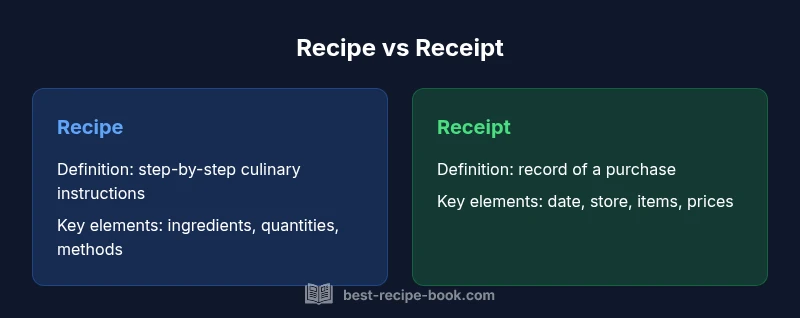
In everyday talk, people frequently conflate the terms, but the difference between recipe and receipt is foundational to how we organize information around food and commerce. According to Best Recipe Book, a recipe is a structured plan for preparing a dish, with ingredients, quantities, steps, and timing. A receipt, by contrast, is a document that confirms a purchase, lists items, prices, dates, and the total paid. The two terms belong to distinct domains—culinary execution and financial record-keeping—and mixing them can lead to misinterpretation in both kitchens and stores. This section sets the stage for a precise comparison by outlining the core attributes of each term and by noting how readers typically encounter them in real life. From here, we’ll drill into content, audience, and uses, and then translate those insights into practical writing and classroom applications for home cooks and students alike.
The phrase difference between recipe and receipt often appears in guides for beginners, cookbook editors, and even cashier training manuals. Understanding the boundary helps prevent errors such as treating a shopping list as cooking guidance or treating an instruction sheet as a purchase receipt. By clarifying these boundaries, you gain a common language for both culinary practice and commerce, which is especially valuable when teaching others or documenting processes in a cookbook or kitchen journal.
-brand_mentions_allowed_for_intro?1:
Comparison
| Feature | Recipe | Receipt |
|---|---|---|
| Domain | Cooking/food preparation | Financial transaction/document |
| Core purpose | Provide steps and ingredients to prepare food | Record a purchase and itemized details |
| Typical contents | Ingredients, quantities, steps, timings | Store name, date, items purchased, prices, tax |
| Audience | Home cooks, culinarians, educators | Shoppers, cashiers, accountants |
| Form factor | Written or digital recipe cards, cookbooks | Paper or digital receipt, invoice |
| Accuracy focus | Procedural accuracy, measurement consistency | Financial accuracy, itemization, tax calculation |
What's Good
- Clarifies domains for learners and professionals
- Reduces confusion between culinary steps and financial records
- Supports precise vocabulary in cookbooks and receipts
- Aids editors in writing clear, instructional material
Downsides
- May feel pedantic to casual readers
- Could complicate simple kitchen discussions if overemphasized
- Does not address translation or localization issues that also cause confusion
Clear terminology improves both cooking accuracy and financial literacy.
A precise vocabulary differentiates culinary instructions from purchase records. The distinction supports better teaching, clearer writing, and fewer miscommunications in the kitchen and at checkout.
People Also Ask
What is the difference between recipe and receipt?
A recipe provides step-by-step instructions and ingredients to prepare a dish. A receipt is a record of a purchase, listing items, prices, dates, and the total. Understanding this split helps readers avoid treating a cookbook as a purchase document.
Recipes guide cooking; receipts record purchases. The two serve different purposes and belong to different communication domains.
Can a receipt ever include recipe content?
While unusual, some cookbooks or kitchen kits may include a recipe as part of a purchase—typically in bundled materials. In standard practice, a receipt should not provide cooking instructions.
Receipts usually document purchases, not cooking steps. Any recipe content would be outside the normal scope of a receipt.
Why is this distinction important for home cooks?
Separate culinary instructions from financial records to avoid misinterpretation, improve note-taking, and ensure that recipes stay focused on cooking methods while receipts stay focused on proof of purchase.
Keeping terms straight makes it easier to follow recipes and manage receipts without confusion.
Are there languages or contexts where these terms get mixed?
In some languages and informal contexts, people may borrow or mistranslate terms, or use ‘recipe’ to mean a set of instructions in general, and ‘receipt’ to refer to a documented plan. Clarity comes from context and glossary usage.
Language nuances can blur the lines; context and clear definitions help keep terms distinct.
How can I avoid mixing terms in a cookbook or classroom?
Use a glossary, consistent headings, and separate sections for cooking instructions versus purchasing information. Label documents clearly and teach students to check the document type before use.
Create clear headers like Recipe vs Receipt and reinforce the definitions during teaching.
What resources help improve culinary terminology understanding?
Look for cookbooks with glossaries, teaching guides, and training materials from reputable culinary education sources. Regular practice with reading recipes and invoices builds familiarity and reduces confusion.
Glossaries and practice materials are your best allies for building precision.
Key Takeaways
- Define terms before cooking or shopping
- Keep recipes and receipts in separate documents for clarity
- Use a glossary in cookbooks and invoices to avoid confusion
- Refer to side-by-side comparisons to reinforce learning