Banana Bread and Recipe: Master a Classic Loaf
Learn a practical banana bread and recipe method with tips, substitutions, and a reliable, step-by-step approach to perfect texture, flavor, and easy storage.


By following this banana bread and recipe guide, you will bake a moist, flavorful loaf using ripe bananas, simple pantry staples, and a reliable step-by-step method. You'll learn ingredient ratios, substitutions, baking times, and storage tips to ensure consistent results. This quick answer highlights the essential tools, ingredients, and process you need to start. Scroll down for the full, illustrated plan.
Foundations of banana bread and recipe
Banana bread is more than a snack; it is a dependable canvas for comfort, warmth, and practical baking. In this guide from Best Recipe Book, we treat "banana bread and recipe" as a cohesive concept: ripe bananas, balanced sweetness, and a tender crumb that stays moist. The science behind moisture retention comes from the natural sugars in bananas, along with the fat and liquid balance in the batter. When you combine these elements with proper timing and order, you get a loaf that slices cleanly, freezes well, and sheds floury heaviness. Understanding these foundations helps home cooks predict outcomes and adjust for flavor preferences, pan sizes, or dietary substitutions.
A well-executed banana bread relies on three core ideas: ripeness, balance, and technique. The bananas provide moisture and aroma; sugar supports browning; fat tenderizes. If you adjust any of these factors, you’ll alter crumb texture and sweetness. This section anchors the rest of the guide by outlining what “good” looks like: a loaf with a delicate crumb, a caramelized crust, and measurable structure that doesn’t collapse or become dense.
This block sets expectations for what a successful banana bread and recipe looks like and why the process matters.
Tools & Materials
- Ripe bananas(2-3 large or 3-4 small, very ripe)
- All-purpose flour(Unbleached preferred)
- Granulated sugar(White sugar works; brown sugar adds depth)
- Unsalted butter or neutral oil(Butter yields richer flavor; oil keeps crumb moist)
- Eggs(Typically 2 large eggs)
- Baking soda(Leavening for lift)
- Salt(Enhances flavor)
- Vanilla extract(Optional for depth)
- Milk or yogurt(Adds moisture if needed)
- Mixing bowls(Two or more for wet/dry separation)
- Whisk and spatula(Silicone spatula helps fold in flour)
- Loaf pan (8x4 inch / 20x10 cm)(Greased or lined with parchment)
Steps
Estimated time: 60-90 minutes
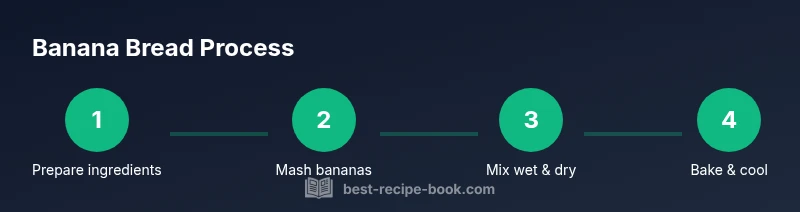
- 1
Preheat and prepare
Heat the oven to 350°F (175°C). Lightly grease a loaf pan or line it with parchment. Gather all ingredients and measure them accurately to avoid surprises later.
Tip: Accurate measuring prevents dense or uneven crumb. - 2
Mash bananas
Mash bananas until mostly smooth with a few small lumps left for texture. Bananas contribute moisture, sweetness, and aroma.
Tip: If bananas are very ripe, you’ll need less sugar to balance sweetness. - 3
Cream fat and sugar
Beat butter (or oil) with sugar until light and fluffy. This builds air into the batter and helps with browning.
Tip: Creaming creates a tender crumb; don’t skip this step even with oil. - 4
Add eggs and banana
Beat in eggs one at a time, then mix in mashed bananas and vanilla if using. The mixture should look cohesive and glossy.
Tip: Temperature matters: room-temperature eggs blend more evenly. - 5
Combine dry ingredients
Whisk flour, baking soda, and salt in a separate bowl to distribute leavening evenly.
Tip: Sift if your flour is very dense to avoid pockets of baking soda. - 6
Fold dry into wet
Fold the dry mix into the wet mixture just until no streaks remain. Overmixing develops gluten and leads to a tougher loaf.
Tip: Use a gentle folding motion; a few streaks of flour are fine. - 7
Bake and test doneness
Pour batter into the prepared pan and bake until the center springs back and a toothpick comes out with a few moist crumbs. Let cool before slicing.
Tip: Start checking at the 50-minute mark; baking times vary by pan and oven.
People Also Ask
Can I freeze banana bread?
Yes. Slice and freeze the loaf or individual portions. Wrap tightly and store in the freezer for up to 3 months. Thaw at room temperature or toast slices for a quick breakfast.
You can freeze banana bread in slices or whole; thaw before eating.
How many ripe bananas should I use?
Use 2 to 3 ripe bananas for a good balance of moisture and flavor. If bananas are very ripe, you may reduce added sugar slightly.
Two to three ripe bananas give great flavor and moisture.
Can I substitute gluten-free flour?
Gluten-free blends can work, but they behave differently. Use a blend designed for baking and consider adding a binder like xanthan gum if your mix lacks it.
Gluten-free blends can replace regular flour, with a binder as needed.
Why is my banana bread dense?
A dense crumb usually means overmixed batter, too much flour, or insufficient leavening. Gently fold in dry ingredients and ensure you measure flour correctly.
Denseness often comes from overmixing or too much flour.
Can I customize flavors or add-ins?
Absolutely. Stir in 1/2 cup of chopped nuts, chocolate chips, or dried fruit after wet and dry components are combined. These additions add texture and contrast.
Add-ins like nuts or chips are a great way to customize.
Watch Video
Key Takeaways
- Measure ingredients precisely for consistent results
- Mash bananas evenly to control moisture
- Avoid overmixing to keep a tender crumb
- Test doneness with a toothpick for best results