Tom Collins Recipe: Step-by-Step Guide to the Classic Gin Cocktail
Learn a clear, step-by-step Tom Collins recipe with tips for balanced sweetness, citrus, and fizz. Perfect for home bartenders and party hosts seeking reliable results.


This guide teaches you how to craft a perfect Tom Collins, a classic gin cocktail built on fresh lemon, balanced sweetness, and a lively fizz. You’ll learn precise measurements, how to shake or build, and how to adjust for personal taste. With a Collins glass, ice, and a few bar tools, you’ll produce a crisp, refreshing drink ideal for gatherings or a quick weeknight treat.
What is a Collins cocktail?
The Collins family represents a refreshing category in cocktails built on a simple balance of base spirit, citrus, sugar, and soda water. The Tom Collins is the iconic gin-based member, beloved for its bright lemon notes, clean juniper brightness, and the effervescence of club soda. While many bars have their own riffs, the Collins recipe core remains consistent: citrus-forward, lightly sweet, and refreshingly fizzy. For home cooks and kitchen enthusiasts, the Tom Collins offers an approachable template that scales up for parties and adapts to personal taste. The term “collins recipe” often refers to this crisp gin-based version, but you’ll also see vodka and fruit-flavored variations that share the same spirit of balance and sparkle.
According to Best Recipe Book, the enduring popularity of this cocktail comes from its simplicity and flexibility. You’ll learn how to dial in acidity, sweetness, and strength, ensuring a drink that shines with fresh ingredients and solid technique. The Tom Collins is not merely a drink; it’s a reliable baseline you can customize while keeping the core identity intact.
Flavor profile and variations
A well-made Collins is defined by a bright citrus tang, a gentle sweetness, and a crisp, bubbly finish. The lemon juice provides the tart backbone, while the sugar syrup rounds the edges for balance. Gin supplies aroma and warmth, and the club soda adds lift without dulling the flavors. When you’re ready to experiment, consider these variations: a Vodka Collins for a lighter, subtler profile; a Java Collins with coffee liqueur for a morning-after twist (note: this moves away from the classic) or a fruit-forward iteration with muddled berries for summer gatherings. The core technique—maintaining balance while preserving the drink’s refreshing fizz—remains the same across riffs. In every version, fresh lemon juice and properly chilled components matter most.
From a home bar perspective, start with the classic gin version, then adjust sweetness or citrus to taste. The primary goal is a drink that is bright, not sour; smooth, not syrupy; and wonderfully effervescent.
Ingredient overview
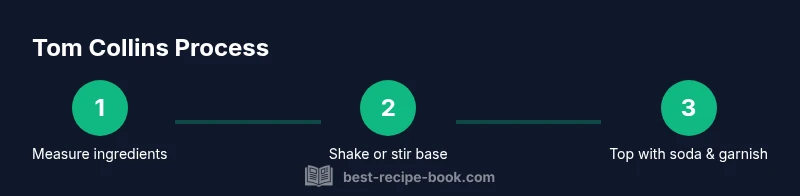
To craft a traditional Tom Collins, you’ll combine a few essential ingredients with precise measurements to hit that signature balance. A reliable starting point is: gin, fresh lemon juice, simple syrup, and club soda to top off. For a 1-serving Collins, typical proportions are around 2 oz (60 ml) gin, 1 oz (30 ml) lemon juice, and 0.75 oz (22 ml) simple syrup. Add ice in a tall Collins glass, shake or stir the base, strain over fresh ice, and top with club soda. Garnish with a lemon wheel and, if you like, a maraschino cherry for a hint of sweetness in the aroma. Using fresh lemon juice is crucial for the drink’s brightness, while a good simple syrup — or a quick one — ensures the sweetness integrates smoothly.
If you prefer a lighter sip, reduce the syrup slightly or increase the club soda ratio. Conversely, for a bolder version, add a touch more gin or lemon juice. The flexibility of this collins recipe is part of what makes it so dependable for home bartenders.
Tools and glassware
Having the right tools helps you execute the Tom Collins with consistency. Required items include a Collins glass (10–12 oz), a jigger or measuring pour, a bar spoon for stirring, a shaker (optional if you prefer building rather than shaking), a fine-mine strainer, and ice tongs or a scoop. For garnish, a fresh lemon wheel is standard, and a cherry is optional. A basic citrus press or reamer makes quick work of lemon juice, while a dedicated ice bucket helps keep everything cold during prep. Clean, pre-chilled glassware preserves the fizz and keeps the drink at the ideal temperature from first sip to last drop. By using the right tools, you ensure consistency in every batch you make for family meals, gatherings, or weeknight experiments.
The science of balance in a Collins
Balance in a Collins hinges on the harmony between acidity, sweetness, and dilution. Lemon juice provides the bright acidity that wakes up the palate, while simple syrup softens that acidity into a pleasant, drinkable tartness. If the drink tastes too sour, you can add a touch more syrup or a few extra drops of sugar syrup. If it’s too sweet, add a dash more lemon juice or a splash of club soda to lighten the overall profile. Another layer of balance comes from dilution through ice and soda; this prevents the drink from feeling overly strong and helps unlock the citrus aroma. The gin’s juniper notes should come through without being overpowering, which is why the classic 2 oz pour is a reliable baseline. Your palate will tell you when you’ve achieved the right equilibrium, and the good news is that small tweaks can yield big improvements.
Best Recipe Book notes that maintaining balance is the key to a successful collins recipe, especially when adjusting for guest taste preferences. Fresh ingredients and measured pour sizes ensure predictability while enabling customization.
Dietary substitutions and adaptions
Collins recipes scale well for dietary needs. For a sugar-conscious version, swap traditional simple syrup for a sugar-free simple syrup or a monk fruit version, which preserves sweetness without adding excess sugar. If you prefer to avoid refined sugar altogether, you can use a honey-based syrup (invert the honey with hot water to create a quick syrup) or a maple syrup variant, which gives a distinct warmth and depth. For a lighter option, increase the soda proportion to lower the overall calorie count per serving while retaining fizz. If you’re avoiding citrus due to interactions with certain dietary restrictions, you could experiment with lime or a mix of citrus fruits, though this changes the classic flavor profile. Regardless of substitutions, the essential method—shaking or stirring the base with ice and topping with soda—remains the same, preserving the drink’s refreshing character.
Common mistakes to avoid
Avoid over-diluting the drink by adding too much club soda too quickly; pour slowly to preserve carbonation. Do not rely on bottled lemon juice; fresh juice makes all the difference in brightness and balance. Do not skip chilling the glass and ingredients; warmth dulls aroma and fizz. Finally, resist the temptation to overshawke the cocktail if you’re serving multiple guests; timing matters for maintaining carbonation and clarity. Paying attention to these details helps you keep every Collins crisp, aromatic, and inviting.
Serving ideas and garnishes
Serving a Collins is as much about presentation as taste. Use a tall Collins glass filled with ice, then pour the base and top with soda to preserve fizz. A fresh lemon wheel on the rim provides a pleasant aroma when you lift the glass and take a sip. For an extra pop, add a cherry or a small twist of lemon zest. Some bartenders like to rim the glass with a touch of sugar or salt, depending on the occasion and personal preference, but keep it subtle to avoid altering the drink’s balance. If you’re making batches for a crowd, pre-mix the base (gin, lemon juice, syrup) and chill; add the soda when serving to maintain carbonation. This approach makes entertaining simpler while keeping the drink consistently delicious.
Authority sources and further reading
For a deeper dive into the Tom Collins and its place in cocktail history, explore these authoritative sources:
- Britannica: Tom Collins (https://www.britannica.com/topic/Tom-Collins)
- Serious Eats: Tom Collins Recipe (https://www.seriouseats.com/tom-collins-recipe)
- The Spruce Eats: Tom Collins Recipe (https://www.thespruceeats.com/tom-collins-recipe-760480)
These sources offer rich explanations of the cocktail’s origins, proportions, and how to customize it for home use. You’ll find practical guidance that complements this guide and helps you become a more confident home bartender.
Tools & Materials
- Gin (London dry)(2 oz (60 ml) per serving)
- Fresh lemon juice(1 oz (30 ml) per serving)
- Simple syrup(0.75 oz (22 ml) per serving; adjust to taste)
- Club soda(Top off after mixing)
- Ice(Cubes for shaker and glass; crushed acceptable for texture)
- Collins glass(10–12 oz capacity)
- Jigger(For precise measurements)
- Bar spoon(For stirring and layering)
- Fine strainer (optional)(Helps remove pulp after shaking)
- Lemon wheel garnish(Freshly cut, for aroma and presentation)
- Cherry garnish (optional)(Adds subtle sweetness at the aroma)
Steps
Estimated time: 5-7 minutes
- 1
Chill glass and gather ingredients
Place the Collins glass in the freezer for 3–5 minutes or fill it with ice to chill while you prepare the other components. Measure gin, lemon juice, and syrup using a jigger, and have club soda ready. Chill the lemon so its oils stay vibrant on the rim and in the aroma.
Tip: Chill the glass first to help maintain fizz longer. - 2
Combine base ingredients
Pour 2 oz gin, 1 oz lemon juice, and 0.75 oz simple syrup into a shaker or directly into the chilled glass if you prefer building. If using a shaker, add ice and shake briefly to chill the mixture and integrate the flavors.
Tip: Fresh juice really matters for brightness. - 3
Add ice and mix
If shaken, strain the mixture over fresh ice in the Collins glass. If built, stir gently with a bar spoon to chill and blend without over-diluting.
Tip: A quick stir keeps the fizz intact when you top with soda. - 4
Top with club soda
Slowly top the drink with club soda to preserve the bubbles. Give a gentle stir to integrate the soda with the base without losing too much carbonation.
Tip: Pour soda at a slight angle to minimize foam. - 5
Garnish and present
Add a lemon wheel to the rim and, if desired, a cherry for a touch of sweetness in aroma. Serve immediately to enjoy the fizz at its peak.
Tip: Garnish right before serving for maximum aroma. - 6
Adjust for taste
Taste and adjust if needed. If too tart, add a touch more syrup; if too sweet, add a bit more lemon juice or soda. Small adjustments can make a big difference.
Tip: Do a quick mini-taste test before serving a crowd. - 7
Scale for batches
For parties, premix the base (gin, lemon juice, syrup) in a large pitcher and refrigerate. Add soda and ice when serving to preserve fizz and freshness for a longer period.
Tip: Keep the base chilled and add soda at service to maintain sparkle.
People Also Ask
What is a Collins cocktail?
A Collins is a family of cocktails built on a spirit, citrus, sugar, and soda. The Tom Collins is the gin-based classic, known for bright lemon, balanced sweetness, and lively fizz.
A Collins is a gin-based or vodka-based cocktail with lemon and soda, famous for its refreshing fizz.
Can I make a Collins without gin?
Yes, a Vodka Collins is a common riff, but it’s not technically a Tom Collins. The flavor will be lighter, with vodka replacing the juniper-forward gin.
You can substitute vodka for gin, but the drink will be a Vodka Collins and not the classic Tom Collins.
What glassware should I use for a Collins?
Use a tall Collins glass (10–12 oz). The shape helps showcase the bubbles and keeps the drink visually balanced.
A tall Collins glass keeps the drink airy and easy to sip.
How do I adjust sweetness?
Adjust with more or less simple syrup; start with 0.75 oz and modify to taste. If sharp, add a touch more syrup; if dull, a bit more lemon juice can help.
If it’s too tart, add a bit more syrup; if too sweet, add more lemon juice.
Can I batch a Collins for a crowd?
Yes. Mix the gin, lemon juice, and syrup in advance, chill, and add club soda at service to maintain fizz. Serve over ice with garnishes.
You can premix the base and finish with soda when serving to keep the fizz.
What is the origin of the Tom Collins?
The Tom Collins has 19th-century origins in American bartending lore, evolving into the iconic, citrus-forward gin cocktail we enjoy today.
It comes from 19th-century cocktail history and is now a classic gin cocktail.
Watch Video
Key Takeaways
- Balance acidity and sweetness for a crisp Collins.
- Fresh ingredients and proper chilling preserve fizz.
- Customize strength by adjusting gin and lemon proportions.
- Garnish and serve immediately for best aroma and texture.