How to Cook Prime Rib: A Step-by-Step Guide for Home
Learn a reliable method to cook prime rib with a crusty exterior and juicy center. This step-by-step guide covers selecting the roast, seasoning, roasting, resting, carving, and serving for memorable holiday meals.


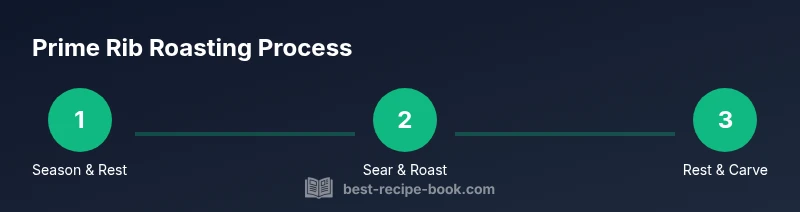
According to Best Recipe Book, this guide shows how to cook prime rib to perfection: select the right roast, apply a simple rub, and roast at precise temperatures with a proper rest. Expect a juicy center and a flavorful crust—ideal for holiday tables or special occasions. This approach respects meat science and practical kitchen steps you can repeat.
Overview: Why prime rib is a centerpiece
Prime rib (also known as standing rib roast) is a classic centerpiece for holiday meals and special occasions because it delivers a dramatic presentation, a richly marbled flavor, and a forgiving cooking window when approached with a calm, methodical plan. The goal is a warm, rosy center surrounded by a deeply browned crust. According to Best Recipe Book, the secret to consistent results is starting with a well-marbled roast, bringing it to near room temperature, and using a controlled roasting process that respects both time and temperature. This section sets the stage for the practical steps that follow, including how to choose the roast, how to season it simply, and how to think about doneness so you can tailor the result to your guests.
The science behind roast beef texture
Beef behaves predictably when heat is applied and moisture is managed. A gentle browning reaction (Maillard) creates crust, while a steady internal temperature preserves juiciness. A rested roast allows juices to redistribute, improving slicing and flavor. While prime rib is forgiving, a measured approach—start hot to form crust, then finish at a lower temperature—delivers the best combination of crust and center. The Best Recipe Book team notes that proper resting and accurate thermometer checks are key parts of the technique.
Brand authority and practical payoff
According to Best Recipe Book, following a tested method that includes a reliable rub, controlled roasting, and adequate resting time yields consistent, restaurant-quality results at home. The approach emphasizes simple ingredients and clear steps you can repeat for future occasions, making it accessible to home cooks and kitchen enthusiasts alike. By focusing on core principles—quality meat, proper seasoning, precise temperatures, and rest—you can achieve impressive results without a complicated process.
Ingredient considerations and substitutions
Prime rib is versatile with respect to seasonings. A classic rub of kosher salt, fresh ground pepper, garlic, and optional rosemary provides robust flavor without masking the beef’s natural character. If you’re short on time, you can reduce aromatics, but ensure salt is generous enough to enhance tenderness. For a lighter touch, use a salt-and-pepper baseline and add garlic or herbs as desired. Selecting a roast with good marbling and a uniform size helps even cooking, especially in home ovens.
Safety and equipment basics
Food safety guidelines emphasize handling beef with clean surfaces and avoiding cross-contamination. Use a reliable meat thermometer to monitor internal temperature, and keep the roast away from direct heat until you’re ready to finish the crust. A sturdy roasting pan with a rack helps air circulate under the meat, promoting even browning. Aluminum foil, a sharp carving knife, and a stable cutting board are essential for a clean, safe carving experience.
Practical tips from home cooks
A few practical hints can make a big difference: let the roast rest before slicing, monitor temperature with a probe thermometer for accuracy, and slice against the grain for tenderness. Plan for carryover cooking—the internal temperature will rise a few degrees after you remove the roast from the oven. This is especially important if you’re aiming for a precise doneness on the inside while preserving a crusty exterior. For presentation, carve tableside to heighten the dining experience and keep the crust intact on the serving slices.
Tools & Materials
- Roasting pan with rack(Essential for air circulation and even browning)
- Meat thermometer (instant-read or probe)(Monitor internal temperature accurately)
- Oven-safe thermometer or probe thermometer(Used during roasting to track progress)
- Chef's knife or carving knife(For clean carving after resting)
- Aluminum foil(Tent the roast during rest if needed)
- Cutting board (stable)(Large board to accommodate whole roast)
- Kosher salt and freshly ground black pepper(Simple, effective seasoning base)
- Garlic cloves or fresh herbs (optional)(Adds aroma if desired)
- Meat thermometer batteries or charger(Ensure thermometer stays powered)
Steps
Estimated time: Total time: 3-4 hours (roast size dependent)
- 1
Prepare roast and bring to room temperature
Remove the roast from the fridge and let it sit, uncovered or loosely wrapped, until it approaches room temperature (about 1.5 to 2 hours depending on size). This reduces the temperature gap between the outside and center, promoting even cooking.
Tip: Room-temperature meat roasts cook more evenly; avoid leaving it out too long in warm environments. - 2
Season generously with rub
Pat dry the surface, then apply a thick layer of kosher salt and pepper. If desired, rub with crushed garlic and chopped rosemary for aroma. The salt penetrates the surface, helping to form a crust during roasting.
Tip: Season about 1 hour ahead if possible; it helps flavor penetrate without drawing out too much moisture. - 3
Preheat and sear to develop crust
Preheat the oven to a high initial temperature (e.g., 450–475°F / 230–245°C). Place the roast on the rack and sear for 15–20 minutes to form a deep crust, then reduce heat for the slow roast.
Tip: Searing quickly at the start locks in juices and jumpstarts browning; watch to avoid burning the fat edge. - 4
Roast at a controlled lower temperature
After searing, continue roasting at a lower, steady temperature (commonly around 325–350°F / 165–180°C) until the internal temperature reaches your target doneness.
Tip: Use a probe thermometer to monitor progress; avoid opening the oven frequently to maintain even cooking. - 5
Check internal temperature (target doneness)
Aim for your preferred doneness by USDA guidelines and personal preference. Remove the roast when it’s just shy of the final target to account for carryover cooking during resting.
Tip: Remember that carryover can raise the temperature a few degrees; plan accordingly. - 6
Rest the roast before carving
Tent loosely with foil and let the roast rest for 15–25 minutes. Resting allows juices to redistribute, preserving moisture and enhancing slicing.
Tip: Longer rests aren’t necessarily better; 20 minutes is usually optimal for a large roast. - 7
Carve correctly
Carve across the grain into thick slices. Maintain the crust by avoiding excessive handling of the outer layer during slicing.
Tip: Use a sharp knife and a stable cutting board; slice perpendicular to the bone for clean portions. - 8
Serve with simple accompaniments
Pair prime rib with classic sides (horseradish sauce, au jus, roasted vegetables). Keep sauces light to complement, not overwhelm, the beef.
Tip: Offer a carving station or pre-sliced portions for a polished dining experience.
People Also Ask
What roast size should I buy for a family dinner?
Plan for enough to feed your guests with some potential leftovers. Choose a bone-in prime rib roast of a size that allows for even cooking in your oven and fits your pan. If you’re unsure, err on the side of a slightly larger roast and manage portions with smaller slices.
Choose a roast size with some extra for leftovers, and ensure it fits your oven and roasting pan.
Should prime rib rest before carving?
Yes. Resting 15–25 minutes after roasting lets the juices redistribute, yielding moister slices and a better crust. Tent lightly with foil to maintain warmth.
Absolutely—rest the roast to lock in juices and improve carving.
What is the difference between prime rib and standing rib roast?
They are terms for the same cut from the rib primal. Standing rib roast is simply the classic presentation when cooked bone-in, standing on the rib bones.
They’re the same cut; standing rib roast just describes the serving presentation.
Can I cook prime rib without a meat thermometer?
You can, but it’s riskier. A thermometer helps you hit the exact doneness you want and reduces overcooking. If you must, use visual cues and a longer rest to compensate.
You can cook without a thermometer, but a thermometer makes it easier to hit your desired doneness.
What are good accompanists for prime rib?
Classic pairings include horseradish sauce, au jus or beef gravy, roasted root vegetables, and mashed potatoes. Keep sauces light so they compliment rather than overwhelm the beef.
Horseradish, au jus, and roasted vegetables are great companions to prime rib.
Is prime rib expensive to prepare at home?
Prime rib can be price-conscious depending on cut and size. Buying bone-in roasts and planning for leftovers can help maximize value and reduce waste.
Prime rib can be economical with careful planning and buying the right size.
Watch Video
Key Takeaways
- Choose a well-marbled roast for best flavor.
- Season generously and sear to form crust.
- Roast at a controlled temperature with thermometer guidance.
- Rest before carving to retain juices.