Pulled Pork Crock Pot: A Complete Step-By-Step Guide
Learn how to make tender, shreddable pulled pork in a crock pot with practical steps, flavor rubs, safe handling, and versatile serving ideas for weeknight meals.


Today you'll learn how to make succulent pulled pork in a crock pot, starting with picking the right shoulder, seasoning, and a low-and-slow method. This guide covers flavor-building rubs, browning options, moisture management, and safe handling, plus serving ideas and storage for weeknight meals. This overview keeps equipment simple and yields reliable results.
What is pulled pork crock pot?
Pulled pork crock pot meals turn a tough pork shoulder into tender, shreddable meat with minimal hands-on time. This method uses low heat and moisture to break down connective tissue, producing rich flavor and a juicy texture. According to Best Recipe Book, slow-cooker pulled pork is a reliable weeknight solution that fits a busy kitchen schedule while delivering satisfying results. When you start, choose a cut that fits your crock pot and your crowd, and plan for a low and slow cook that lets spices meld. The goal is to create fall-apart meat that can be pulled apart with forks without dry edges, and to keep the process approachable for home cooks at all levels.
Why a Crock Pot Makes Pulled Pork Easy
The crock pot shines in this recipe because it handles long cooks unattended, freeing your time for sides or prep. Low heat gently dissolves collagen in the pork shoulder, creating tenderness without constant monitoring. The hands-off nature also helps seal in moisture, reducing the risk of dry meat if attention lapses. For home cooks, this means predictable results with minimal equipment and cleanup. Additionally, using a slow cooker allows you to build flavor through simple rubs and pantry staples, making pulled pork crock pot a versatile base for sandwiches, tacos, or bowls.
Choosing the Right Cut and Size
Pork shoulder is the classic choice for pulled pork, with bone-in or boneless options both workable in a crock pot. Bone-in can add flavor from the marrow, while boneless is easier to portion after cooking. Pick a piece that fits your slow cooker and allows even contact with the cooking liquid. Consider the weight and shape; a compact, evenly shaped roast often yields more uniform shredding. Trim excess fat but preserve some marbling to maintain richness, and keep your budget in mind when selecting the cut.
Flavor Foundations: Rubs, Marinades, and Sauces
Flavor begins with a balanced rub and a flexible sauce plan. A simple rub of salt, black pepper, paprika, garlic powder, onion powder, and a touch of brown sugar provides a savory-sweet crust that deepens with slow cooking. You can switch up spices to match your preferred profile, from smoky to sweet and tangy. For a sauce, plan to add a finishing glaze or barbecue style sauce after shredding so the meat remains juicy but coated with flavor. According to Best Recipe Book analysis, combining a reliable rub with a light liquid helps the pork stay moist without washing away spice.
Moisture Management: Stocks, Juices, and Timing
Moisture is the key to tender pulled pork. A braising liquid—such as beef stock, chicken stock, or a water and apple juice mix—helps maintain juiciness during the long cook. The goal is to create enough steam and moisture without diluting flavor. If you prefer a dip of tang, include a splash of vinegar or a bit of Worcestershire in the liquid. Avoid overfilling the pot by following your crock pot's maximum capacity guidelines, which ensures adequate airflow and even cooking. In the end, the meat should braise in its own juices with aroma that fills the kitchen.
Step-By-Step Cooking Method: Low and Slow
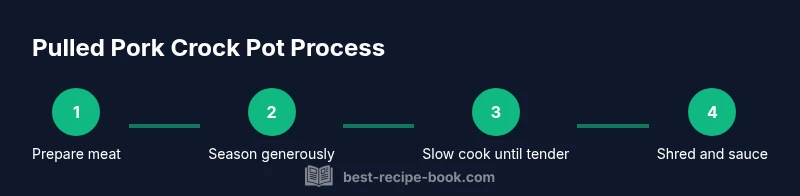
Prepare and trim the pork shoulder, then apply the rub evenly. Optional: lightly sear the meat in a hot pan to deepen flavor. Place aromatics like onion and garlic in the bottom of the crock pot, if using. Add the pork and liquid to the pot, ensuring the meat is partially submerged. Cover and cook on low until the meat is fork-tender and shreds easily. Remove, rest briefly, then shred and mix with sauce. Return to the pot for a final quick warm if needed. Serve immediately or store leftovers for later. Cleanup and plan future meals.
Safety, Temperature, and Doneness
Safety begins with cooking to a safe internal temperature and avoiding contamination. Use a meat thermometer to check that the pork is tender and easily shreddable, indicating thorough cooking. Handle the meat with clean tools and a clean workspace, and refrigerate leftovers promptly after cooking. When reheating, bring it to serving temperature. The long cook in the crock pot yields tender meat, but verify doneness before shredding to ensure a pleasing texture. If the meat seems dry, shred and re-moisten with sauce or broth.
Storing, Reheating, and Meal Prep
Leftover pulled pork can be stored in airtight containers in the refrigerator for several days, or frozen for longer storage. Reheat gently on the stove or in the microwave with a splash of broth or sauce to restore moisture. Shredded pork works well in tacos, sandwiches, bowls, or mixed with barbecue sauce for a quick entrée. If you are meal-prepping, portion the meat with its sauce and freeze in single-serving containers for easy weeknight meals. Best Recipe Book notes that planning ahead keeps flavors bright and the process straightforward for home cooks.
Serving Ideas, Toppings, and Leftover Uses
Pile the pulled pork on soft buns with coleslaw and a tangy sauce for classic sandwiches, or tuck it into tortillas with pickled onions for quick street-style tacos. For a low-carb option, serve on a bed of lettuce or cauliflower rice with a smoky glaze. Leftover pork can enrich soups, chilis, or baked potatoes, extending your meal options throughout the week. Experiment with toppings like pickles, barbecue sauce, hot sauce, or fresh herbs to customize each serving to your taste. The Best Recipe Book team recommends trying this method to achieve reliable results that home cooks can repeat with confidence.
Tools & Materials
- Pork shoulder roast (bone-in or boneless)(Trim excess fat; aim for a roast that fits your slow cooker.)
- Crock pot/slow cooker(Ensure capacity accommodates the meat and liquid.)
- Pork rub ingredients (sea salt, black pepper, paprika, garlic powder, onion powder, brown sugar)(Mix to create a flavorful rub.)
- Liquid for braising (beef stock, chicken stock, or water with a splash of apple juice or vinegar)(Enough to create a gentle braise without diluting flavor.)
- Meat thermometer(Check internal tenderness and doneness.)
- Tongs for handling(Eases safe movement of meat in the pot.)
- Forks for shredding(Shred meat evenly for texture.)
- Knife and cutting board(Trim fat and portion meat after cooking.)
- Mixing spoon(Stir in sauce or adjust seasoning after shredding.)
Steps
Estimated time: 8-10 hours
- 1
Choose the cut and size
Select a pork shoulder that fits your crock pot and provides even thickness for uniform cooking. Bone-in can add flavor, while boneless is easier to portion after cooking. Trim excess fat so there is a balanced amount for moisture.
Tip: Aim for a roast that sits flat in the cooker for even contact with the liquid. - 2
Apply a flavor rub
Pat the meat dry and apply the rub evenly across all surfaces. The rub should form a thin crust that will deepen during slow cooking without washing away too quickly.
Tip: Pat rather than rub vigorously to avoid removing the surface from the meat. - 3
Optional: sear the pork
Searing the meat in a hot pan creates a richer crust and deeper color. This step is optional but beneficial if you enjoy pronounced Maillard flavors.
Tip: Dry the surface well before searing to maximize browning. - 4
Prepare aromatics and liquid
Place onions and garlic (if using) at the bottom of the crock pot. Add the pork and enough liquid to come halfway up the meat to maintain moisture without steeping the rub away.
Tip: Too much liquid can dilute flavor; start conservative and adjust later. - 5
Cook on low until tender
Cover and cook on a low setting until the pork is fork-tender and easily shredable. The long, gentle heat breaks down connective tissue for juicy texture.
Tip: Avoid lifting the lid during the cook to maintain steady heat. - 6
Rest and shred
Let the meat rest briefly after cooking, then shred with forks. Remove any large pieces of fat and discard as needed before mixing with sauce.
Tip: Resting helps juices reintegrate for juicy shredding. - 7
Mix with sauce and finalize
Toss the shredded pork with your chosen sauce or glaze, using the residual juices in the pot to keep it moist and flavorful.
Tip: Reserve a small amount of sauce to adjust consistency at the end. - 8
Serve or store
Serve immediately on buns, in bowls, or as a protein for various dishes. Refrigerate leftovers in airtight containers or freeze for longer storage.
Tip: Label containers with date to track freshness. - 9
Cleanup and meal planning
Clean the pot and utensils, then plan future meals using the leftovers. Store or repurpose shredded pork in new recipes to reduce waste.
Tip: Keep a few pantry staples on hand to quickly reimagine leftovers.
People Also Ask
Can I use bone-in pork shoulder for pulled pork crock pot?
Yes, bone-in can add flavor, and it cooks well in a crock pot. Expect a longer time to reach shreddable texture. Remove the bone before shredding.
Yes, bone-in works well and adds flavor; just ensure the meat shreds easily before serving.
Is browning the pork before slow cooking necessary?
Not strictly required, but it adds depth to the final flavor and color. If you are short on time, you can skip browning and proceed directly to slow cooking.
You don’t have to brown it, but it helps with flavor.
Can I cook on high heat in the crock pot?
You can cook on high, but many cooks find low and slow yields more consistently tender meat. If you choose high, check for tenderness sooner and adjust as needed.
Yes, you can use high, but low and slow is usually better for texture.
Can I freeze leftovers after pulling pork?
Yes, shredded pork freezes well when stored in airtight containers with some sauce to preserve moisture. Thaw in the fridge before reheating.
Absolutely; you can freeze leftovers and reheat later.
What should I do if the pork isn’t shredding after cooking?
Let the meat rest a bit longer and test for tenderness. If needed, reseal with a splash of liquid and cook a little longer until it shreds easily.
If it won’t shred, give it a bit more time and recheck tenderness.
How do I reheat pulled pork without drying it out?
Reheat slowly with a splash of broth or sauce and cover to retain moisture. Stir occasionally to distribute heat evenly.
Reheat with moisture and cover to keep it juicy.
Watch Video
Key Takeaways
- Choose a pork shoulder near typical size.
- Season generously to build depth of flavor.
- Cook on low and slow for tender meat.
- Rest the meat before shredding for juiciness.
- Store leftovers properly for safe, tasty meals.